
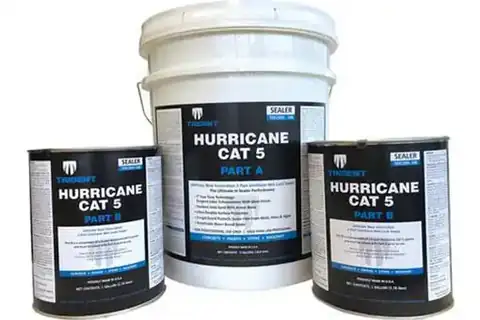
There's no single best paver sealer for every Florida home. The right one depends on your pavers and the look you want. Here's what matters most.
Quick answer: For most Florida concrete paver driveways, patios, and pool decks, the best paver sealer is a breathable, joint-stabilizing urethane sealer. Our first choice is Trident Hurricane CAT 5. For a natural, non-shiny look we use Trident Cyclone, and for travertine, marble, and other natural stone we use an invisible penetrating sealer such as Trident Break Wall.
What to Look For
- Breathability so moisture and efflorescence can escape instead of clouding the finish.
- Joint stabilization for concrete pavers, so the sand hardens and stays put through summer storms.
- UV resistance so it won't yellow or fade.
- Mold and algae resistance for shady, damp areas.
- The right finish: natural, enhanced, or wet look.
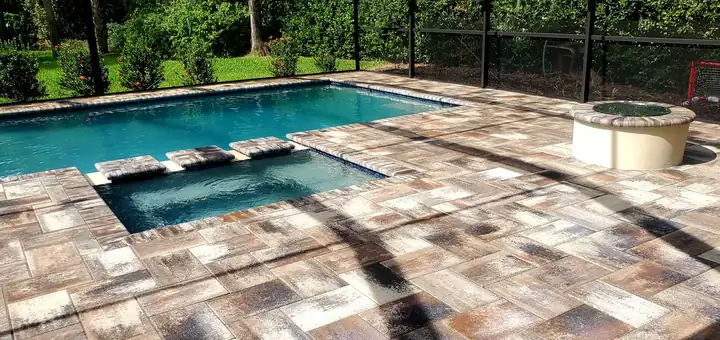
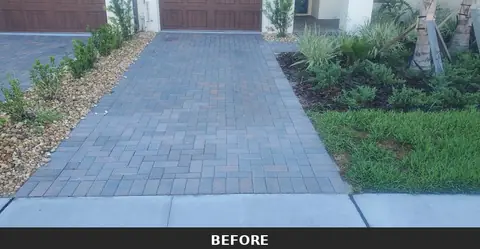
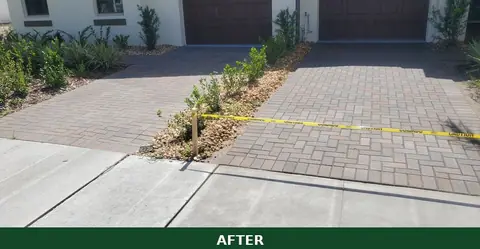
The Sealers We Use
- Trident Hurricane CAT 5: 2-part urethane, wet look, strongest joint stabilization.
- Trident Cyclone: natural, non-enhancing look.
- Break Wall and Sea Wall: invisible penetrating sealers for natural stone.
Compare finishes on our sand colors and sealer finishes page.
Florida Paver Sealer Types Compared
Store shelves and contractor trucks carry four main kinds of paver sealer. Here's how they hold up in Florida sun, rain, and humidity.
| Sealer Type | Look | Strengths in Florida | Watch Out for |
|---|---|---|---|
| Water-based acrylic | Natural to light sheen | Low odor, breathable, easy to recoat | Wears faster in full sun and on driveways |
| Solvent-based acrylic | Glossy wet look | Strong color enhancement, popular at big-box stores | Can trap moisture and turn white or cloudy on damp Florida pavers |
| Urethane or acrylic-urethane | Enhanced to wet look | Tougher film, better UV and tire resistance, strong joint stabilization | Needs careful prep and dry weather to apply |
| Penetrating silane/siloxane | Invisible | No film to peel, breathable, great for salt and natural stone | Does not harden joint sand or add color |
Want the detail on carriers? Read water-based vs. solvent-based paver sealer.
Best Paver Sealer by Surface
- Concrete paver driveways: a joint-stabilizing urethane like Hurricane CAT 5, which stands up to hot tires and keeps sand in the joints.
- Pool decks and lanais: a breathable sealer with good slip resistance. Ask about our slip-resistant add-on, and read is wet look paver sealer slippery?
- Clay brick pavers: a breathable sealer applied lightly, since clay absorbs less than concrete.
- Travertine and marble: an invisible penetrating sealer for natural stone, or an enhancing stone sealer if you want deeper color.
- Shellstone and coquina: a penetrating sealer only, applied after a gentle clean. See our shellstone and coquina care guide.
- Waterfront and seawalls: a solvent-based penetrating sealer like Trident Sea Wall for heavy salt exposure.
Store-Bought vs. Professional Paver Sealer
Big-box sealers are made to be forgiving for weekend use, which usually means thinner protection and shorter life. Professional sealers like Trident's are stronger, but they require proper cleaning, dry pavers, correct dilution or mixing, and the right number of coats. Most of the sealer stripping jobs we do started with the wrong product or a rushed application, not a bad paver. If you plan to do it yourself, read DIY paver sealing vs. hiring a pro first.
How Long Paver Sealer Lasts in Florida
With Hurricane CAT 5, most of our customers report 3 to 4 years between reseals. Full sun, heavy vehicle traffic, irrigation overspray, and trees overhead all shorten that window. When water stops beading and soaks in quickly, it's time to reseal. Read more in how long paver sealer lasts in Florida.
Why Hurricane CAT 5 Is Our First Choice
For most Florida paver driveways, patios, and pool decks, we choose Hurricane CAT 5. It has twice as much urethane as other brands, which adds up to commercial-grade protection, excellent color enhancement, and strong joint stability. Most of our customers report 3 to 4 years before they need a reseal.
Get a recommendation for your own surface, sun, and finish with our interactive sealer selection guide.
Comparing sealer types? Read water-based vs. solvent-based paver sealer.
Does an amazing job. There was great communication and the pavers came out great!
The Best Paver Sealer for Florida: What Actually Matters FAQs
Is water-based or solvent-based sealer better in Florida?
Breathable water-based sealers are popular here because Florida pavers are often damp, and they're less likely to trap moisture. Solvent-based sealers have their place, mainly for heavy salt exposure.
What sealer do you use?
We use Trident sealers, including Hurricane CAT 5 for wet-look joint stabilization, Cyclone for a natural look, and Break Wall or Sea Wall for natural stone.
Can I buy professional sealer myself?
Some products are sold for professional use only and require mixing and dilution. Results depend heavily on prep and application.
What is the best paver sealer for Florida?
For most pavers we use Trident Hurricane CAT 5. It has twice the urethane of other brands, and most customers report 3 to 4 years between reseals.
What is the best sealer for pavers around a pool in Florida?
A breathable, joint-stabilizing sealer with good traction. We often use Hurricane CAT 5 with a slip-resistant additive on concrete pavers, and a penetrating sealer on travertine.
Is wet look or natural sealer better in Florida?
Both work. Wet look deepens color and adds shine; natural keeps the original look. Choose wet look for faded concrete pavers and natural for a matte finish or stone.
Why does paver sealer turn white in Florida?
Usually trapped moisture under a non-breathable or overapplied sealer, or efflorescence that was not removed first. The fix is stripping and resealing with a breathable product.