
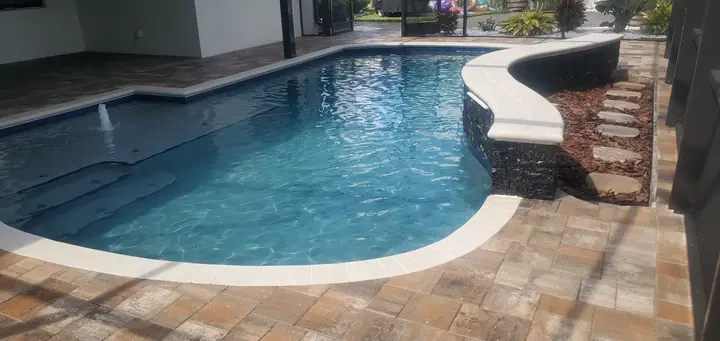
Wet look sealers give pavers a rich, just-rained shine. The trade-off is that glossy surfaces can feel slicker when wet, especially around pools.
What Makes Sealed Pavers Slippery
- High-gloss finishes
- Too much sealer applied in one area
- Shady spots that stay damp and grow algae
Trident notes that excessive application can make a surface slippery and that some surfaces may need an anti-slip additive.
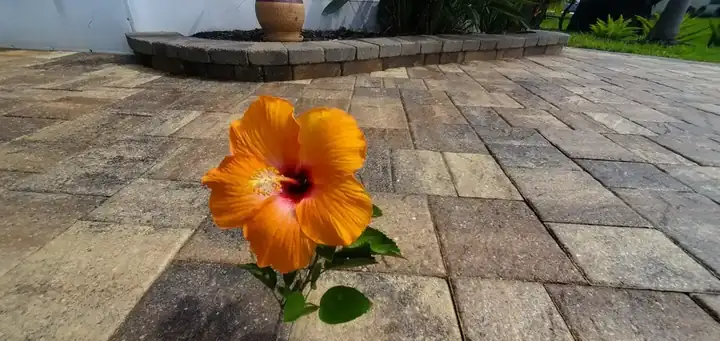
How We Keep It Safe
- Correct dilution and thin, even coats
- Natural finishes for pool decks when you prefer
- An optional slip resistant additive for an additional charge
Have a stone pool deck? Read is travertine slippery when wet?
Managing a community or rental pool? Read pool deck slip safety for property owners.
Sam and Steve are total professionals! Their service and product are superb and our pavers look phenomenal. They also ensure the area and pool has been cleaned and vacuumed to ensure they leave it better than they found it. I am totally impressed with this company. Highly recommended if you want an HONEST AND COMPLETE job.
Is Wet Look Paver Sealer Slippery? FAQs
Does every sealer make pavers slippery?
No. Natural, penetrating sealers barely change the feel. Glossy finishes and heavy coats are the ones that can feel slick when wet.
Can you add slip resistance?
Yes. We offer a slip-resistant additive mixed into the sealer for an additional charge.
Is slip resistance worth it on a pool deck?
For families with kids or older relatives, or decks that stay damp, it's a smart, low-cost upgrade.