
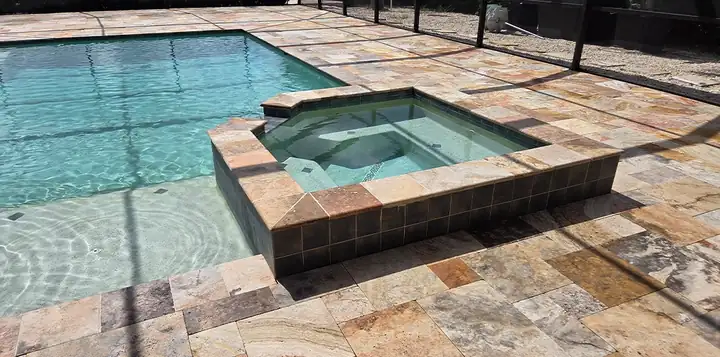
Not every surface needs a shiny coating. For travertine, marble, limestone, and many coastal surfaces, the best protection is a penetrating sealer that works from the inside.
How Penetrating Sealers Work
Penetrating sealers use silane and siloxane chemistry that soaks into the pores and reacts there, creating a water-repellent zone below the surface. Because there's no film on top, there's nothing to peel, scuff, or turn cloudy, and moisture vapor can still escape.
The Penetrating Sealers We Use
| Product | Base | Best for |
|---|---|---|
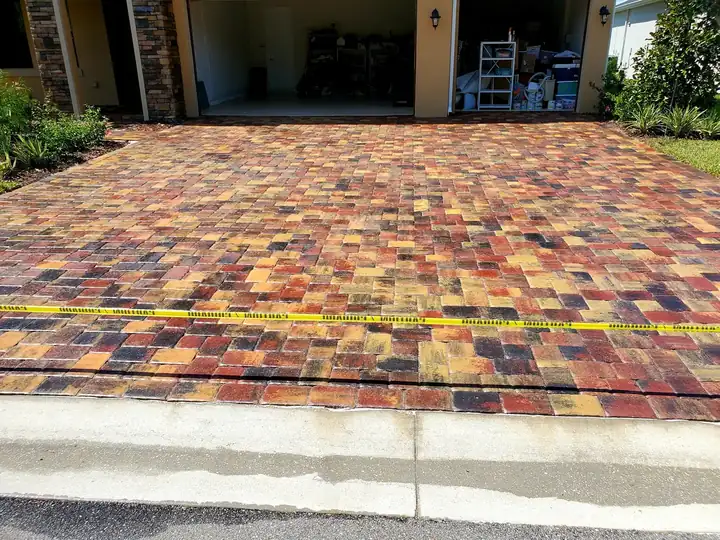
| Trident Break Wall | Water-based, low VOC | Pool decks, patios, walkways, driveways, travertine and pavers |
| Trident Sea Wall | Solvent-based | Seawalls, docks, and areas with heavy salt exposure |
For a side-by-side comparison and stone-specific advice, see marble and stone sealing products.
Best Penetrating Sealer for Natural Stone
Natural stone breathes, absorbs water, and reacts to salt and acids differently than concrete pavers. A penetrating sealer is usually the best choice because it protects from inside the stone without changing how it looks or feels underfoot.
| Stone | What It Needs | Our Usual Choice |
|---|---|---|
| Travertine pool decks | Breathable, invisible, salt and chlorine resistant | Trident Break Wall |
| Marble pavers | Stain and water protection without a film that can scuff | Penetrating stone sealer; enhancing option for deeper color |
| Limestone | Deep penetration in a very absorbent stone | Penetrating stone sealer, applied in more than one coat when needed |
| Shellstone and coquina | Gentle protection that keeps the natural texture | Penetrating sealer only |
| Seawalls, docks, heavy salt | Maximum salt and water repellency | Trident Sea Wall (solvent-based) |
Learn more on travertine sealing, marble paver sealing, and limestone and marble care.
Does Your Stone Need a Penetrating Sealer?
Try the water test. Pour a little water on a dry spot. If it darkens the stone and soaks in within a minute or two, the stone is unprotected and absorbing water, salt, and stains. If it beads up and sits on top, your current sealer is still working.
How We Apply a Penetrating Sealer
- Clean with a stone-safe, pH-neutral cleaner and remove efflorescence or old coatings.
- Let the stone dry completely so the sealer can soak in.
- Test a small area to confirm the look and absorption.
- Apply evenly and remove any excess from the surface before it dries.
- Keep it dry while it cures, following the manufacturer's timing.
Penetrating vs. Film-Forming Sealers
- Penetrating: invisible, breathable, no peeling. Best for natural stone and salt exposure.
- Film-forming: adds color and shine, and joint-stabilizing types harden the sand. Best for concrete pavers.
Not sure which you need? We'll recommend the right sealer during your free estimate and test it on a small area first.
Penetrating Sealers Documents
Official manufacturer information, including the Technical Data Sheet (TDS) and Safety Data Sheet (SDS). Links open the manufacturer's current versions.
Customer Reviews: Penetrating Sealers
Steve and Sam are the hardest working guys you will find. Their knowledge, professionalism and attention to detail is impressive. Covering my plants, cleaning the pool, picking up debris and respect of my propery gave the impression they were working at their own home. The finished product is amazing. Thanks again guys.
Wonderful experience from start to finish. They sealed our patio three years ago, and we were so pleased that we had them back again today. This time they also sealed our landscaping curbing, and everything looks fantastic. Great customer service and excellent workmanship—we couldn’t be happier.
Sam & Steve are the best. We are repeat customers. They sealed the deck around the pool, driveway and porch. They do a professional job with great attention to detail. They also do a great job of cleaning up afterwards. Everything looks great and lasts for a good deal of time. We highly recommend them!
More Reading on Penetrating Sealers
Penetrating Sealers FAQs
What is a penetrating sealer?
A sealer that soaks into the surface and bonds inside the pores, instead of forming a film on top. It repels water and salt while letting moisture vapor escape.
Will a penetrating sealer change the look of my stone?
Break Wall and Sea Wall are invisible. Your stone or pavers keep their natural color and texture.
Does a penetrating sealer stabilize joint sand?
Not the way a joint-stabilizing sealer does. For pavers where sand loss is the main problem, we use a joint-stabilizing sealer like Hurricane CAT 5 or Cyclone.
How do I know when to reapply?
When water stops beading and soaks in quickly, it's time. Sun, traffic, salt exposure, and cleaning all affect how long it lasts.
What is the best penetrating sealer for travertine?
For most Florida travertine pool decks and patios we use Trident Break Wall, a water-based, low-VOC penetrating sealer that stays invisible and lets the stone breathe.
Is a penetrating sealer slippery?
No. Because it soaks in instead of coating the surface, a penetrating sealer keeps the natural texture and traction of the stone.
How long does a penetrating sealer last on natural stone?
Often several years, depending on sun, salt, traffic, and cleaning. Use the water test once a year; when water soaks in quickly, it is time to reapply.