
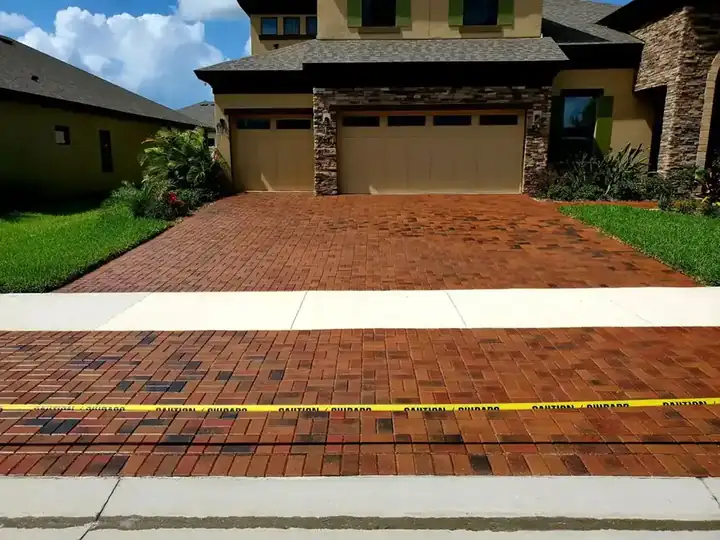
Few things are more frustrating than paying to seal your pavers and seeing them turn white or milky. Here are the usual causes.
Common Causes
- Trapped moisture. Some sealers, especially solvent-based ones, turn white if applied over damp pavers.
- Efflorescence under the sealer. Salts rose to the surface and were sealed in. See efflorescence.
- Too much sealer. Heavy coats can trap air and moisture.
- Incompatible products. A new sealer applied over a different old one.
How to Fix White or Cloudy Sealer
Most persistent cloudiness requires stripping the old sealer, cleaning, re-sanding, and resealing with a breathable sealer applied at the right dilution.
Before adding another coat, see when sealing over old sealer fails.
Sam and Steve are the best in the area at what they do. We used another paver company when we had to have our pavers repaired and they would only do it if they could seal it too. Long story short after peeling sealant and it being slippery as ice, we called Sam and Steve. They had to use a stripping compound to remove the old before sealing our pavers. Learn from us....use the best company in the area Paver Sealing Florida. Their workmanship and effort to detail is a joy to watch. You won't regret calling Sam and Steve.
Why Is My Paver Sealer White or Cloudy? FAQs
Will cloudy sealer go away on its own?
Light haze from humidity sometimes clears as it cures. Cloudiness that lasts more than a few days usually needs correction.
Can cloudy sealer be fixed without stripping?
Occasionally, but most persistent white or milky sealer has to be stripped and the pavers resealed.
How do you prevent cloudy sealer?
Proper drying time, removing efflorescence first, the right sealer for the surface, and the correct dilution and number of coats.