
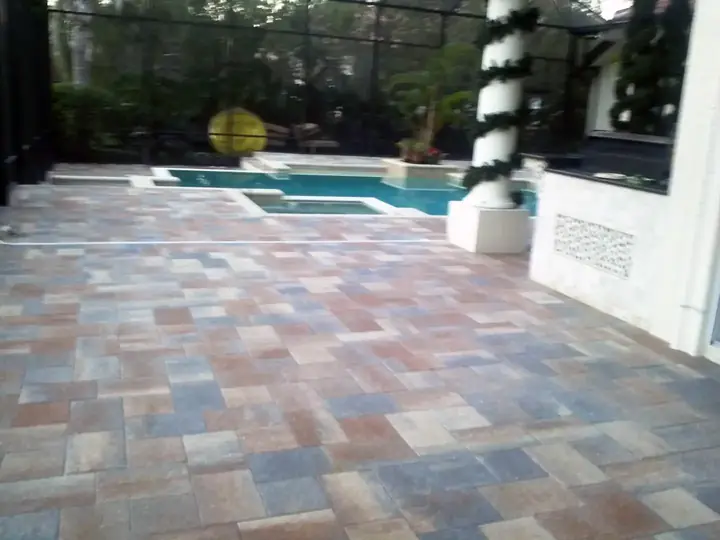
Most resealing jobs go right over the existing sealer, and that's normal. A recoat bonds well when the old sealer is clean, well attached, and compatible with the new product. When the old coat is peeling, cloudy, or a different chemistry, sealing over it locks the problem in, and the new coat fails along with the old one.
When Recoating Over Old Sealer Works
- The old sealer is worn thin but still firmly bonded, with no flaking or white patches.
- You know what was used, or a test patch shows the new sealer bonds and dries clear.
- The surface can be cleaned thoroughly, including mildew, rust, and oil, without damaging the old coat.
- The joints can be re-sanded so the new sealer locks fresh sand in place.
Warning Signs the Old Sealer Has to Come Off
| What You See | What It Usually Means | Usual Fix |
|---|---|---|
| Peeling or flaking | The old coat lost its bond | Strip, then reseal |
| White, milky, or cloudy patches | Trapped moisture or too much sealer | Sometimes a solvent treatment; often stripping |
| Dark, blotchy, or shiny-then-dull areas | Layers built up over years | Strip back to bare pavers |
| Sticky or soft film | Wrong product or poor cure | Strip, then reseal |
| Unknown product from a quick, cheap job | Possible compatibility problem | Test patch first |
How We Test Old Sealer Before a Recoat
- Look and feel. We check for peeling, cloudiness, tackiness, and how much film is left.
- Water drop test. Water that beads means sealer is still working; water that soaks in quickly means it's worn through.
- Tape test. Tape pressed on and pulled off shouldn't lift flakes of sealer.
- Test patch. A small area of the new sealer shows how it bonds and dries before we commit the whole surface.
Why Mixing Sealer Types Causes Trouble
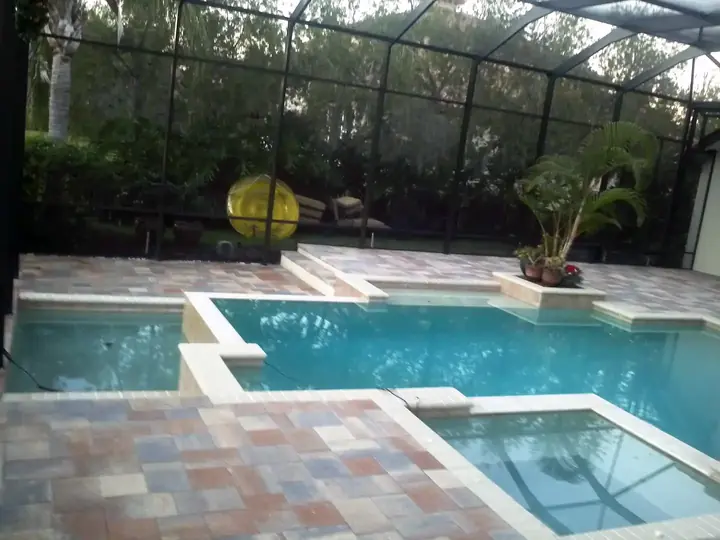
Water-based and solvent-based sealers don't always bond to each other. A product that can't grip the coat below may cloud, peel, or stay soft. We use a water-based 2-part urethane, so we check what's already on the pavers before recoating. Learn more in water-based vs. solvent-based paver sealer.
What Stripping Costs, and Why Experience Matters
Full stripping and restoration of pavers, travertine, and stone typically runs $3.00 to $5.00 per square foot, often double the original sealing job. Most of that work comes from removing a heavy, wrong, or failed coat that went down cheaply. Read about the process on our paver sealer stripping page and see why sealer turns white or cloudy.
We test and recoat or strip pavers across FishHawk, Apollo Beach, Valrico, and the rest of Tampa Bay.
We hired them after seeing the quality of their work at several of our neighbors.
They even had to strip off the old, incompletely applied, sealant first, in order to ensure that the new sealant would last and would look good.
We were very pleased with the end result and found them to be very professional and knowledgeable.
Can You Seal over Old Paver Sealer? FAQs
Can you put new sealer over old sealer on pavers?
Yes, if the old sealer is clean, firmly bonded, and compatible. Peeling, cloudy, or unknown sealer should be tested first and may need stripping.
How do I know if my old paver sealer is failing?
Peeling, flaking, white or cloudy patches, blotchy dark areas, and a sticky film are the common signs.
Can water-based sealer go over solvent-based sealer?
Not always. Different chemistries may not bond, so a test patch is the safe way to know before sealing the whole surface.
Do pavers need to be stripped before resealing?
Only when the old sealer has failed, built up in layers, or isn't compatible. A sound, worn coat can usually be cleaned and recoated.
How much does it cost to strip paver sealer?
Full stripping and restoration typically costs $3.00 to $5.00 per square foot in Tampa Bay, often double the original sealing job.
Will a new coat fix cloudy sealer?
Usually not. Sealing over cloudy sealer traps the haze under the new coat, so the cause has to be treated first.