
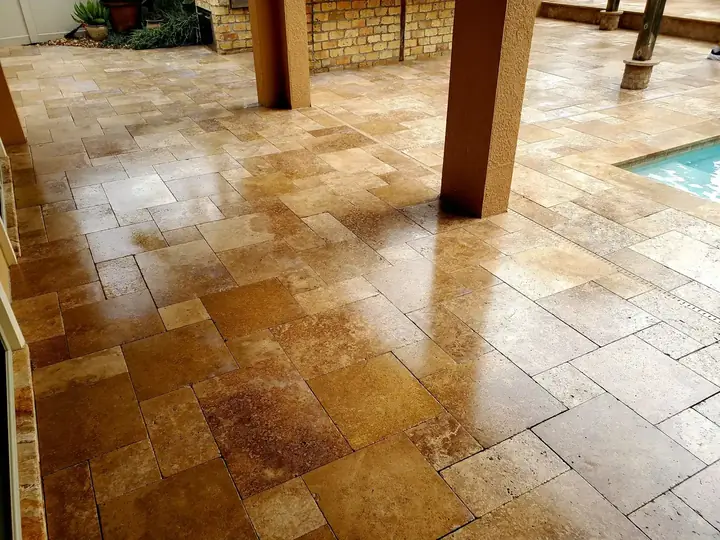
Shop for paver sealer and you'll quickly run into two families: water-based and solvent-based. Both can look good on day one. In Florida's humidity and afternoon storms, how they handle moisture makes a big difference a few months later.
The Main Differences
| Item | Water-based | Solvent-based |
|---|---|---|
| What Carries the Resin | Water | Chemical solvents |
| Odor and Fumes | Low | Strong; needs ventilation and care around plants and pets |
| Look | Natural to wet look depending on product and coats | Often a deep, glossy wet look |
| Moisture Problems | Much less prone to turning white | Can blush white or cloudy if moisture is trapped |
| Recoating | Compatible products recoat well | Builds up over time; layers can peel or haze |
| Cleanup | Water | Solvents |
Why Moisture Matters in Florida
Solvent sealers form a tight film. If the pavers or joint sand still hold moisture from rain, sprinklers, or a damp base, that moisture can get trapped and turn the sealer milky white. In Tampa Bay that's a real risk much of the year. It's one of the main reasons we see white or cloudy sealer and end up stripping it.
What We Use
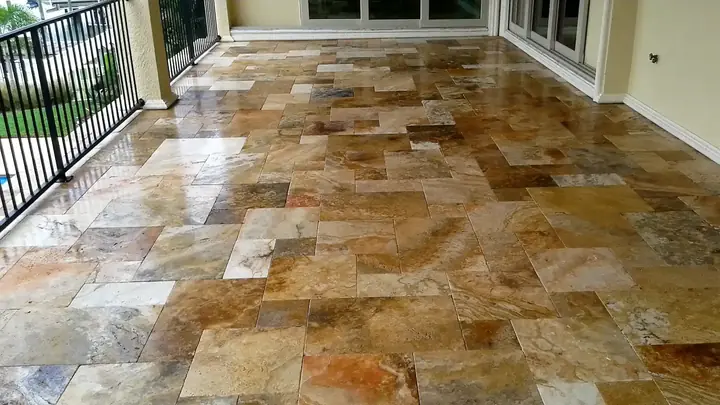
We use high-quality, water-based urethane sealers from Trident Protects, like Hurricane CAT 5 for a wet look on concrete pavers and Cyclone for a natural look. For travertine and marble we use breathable penetrating sealers that soak into the stone instead of coating it.
Can You Switch From Solvent to Water-Based?
Not always directly. Some water-based sealers won't bond well over an existing solvent film. If the old sealer is sound, a compatible product can sometimes go over it after a test patch. If it's peeling or cloudy, it should be stripped first. We test before we seal.
Which Is Better?
For most Florida driveways, patios, and pool decks, a quality water-based urethane is the safer choice: less odor, fewer moisture problems, and easier future recoats. Want a glossier look? That comes from the product and the number of coats, not from solvent. Compare finishes in wet look vs. natural paver sealer and read the best paver sealer for Florida.
Steve and Sam are great! They did an immaculate job sealing my driveway pavers and left the place spotless at a reasonable price. I highly recommend this company!
Water-based vs. Solvent-Based Paver Sealer FAQs
Is water-based or solvent-based paver sealer better?
In Florida, a quality water-based urethane is usually the safer choice. It has less odor and is much less prone to turning white from trapped moisture.
Why did my solvent sealer turn white?
Moisture trapped under the film, from damp pavers, rain too soon, or humidity, can turn solvent sealer milky white. It often needs reviving or stripping.
Does water-based sealer give a wet look?
Yes. Wet-look water-based urethanes like Hurricane CAT 5 give a rich, enhanced look. Sheen depends on the product and number of coats.
Can I put water-based sealer over solvent-based sealer?
Sometimes, if the old sealer is sound and a test patch bonds well. Failing solvent sealer should be stripped first.
What sealer do you use?
Water-based urethane sealers from Trident Protects on concrete pavers, and breathable penetrating sealers on travertine and marble.
Does solvent sealer last longer?
Not necessarily. Lifespan depends more on prep, joint sand, coats, and traffic than on the carrier.