
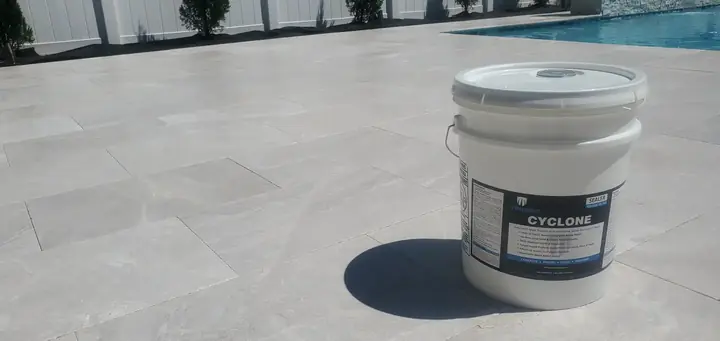
White and light gray marble pool decks look crisp when they're new. Over a few years, some turn cream, then yellow or brownish, especially in patches. Yellowing has a handful of causes, and the fix depends on which one you have. Some come off completely; one can be permanent.
What Causes Outdoor Marble to Yellow
| Cause | What It Looks Like | Usual Fix |
|---|---|---|
| Yellowed sealer | Even yellow or amber tint, often with a film or sheen | Strip the old sealer and reseal with a UV-stable, non-yellowing product |
| Dirt trapped in sealer or pores | Dingy, darker traffic lanes and edges | Deep cleaning with stone-safe cleaners |
| Iron in the stone | Yellow to rusty spots or veins, often after bleach or constant moisture | Iron-specific poultice; may lighten but not fully clear |
| Rust from irrigation or fertilizer | Orange-brown stains along beds and sprinkler arcs | Stone-safe rust treatment and fixing the source |
| Organic tannins | Tea-colored stains under trees and planters | Oxygen cleaner or a peroxide poultice |
How to Tell Which One You Have
- Scrape a small, hidden spot. If yellow film comes off and the stone underneath is lighter, it's the sealer.
- Look at the pattern. Even color across the whole deck points to sealer; spots and veins point to iron; arcs and edges point to irrigation.
- Check under furniture and planters. Covered areas that stayed white suggest sun-yellowed sealer.
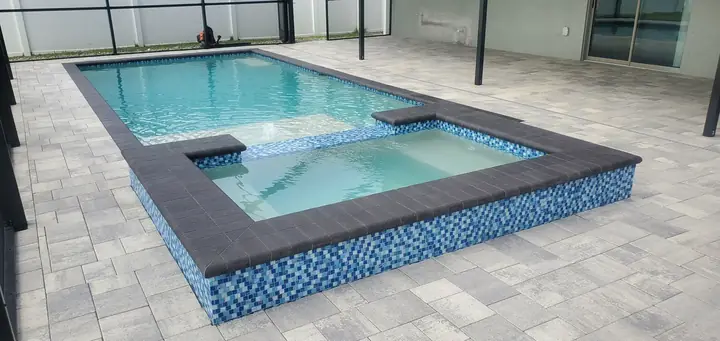
Fixing Yellowed Sealer
Some older solvent-based acrylic sealers yellow under strong UV, and heavy coats yellow faster. Sealing over them locks the color in. The fix is stripping back to bare stone and resealing with a breathable, non-yellowing sealer. Full stripping and restoration is estimated at $3.00 to $5.00 per square foot, depending on the buildup and the condition of the stone. See sealer stripping and sealing over old sealer.
Iron Staining in Marble
Some marbles contain natural iron. Constant moisture or chlorine bleach can oxidize it, turning spots and veins yellow or rusty from inside the stone. An iron-specific poultice often lightens it, but deep iron staining may never fully clear. Avoid bleach on marble for this reason. Read removing marble stains with a poultice.
How to Keep Marble From Yellowing
- Use a breathable, UV-stable sealer made for natural stone.
- Clean with pH-neutral, stone-safe products, never bleach or acid.
- Aim sprinklers away from the deck and use well water filters where needed.
- Rinse off leaves, fertilizer, and pool chemicals promptly.
See outdoor marble cleaning do's and don'ts and our marble paver sealing service. We restore exterior marble in Apollo Beach, Valrico, New Tampa, and across Tampa Bay.
We had Sam and Steve come out to clean, sand, and seal our outdoor pool area travertine . We are very happy with the results !!
They took the time to thoroughly clean the surface, and address problem areas. The sealant they use is fantastic. Does not leave a thick film. Our travertine looks brand new, with a beautiful, natural finish that really enhances the entire pool area. You can tell they take pride in their work, and it shows in the final result. Reasonably priced too!
Why Outdoor Marble Turns Yellow FAQs
Why is my white marble pool deck turning yellow?
Usually yellowed sealer, trapped dirt, iron in the stone, or rust from irrigation. The pattern of the yellowing usually tells which.
Can yellow sealer be removed from marble?
Yes. Yellowed sealer can be stripped back to bare stone, then resealed with a breathable, non-yellowing sealer.
Does bleach turn marble yellow?
It can. Bleach can oxidize natural iron in some marbles, leaving yellow or rusty spots inside the stone.
Is yellowing in marble permanent?
Sealer, dirt, rust, and organic stains usually come out. Deep iron staining from inside the stone may lighten but not fully clear. We handle this with our outdoor marble stain removal.
How do I keep outdoor marble from yellowing?
Use a UV-stable sealer, stone-safe cleaners, keep sprinklers off the deck, and rinse off leaves and fertilizer promptly.