
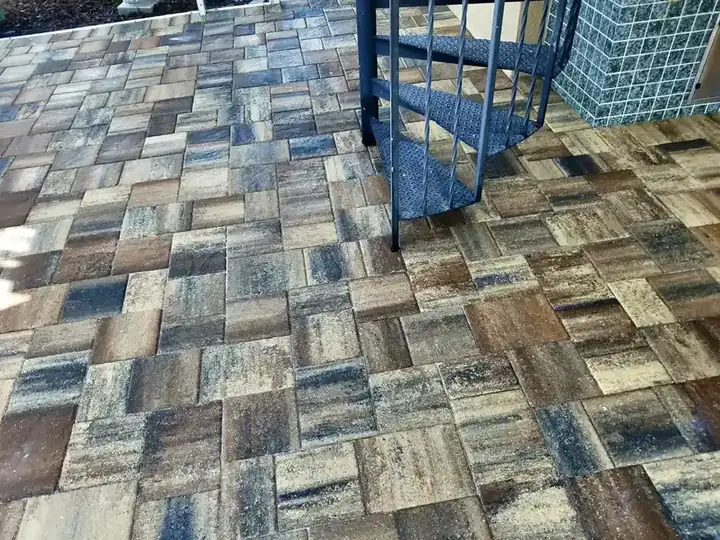
Efflorescence is a white, chalky haze that shows up on concrete pavers, travertine, and mortar. Moisture inside the material carries natural salts to the surface, the water evaporates, and the salts stay behind.
Quick answer: Efflorescence on pavers is a white, powdery haze of natural salts that moisture carries up from the concrete or the ground. It is common on new pavers and after heavy rain. Light paver efflorescence often fades on its own over several months; heavy buildup should be removed with an efflorescence cleaner before sealing, or the sealer will lock the haze in.
Where We See It Most
- New paver installations
- Travertine around salt water pools
- Covered areas that stay damp
- Retaining walls and mortar joints
Why It Matters Before Sealing
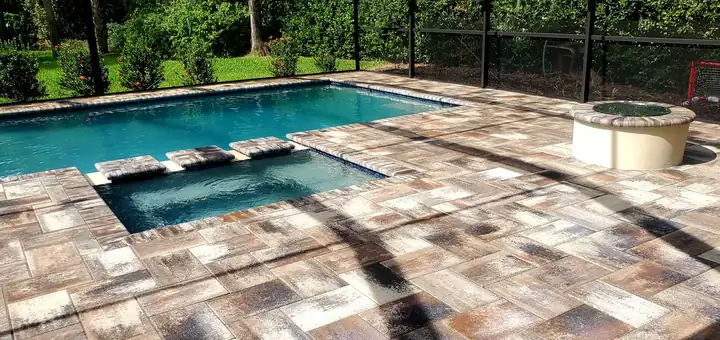
Sealing over efflorescence traps the haze under the finish, where it looks cloudy until the sealer wears off. That's why we always remove it first. See when you can seal new pavers.
How We Remove It
- Identify it (efflorescence vs. old sealer vs. mineral deposits).
- Test an efflorescence cleaner on a small area.
- Apply, agitate, and rinse thoroughly while the cleaner is still wet.
- Let the surface dry, then sand and seal with a breathable sealer.
Product documents for Trident White Water are linked below.
What Causes Efflorescence on Pavers
Concrete pavers, mortar, and stone contain natural calcium salts. When water soaks in from rain, sprinklers, a high water table, or a damp base, it dissolves some of those salts and carries them to the surface. As the water evaporates, the salts react with the air and dry into a white film of calcium carbonate. That's why it shows up most on new pavers, on pool decks, and in spots that stay wet.
Will Efflorescence Go Away on Its Own?
On new pavers it often fades over several months as rain and foot traffic wear it off and the pavers run out of loose salts. Heavy or recurring efflorescence usually points to a moisture source, like constant sprinkler overspray, poor drainage, or a wet base, and it can keep coming back until that's fixed.
Efflorescence vs. Cloudy Sealer
| Clue | Efflorescence | Cloudy or White Sealer |
|---|---|---|
| Feel | Dry, powdery, or crusty on top | Smooth; the haze is inside the coating |
| When it shows | New pavers, damp areas, after rain | After sealing, often in humid weather or over damp pavers |
| Fix | Efflorescence cleaner, rinse, then seal | Revive or strip the sealer; see why paver sealer turns white |
How to Keep Efflorescence from Coming Back
- Wait to seal new pavers until the first heavy bloom has passed; see when you can seal new pavers.
- Aim sprinklers away from pavers and fix low spots that hold water.
- Use a breathable sealer that lets moisture vapor escape, especially on travertine and pool decks.
- Avoid acid cleaners on travertine and marble; they etch the stone. See how to clean a travertine pool deck.
Efflorescence Documents
Official manufacturer information, including the Technical Data Sheet (TDS) and Safety Data Sheet (SDS). Links open the manufacturer's current versions.
Customer Reviews: Efflorescence
Steve and Sam Sadler were great. We recently moved into our home and had stained and dingy pavers around the entire pool deck. Many weeds starting to pop up between the joints of the pavers in many areas. Steve thoroughly explained the multi step procedure to clean, resand and seal the pavers. They arrived exactly when they said and were very efficient and thorough! They cleaned up entire area when they were done and the pool deck looks amazing. Highly recommend this company and these brothers. Fee was more than reasonable for the work that was done. Very pleased with the whole experience!
Sam & Steve did a great job, worked fast, removed all stains, and applied 3 coats of sealer. The pavers actually sparkle in the sun with the paver color shining throughout the pool deck. I was worried about the sand used around the pool area, but when they were done it was not gritty, and looked sharp. They did a wonderful job, highly recommended, and will use them again when needed again.
Outstanding job on our paver driveway and porch. The very experienced team removed oil stains and tire cleaner that I thought I was stuck with. It probably helped that they had sealed our driveway 3 years ago. Definitely, recommend; thank you Sam & Steve!
More Reading on Efflorescence
Efflorescence FAQs
Is efflorescence a defect?
No. It's a natural process where salts inside concrete or stone travel to the surface with moisture.
Will efflorescence go away on its own?
It often fades over the first months, but it can keep coming back. It must be removed before sealing.
What do you use to remove it?
We use efflorescence cleaners made for pavers and stone, such as Trident White Water, at the dilution the surface needs, and test first.
Will efflorescence go away by itself?
On new pavers it often fades over several months. If it keeps coming back, there's usually a moisture source like sprinkler overspray or poor drainage to fix.
Can I seal over efflorescence?
No. Sealing over it traps the white haze under the finish. It should be cleaned off and the pavers dried before sealing.
Is efflorescence the same as white sealer?
No. Efflorescence is powdery salt on the surface. White or cloudy sealer is moisture or a problem inside the coating, and it needs a different fix.
Can you seal over efflorescence?
No. Sealing over it traps the salts under the sealer and leaves a cloudy, white finish. We remove it first, let the pavers dry, then seal.
Is efflorescence a sign of bad pavers?
No. It is a normal reaction in concrete and stone, especially in new pavers and wet climates like Florida. It does not weaken the pavers.