
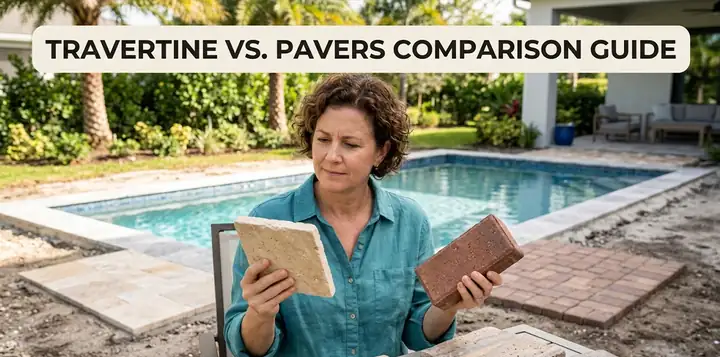
Concrete pavers and natural travertine are the two most popular choices for Florida patios and pool decks. Here's how they compare.
| Item | Concrete Pavers | Travertine |
|---|---|---|
| Look | Uniform shapes and colors, many styles | Natural stone with unique veining and holes |
| Heat Underfoot | Can get hot, especially dark colors | Light colors stay cooler |
| Upfront Cost | Usually lower | Usually higher |
| Durability | Very strong, good for driveways | Softer, best for foot traffic |
| Maintenance | Joint sand and sealing | Gentle cleaning and breathable sealing |
| Best Sealer | Joint-stabilizing (e.g., Hurricane CAT 5) | Penetrating or enhancing stone sealer |
Travertine vs. Pavers for Pool Decks
For pool decks, the biggest differences are heat, feel, and upkeep. Light travertine stays noticeably cooler under bare feet and has a soft, natural texture, which is why so many Florida pool decks use it. Concrete pavers cost less up front, come in more colors and patterns, and are easy to repair one at a time. Both can be slippery when wet if they're sealed with the wrong product, so we use breathable sealers and offer a slip-resistant add-on. Read is travertine slippery when wet? and pool deck options compared.
Travertine vs. Concrete Pavers: Upkeep and Sealing
| Item | Concrete Pavers | Travertine |
|---|---|---|
| Cleaning | Surface cleaner and mild detergents | pH-neutral, stone-safe cleaners only |
| Joints | Sand that needs refilling and stabilizing | Usually tight joints or grout; sand on some installs |
| Typical sealer | Joint-stabilizing sealer like Hurricane CAT 5 or Cyclone | Penetrating or enhancing stone sealer like Break Wall |
| Reseal | About every 3 to 4 years | About every 3 to 5 years |
| Common problems | Fading, sand loss, weeds, efflorescence | Etching, salt damage, filled holes opening up |
Already have one? See brick paver sealing, travertine sealing, or the travertine care guide.
Choose Pavers If
- You need a driveway surface
- You want lower upfront cost and easy repairs
Choose Travertine If
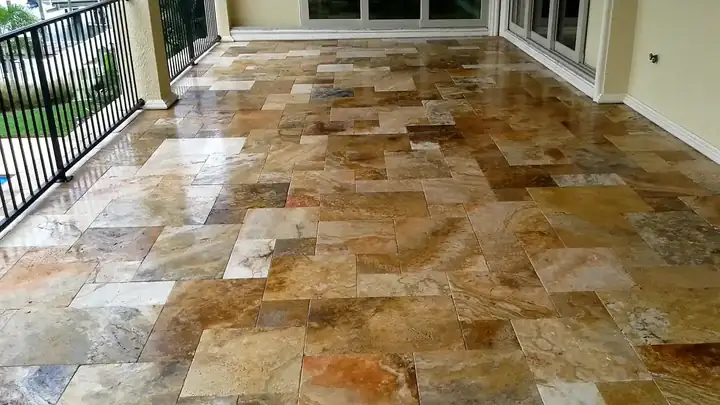
- You want a cooler, natural stone pool deck
- You prefer a high-end, barefoot-friendly look
Already have one? See brick paver sealing or travertine sealing.
Customer Reviews: Travertine and Pavers
Steve and crew are amazing. The guys truly care about the customer and provide great service. Highly recommend!!
Very professional. Sam and Steve did excellent work. First class.
Excellent work. Owners Actually do the work and take great care. Very please with the results!
More Reading
Travertine vs. Pavers FAQs
Is travertine cooler than pavers?
Light-colored travertine generally stays cooler underfoot than darker concrete pavers, which is why it's popular around pools.
Which lasts longer?
Both can last decades when installed and maintained properly. Pavers are easier to replace individually; travertine needs more careful cleaning.
Do both need sealing?
Both benefit. Pavers need joint-stabilizing sealer; travertine needs a breathable stone sealer.
Is travertine better than pavers for a pool deck?
For many Florida homes, yes: light travertine stays cooler and feels great barefoot. Pavers cost less up front and are easier to repair. Both last for decades when cleaned and sealed correctly.
Does travertine stay cooler than pavers?
Light-colored travertine usually stays cooler underfoot than concrete pavers, especially darker paver colors.