
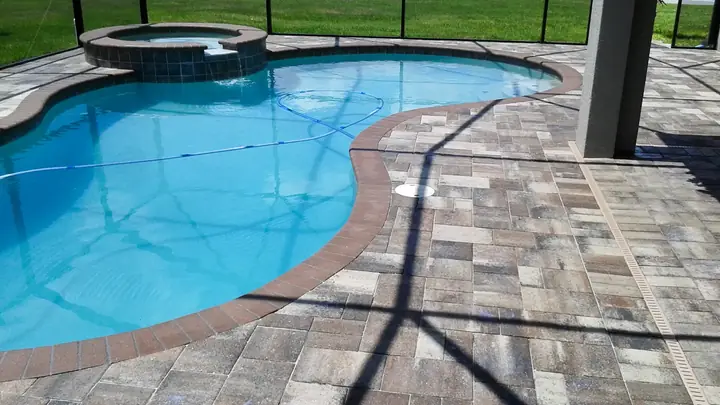
Remodeling a pool or replacing a cracked deck? In Tampa Bay the choice usually comes down to four options: concrete pavers, travertine, porcelain pavers, or a coating over concrete. Each one looks, feels, and ages differently in Florida sun and rain. We clean and seal all of them, so here's an honest comparison.
Florida Pool Deck Materials at a Glance
| Item | Concrete Pavers | Travertine | Porcelain Pavers | Coated Concrete |
|---|---|---|---|---|
| Look | Many colors and patterns | Natural stone, warm tones | Stone or wood looks, uniform | Solid color, textured |
| Heat Underfoot | Medium; darker colors get hot | Stays cooler than most | Depends on color and finish | Light colors stay cooler |
| Slip Resistance | Good; can add slip additive to sealer | Good when tumbled or brushed | Choose an outdoor-rated, textured finish | Textured finish helps |
| Repairs | Easy: lift and reset single pavers | Single stones can be replaced | Single pieces can be replaced | Cracks show and patches can be visible |
| Sealing | Every 2 to 4 years to protect color and joints | Breathable sealer every 2 to 4 years | Low-porosity tile; sealing is optional, joints benefit | Recoat as the coating wears |
| Best for | Value, color choice, easy repair | Luxury look, cooler feel | Modern look, low stain absorption | Budget refresh of sound concrete |
Concrete Pavers
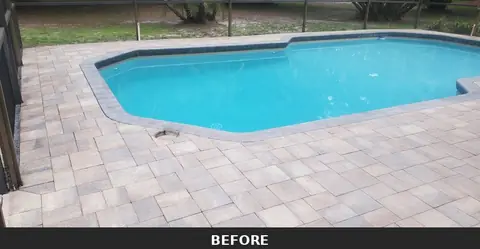
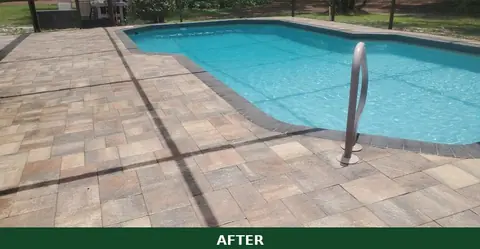
Pavers are the most common Florida pool deck. Individual units flex with sandy soil and can be lifted and reset if an area settles, which is a big plus over poured concrete. They fade in the sun and lose joint sand over time, so cleaning and paver sealing every few years keeps the color rich and the joints locked. See pool deck sealing.
Travertine Pool Decks
Travertine is a natural limestone that stays comfortable on bare feet and looks great around pools. It's softer and more porous than pavers, so it needs stone-safe cleaners and a breathable sealer, especially around salt systems. Learn more in types of outdoor travertine and travertine vs. pavers.
Porcelain Pavers
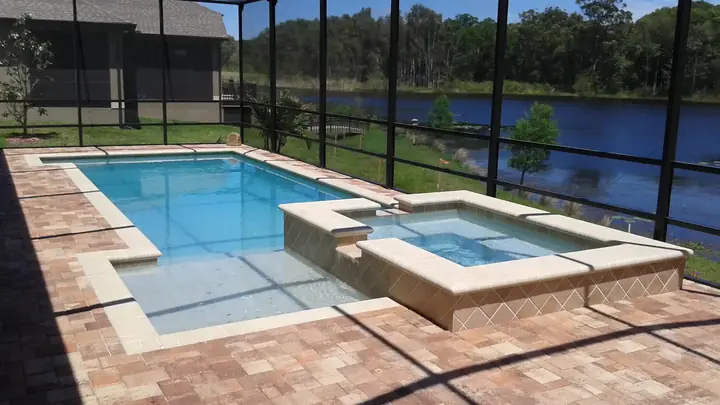
Porcelain is dense and absorbs very little water, so it resists stains and mildew. Choose a thickness and slip rating made for outdoor pool decks. Color matters for heat: dark porcelain can get hot in full sun. The joints still collect dirt and benefit from cleaning and stabilizing.
Coatings Over Concrete
Spray-on textures and acrylic coatings can refresh a sound concrete deck at a lower cost. They don't fix cracks in the slab, and they need recoating as they wear. If your concrete is cracked or settling, pavers or travertine over a proper base are a longer-term fix.
Already Have a Deck? Restore Before You Replace
Many decks that look worn out just need a deep clean, repairs, and a fresh seal. Faded pavers and dull travertine often come back to life for a fraction of the cost of tearing out. See paver restoration, travertine and marble repairs, and strip and reseal vs. replace. Building a new pool? We work with pool builders and paver installers to seal new decks at the end of the job.
Deciding between natural stones? Read marble vs. travertine outdoors.
Steve and Sam did such a wonderful job, took extra care of entire patio are, including vacuuming the pool, cleaned all our screens vacuum every doorway. What a great company. If you are looking for professional work I highly recommend them.
Pool Deck Resurfacing Options Compared FAQs
What is the coolest pool deck material in Florida?
Light-colored travertine is usually the coolest underfoot. Light-colored pavers, porcelain, and coatings also stay cooler than dark surfaces.
Are pavers or travertine better for a pool deck?
Pavers offer more colors and easy repairs at a lower cost. Travertine gives a natural stone look and a cooler feel but needs stone-safe care.
Do porcelain pavers need to be sealed?
Porcelain absorbs very little water, so sealing the tile itself is often optional. The joints still benefit from cleaning and stabilizing.
Can you resurface a pool deck without tearing it out?
Often, yes. Pavers and travertine can be restored with cleaning, repairs, and sealing. Sound concrete can be coated, and pavers or travertine can sometimes go over it.
Which pool deck is least slippery?
Textured surfaces like tumbled travertine, brushed finishes, and outdoor-rated porcelain grip well. Slip resistant additive can be added to paver sealer.
How long does a paver pool deck last?
The pavers themselves can last decades. Cleaning and resealing every 2 to 4 years keeps the color and joints in good shape.