
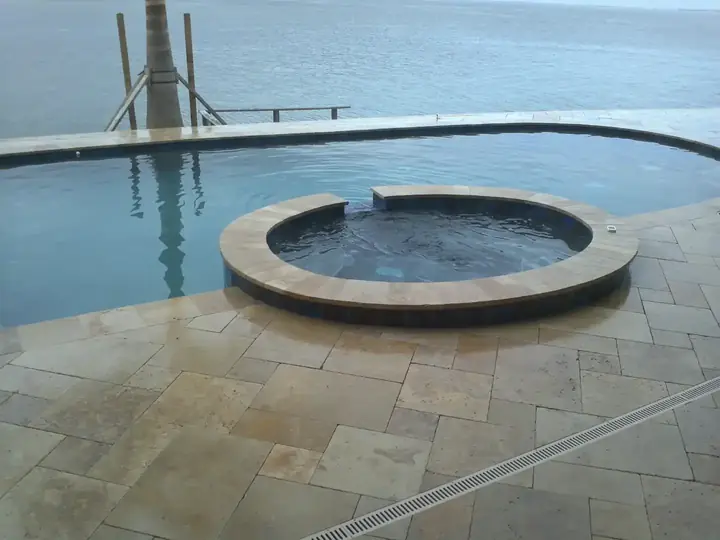
Marble and travertine are the two natural stones we see most on Tampa Bay pool decks and lanais. Both are calcium-based, both stay cooler underfoot than dark pavers, and both need stone-safe care. The differences show up in texture, porosity, stains, and how they look after sealing.
Marble and Travertine Side by Side
| Item | Marble | Travertine |
|---|---|---|
| Look | Veined, crisp, often white, gray, or cream | Earthy, warm tones with natural holes |
| Density | Denser, fewer pores | More porous; holes may be filled or open |
| Outdoor Finish | Tumbled, brushed, or sandblasted | Tumbled or brushed |
| Feel in Sun | Stays cool, light colors best | Stays cool, light colors best |
| Slip | Smooth finishes can be slick when wet | Textured finishes grip well |
| Stains | Light colors show rust and organics | Holes trap dirt and mildew |
| Acid Sensitivity | High; etches easily | High; etches easily |
| Resealing Outdoors | Every 2 to 4 years | Every 2 to 4 years |
Heat and Comfort on Bare Feet
Light stone reflects more sun than dark concrete pavers, so both feel cooler on a July afternoon. Color matters more than stone type: a light ivory travertine and a white marble both stay comfortable, while dark grays and walnuts heat up.
Slip Resistance Around the Pool
Outdoor stone should never be polished. Tumbled and sandblasted finishes give grip, and travertine's texture helps when wet. A smooth marble finish can be slick, so the sealer choice matters. See is travertine slippery?, our sandblasted marble page, and slip-resistant sealing.
Stains, Holes, and Everyday Upkeep
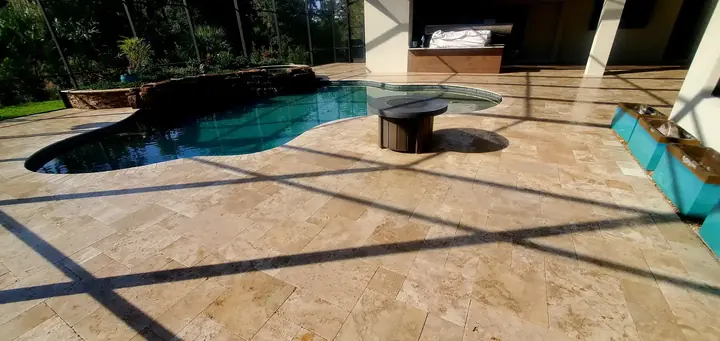
Travertine's holes collect dirt and mildew, and some open up over time. Marble shows rust and leaf stains on light colors. Both need pH-neutral cleaners, low pressure, and quick rinsing after pool chemicals. Read outdoor marble cleaning do's and don'ts and our travertine care guide.
Sealing Each Stone
Both take a breathable, stone-rated sealer. A natural look keeps the stone's color; an enhancing sealer deepens it, which brings out marble's veins and travertine's warm tones. Compare finishes on our travertine sealing and marble paver sealing pages, or read about limestone and marble.
We clean and seal exterior marble and travertine in Harbor Island, Apollo Beach, Wesley Chapel, and across Tampa Bay.
Great job sealing my pavers. Great customer service, everything looks great !
Marble vs. Travertine Outdoors FAQs
Is marble or travertine better for a pool deck?
Both work well. Travertine's texture gives better grip when wet, while marble offers a crisper, veined look. Light colors of either stay cool.
Is marble more slippery than travertine?
Smooth marble can be, but tumbled or sandblasted marble grips well. Travertine's texture is naturally slip-resistant.
Does marble stain more than travertine?
Marble is denser, but light marble shows rust and leaf stains clearly. Travertine's holes trap dirt and mildew.
Can you use the same sealer on marble and travertine?
Usually, yes. Both take a breathable, stone-rated sealer in a natural or enhancing finish.
Which stays cooler, marble or travertine?
Color matters more than stone type. Light marble and light travertine both stay cooler than dark stone or pavers.
Do marble and travertine both etch?
Yes. Both are calcium-based, so acids from cleaners, drinks, and pool chemicals can leave dull etch marks.