
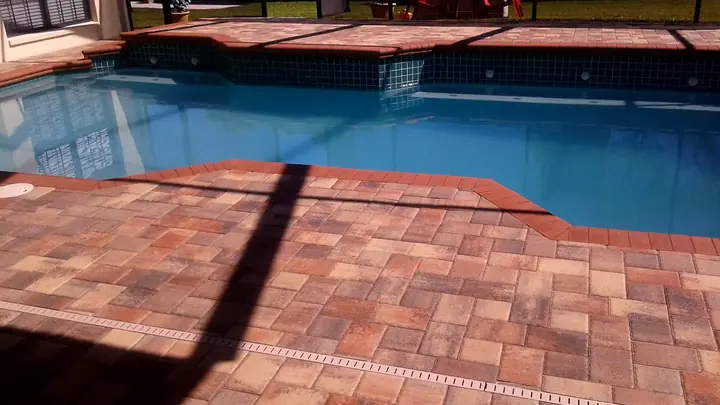
Sealing does most of the work, but a little maintenance makes the seal last longer and keeps your pavers looking their best.
Paver Maintenance in 5 Steps
- Sweep or blow off leaves and dirt weekly so tannins and mildew don't stain.
- Rinse with a garden hose monthly, and spot-clean oil, rust, and food spills right away.
- Pull weeds and top off joint sand as soon as joints look low.
- Check for low spots and loose edges once a year, and fix them before they spread.
- Clean and reseal every 2 to 5 years, or when water stops beading on the surface.
That's the whole routine. The rest of this guide explains each step for Florida weather, sun, and storms.
Every Month
- Sweep leaves, sand, and debris, especially oak leaves that stain.
- Rinse with fresh water, more often near salt water pools.
- Check sprinklers so they don't spray pavers, especially on well water.
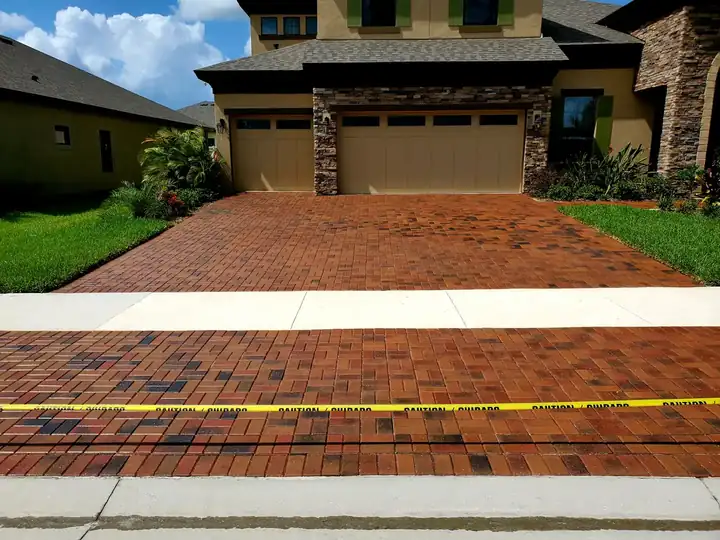
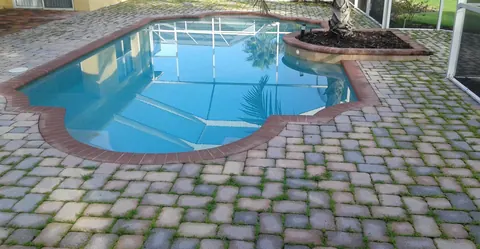
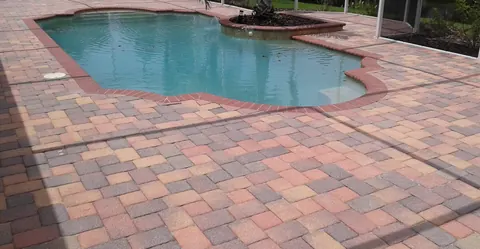
Every Few Months
- Spot clean mildew in shady areas with a mild cleaner and soft brush.
- Wipe up oil, grease, and food spills quickly.
- Look for empty joints, weeds, or ant activity.
Every Year
- Do the water test: water should bead, not soak in.
- Check for sunken spots or loose edges; schedule paver repairs and leveling if needed.
- Consider a professional paver cleaning.
Every 2 to 5 Years
Reseal. A professional clean, fresh joint sand, and a new coat of sealer reset the clock. Learn how long paver sealer lasts in Florida.
DIY Paver Maintenance vs. Calling a Pro
Most paver maintenance is easy to do yourself: sweeping, rinsing, spot-cleaning, and pulling the odd weed. Call a professional when pavers have sunk or shifted, when joints are washing out across the whole area, when sealer has turned white or is peeling, or when it's time to reseal. Those jobs need equipment, the right sand, and the right sealer. We offer paver cleaning and sealing, paver repair and leveling, and hardscape maintenance plans across Tampa Bay.
Paver Maintenance by Surface
| Surface | Routine Care | Reseal |
|---|---|---|
| Concrete paver driveway | Sweep, rinse, treat oil and tire marks quickly | Every 3 to 4 years with a joint-stabilizing sealer |
| Pool deck pavers | Rinse chlorine or salt splash often, keep coping clean | Every 2 to 4 years |
| Travertine and marble | pH-neutral stone cleaner only, no acids or bleach | Every 3 to 5 years with a penetrating sealer |
| Clay brick | Gentle cleaning, watch for moss in shade | As needed with a breathable sealer |
For stains, see the paver and stone stain removal chart.
Month-by-Month Paver Care Calendar for Tampa Bay
| Month | Pavers and Stone Checklist |
|---|---|
| January | Clear oak leaves often; check for low spots after winter rains |
| February | Spot-treat mildew on shaded walks and lanais |
| March | Do the water test; book cleaning and sealing for spring |
| April | Ideal sealing month; check sprinkler heads before summer |
| May | Finish sealing before hurricane season starts June 1; top off joint sand |
| June | Rainy season begins: watch for washed-out joints and ant piles |
| July | Rinse pool decks and coping often; treat algae early |
| August | Keep debris cleared before storms; check drains and downspouts |
| September | After storms, rinse silt and salt and check for sinking |
| October | Rainy season ends: a great time to clean and seal |
| November | Clear leaves; plan repairs before holiday guests |
| December | Wipe up spills from gatherings; sweep and rinse |
Rainy Season Checklist (June to September)
- Look for joint sand washing out after heavy storms, and re-sand before weeds move in.
- Keep sprinklers off pavers; the rain is doing the watering.
- Clear leaves and mulch quickly so they don't stain or feed mildew.
- Watch for new low spots or puddles, which can mean base washout.
- After a hurricane, follow post-storm paver and stone care.
Summer Pool Deck Care
- Rinse the deck and coping with fresh water every week, more often on salt water pools.
- Keep pool chemicals off the pavers and stone, and rinse splashes right away.
- Treat green algae and black mildew early; see mold, mildew, and algae on pavers.
- Travertine decks: use only stone-safe cleaners; see how to clean a travertine pool deck.
For timing, see the best time to seal pavers in Tampa Bay and how often to reseal.
Paver Care Mistakes to Avoid
- High-pressure washing with a narrow tip
- Rock salt or harsh acids
- Metal furniture feet without pads (rust)
- Letting fertilizer sit on pavers
Customer Reviews: Paver Maintenance Guide
Steve and his brother came by and did my patio pavers all in a day. The job looks phenomenal and they revived life into my pavers. Very happy with how professional and detailed they were with the job. All spots that had any plant growth were thoroughly dug out, chemically handled to kill the growth and then re sanded. Very pleased with their work and I will definitely be calling Steve again when it’s time to reseal.
I would give them 10 stars if I could. Steve came out the day after I called him on a Sunday. He was very professional & he explained every detail of what they would do, including cleaning all of the pavers including getting all of the mold & weeds that were coming thru them. He also said that they would clean the screens on the porch as well as the mold on the outside of the pavers outside the patio & our front porch. He said they would put 3 coats of sealant as well as fill the areas that needed sand. They even moved the heavy furniture. We went over the price which was great, & 2 days later while we were away and did everything he said they would & did a great job. Steve even came out when we got home to help move furniture back onto the porch. I will definitely use them again & tell all my friends about them.
Steve and Sam Sadler were great. We recently moved into our home and had stained and dingy pavers around the entire pool deck. Many weeds starting to pop up between the joints of the pavers in many areas. Steve thoroughly explained the multi step procedure to clean, resand and seal the pavers. They arrived exactly when they said and were very efficient and thorough! They cleaned up entire area when they were done and the pool deck looks amazing. Highly recommend this company and these brothers. Fee was more than reasonable for the work that was done. Very pleased with the whole experience!
More Reading on Paver Maintenance Guide
- Florida Weeds Between Pavers: Heat, Rain, and Lost Joint Sand
- Concrete Pavers, Clay Brick, and Travertine: How Their Care Differs
- Stain Removal Chart for Pavers, Travertine, and Marble
- Best Time to Seal Pavers in Tampa Bay: A Month-by-Month Guide
- How Often Should You Reseal Pavers? A Schedule by Surface
Paver Maintenance Guide FAQs
How do I clean sealed pavers?
Sweep, then rinse with a garden hose. For dirt or mildew, use a mild cleaner made for sealed pavers and a soft brush. Avoid high pressure, which can damage sealer and joints.
Can I use bleach on pavers?
A diluted mildew cleaner is fine on concrete pavers, but rinse well and protect plants. Avoid harsh chemicals on travertine and marble.
How do I stop weeds between pavers?
Keep joints full of sand and sealed. Joint-stabilizing sealer hardens the sand so seeds have a harder time taking root.
When should I reseal?
When water stops beading and soaks in quickly, usually every 2 to 5 years.
What is the best month to clean and seal pavers in Tampa Bay?
October through May is the easiest window, with spring being ideal before hurricane season. We seal year-round when the weather allows.
What should I check on my pavers during rainy season?
Washed-out joint sand, new low spots or puddles, ant piles, and algae on shaded or wet areas.
Do pavers need maintenance?
Yes, but not much. Regular sweeping and rinsing, keeping the joints full, fixing low spots early, and resealing every few years keep pavers looking good for decades.
How often should pavers be maintained?
Sweep weekly, rinse monthly, check joints and edges every few months, and plan a professional clean and reseal every 2 to 5 years depending on sun, traffic, and the sealer used.