
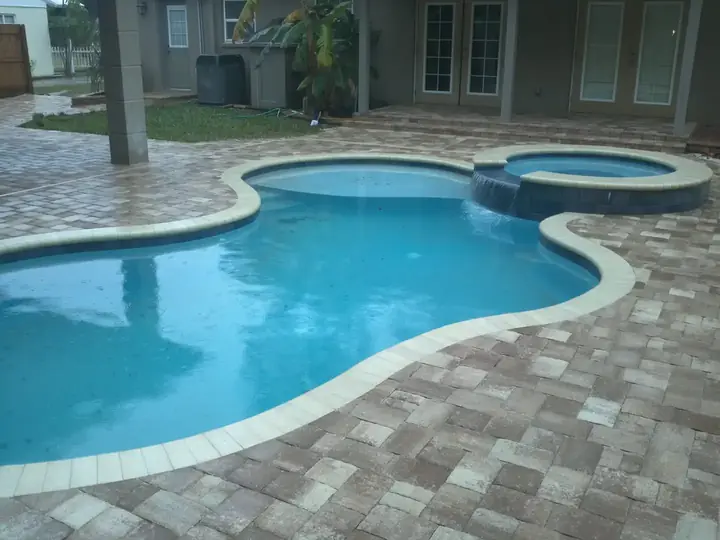
Most professionally sealed pavers in Tampa Bay need resealing every 2 to 5 years. That's a wide range on purpose. A shaded lanai and a sun-baked driveway are very different jobs, so the right schedule depends on the surface, the sun, and how it's used. Here's how to plan it.
Resealing Schedule by Surface
| Surface | Typical Reseal | What Wears It |
|---|---|---|
| Paver driveway | Every 2 to 3 years | Tire traffic, hot tires, oil drips, full sun |
| Paver pool deck | Every 2 to 4 years | Pool chemicals, splash-out, sun, foot traffic |
| Open patio or walkway | Every 3 to 4 years | Sun, sprinklers, leaves |
| Covered lanai or porch | Every 4 to 5 years | Light traffic; little sun or rain |
| Travertine pool deck | Every 2 to 4 years | Salt or chlorine water, sun; see salt water pools |
| Marble, limestone, natural stone | Every 2 to 4 years | Acids, salt, mildew; penetrating sealers wear from the top |
These are typical ranges, not rules. Read how long paver sealer lasts in Florida for what shortens or stretches a seal.
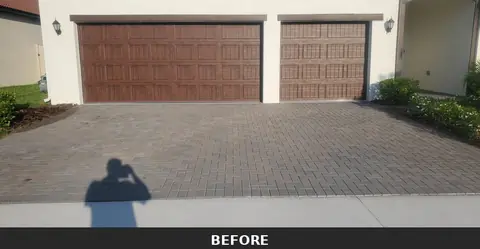
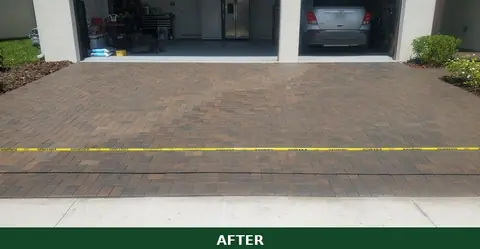
The Water Drop Test
The easiest way to know is to check. On a dry, sunny day:
- Pour a little water on a sunny, high-traffic spot and on a shaded spot.
- Watch for a minute.
- If the water beads up or sits on top, the sealer is still working.
- If it soaks in and the paver turns dark right away, the seal is worn there and it's time to plan resealing.
Test once a year, ideally in spring before the rainy season. Driveway wheel paths and pool splash zones usually fail first.
Other Signs It's Time to Reseal
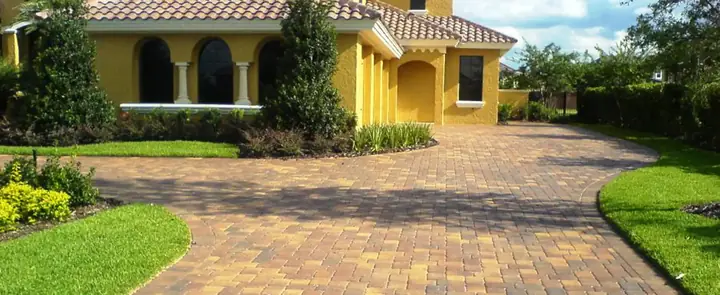
- Color looks faded or chalky in the sun.
- Joint sand is low, or weeds and ant piles are back.
- Stains soak in instead of wiping off.
- Mildew returns quickly in shady spots.
Why You Shouldn't Reseal Every Year
More isn't better. Sealing too often builds layers of sealer that can turn cloudy, peel, or get slippery. If your pavers already look white or milky, see why paver sealer turns white or cloudy. Badly built-up sealer may need sealer stripping before a fresh coat.
Making Each Seal Last Longer
- Rinse with fresh water every few weeks, more often near a pool.
- Point sprinklers away from pavers, especially on well water.
- Wipe oil and food spills quickly.
- Follow the paver maintenance guide and the travertine care guide.
Not sure where you stand? We'll check your pavers, measure, and tell you honestly if it's time, whether you're in Brandon, South Tampa, or Sun City Center.
Due for a recoat? Read can you seal over old paver sealer? to learn when a recoat works and when stripping is safer.
Resealing Less Often With a Stronger Sealer
A sealer with more urethane holds up longer. We use Hurricane CAT 5, with twice the urethane of other brands, and most customers report 3 to 4 years between reseals. Use the water drop test to know for sure when yours is due.
They did a GREAT job sealing the pavers on my driveway and walkway. They even power washed my patio as a gratis. I HIGHLY recommend them and will use them again!
How Often Should You Reseal Pavers? FAQs
How often should pavers be resealed in Florida?
Most pavers need resealing every 2 to 5 years. Driveways and sunny pool decks are usually on the shorter end, and covered lanais on the longer end.
Is it bad to seal pavers every year?
Usually, yes. Yearly coats build up and can turn cloudy, peel, or become slippery. Reseal when the water test shows the seal is worn.
How do I know if my pavers need resealing?
Pour water on a sunny spot. If it beads, the seal is working. If it soaks in and darkens the paver right away, it's time.
Do driveways need sealing more often than patios?
Yes. Tire traffic, hot tires, oil, and full sun wear driveway sealer faster than foot traffic on a patio.
How often should travertine be resealed?
Most travertine pool decks need resealing every 2 to 4 years, sooner around salt water pools or in full sun.
Do I need to re-sand pavers when resealing?
Usually some joints need topping off. We clean, wet-sand the joints as needed, and then seal so the sand is locked in.