
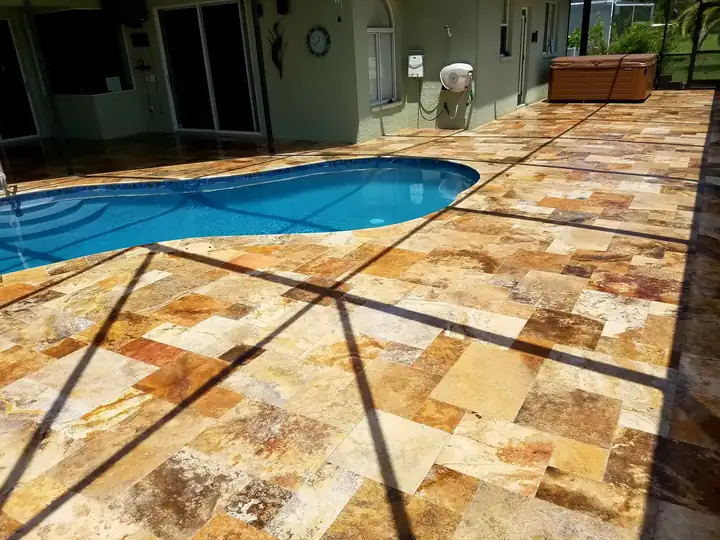
Salt water pools are popular across Tampa Bay, and so is travertine. They can live together happily, but salt does affect natural stone if it isn't protected.
How Salt Affects Travertine
- Efflorescence: salt water soaks in and dries into a white, chalky film.
- Spalling and pitting: salt crystals form below the surface and break off small bits of stone.
- Erosion of coping edges: the stones closest to the water take the most splash.
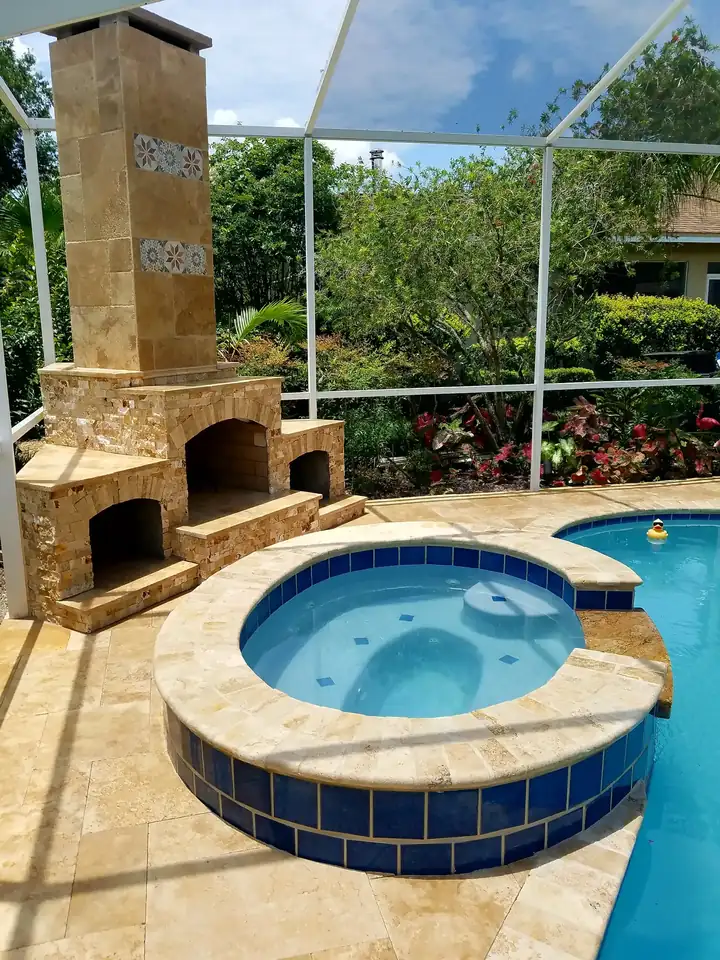
How Sealing Helps
A breathable penetrating sealer reduces how much salt water soaks into the stone, while still letting moisture escape. It doesn't make travertine indestructible, but it slows the damage and makes rinsing more effective. Learn about travertine cleaning and sealing and penetrating stone sealers.
Simple Salt Pool Care
- Rinse the deck and coping with fresh water, especially after heavy use.
- Don't let salty water puddle on the stone.
- Clean white residue early with stone-safe products.
- Reseal when water stops beading.
Loose or damaged coping? See travertine and marble repairs and leveling.
Spalling: When Travertine Starts to Flake
Salt water soaks into travertine, and when it dries, salt crystals form inside the pores. Over time that pressure can flake off the top layer, especially on coping and around the waterline. This is called spalling. A penetrating sealer that keeps salt water out of the pores, frequent freshwater rinsing, and low-pressure cleaning slow it down. Badly spalled pieces usually need replacing.
White Salt and Efflorescence Around the Pool
White crust near a salt pool is often salt residue or efflorescence carried up by moisture. It's cleaned with stone-safe products, never acid, and the deck is dried before sealing so the haze isn't trapped. See efflorescence information.
More on salt and pool deck care: salt air and waterfront paver care and pool chemical and calcium stains.
While calling around for estimates for my new paver pool deck, Steve came out quickly and was very knowledgeable in his craft. He explained everything perfectly and even added cleaning my brick grill for no extra charge. And while most places will make a mess of the dirt and sand which all ends up in the pool while cleaning, they even vacuum the pool to clean any dirt they added themselves! Steve and Sam did a great job in removing the stains from the pavers and the sealing itself and did it all in one day. Nobody had to “come back tomorrow to finish it up”. I would highly recommend Paver Sealing Florida for any sealing job you need done!
Travertine Around Salt Water Pools: What You Need to Know FAQs
Does salt water damage travertine?
It can. Salt water soaks into the stone, then dries into crystals that can leave white residue or cause small pits over time.
What sealer is best for travertine around a salt pool?
A breathable, water-repellent penetrating sealer is the usual choice. It reduces how much salt water gets in without a film that can peel.
How should I care for travertine by a salt pool?
Rinse the deck and coping with fresh water regularly, keep it sealed, and clean white residue early with a stone-safe product.
What is spalling on travertine?
Flaking of the stone's surface when salt crystals form inside the pores as salt water dries. Sealing and rinsing slow it down.
Is the white crust on my travertine salt or efflorescence?
It can be either. Both are removed with stone-safe cleaners, never acid, and the deck should be dry before sealing.