
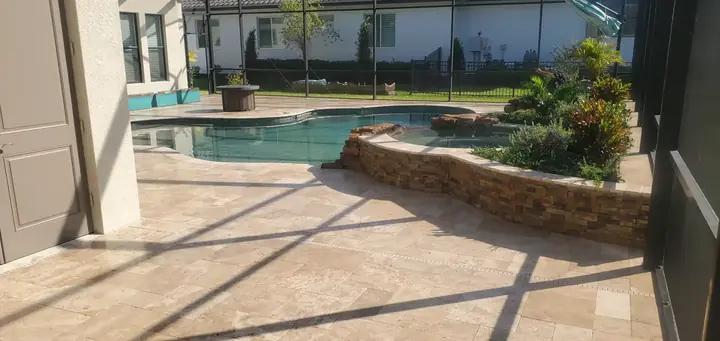
Waterfront living in Apollo Beach, Ruskin, South Tampa, and the Pinellas coast comes with salt in the air and, after big storms, salt water on the ground. Salt is tough on pavers and even tougher on natural stone, but a few habits and the right sealer go a long way.
What Salt Does to Pavers and Stone
- Salt crystallization. Salty moisture soaks into pores and, as it dries, crystals grow and push against the surface. Over time that causes flaking and pitting, especially on travertine and marble.
- White residue. Dried salt leaves a hazy film that looks like efflorescence.
- Faster sealer wear. Salt and sun together break down sealers faster than inland.
- Rust stains from metal furniture, railings, and fixtures corroding in salt air; see rust stains on pavers.
Coastal Care Routine
| How Often | What to Do |
|---|---|
| Weekly | Rinse pool decks, coping, and seawall-side pavers with fresh water |
| Monthly | Clean with a pH-neutral cleaner; check for white haze and flaking |
| After storms | Flush surge salt and silt several times; see care after a hurricane |
| Every 2 to 4 years | Professional clean and reseal; see how often to reseal |
The Right Sealer Near Salt Water
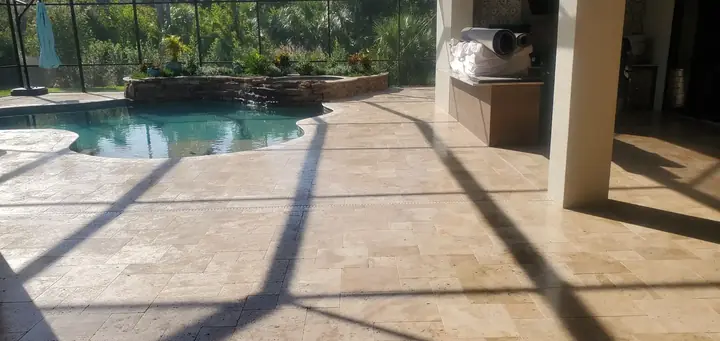
Natural stone near the water needs a breathable, penetrating sealer that keeps salty water out but lets moisture vapor escape. Film sealers can trap salt and moisture underneath. We often use Trident Sea Wall, a penetrating sealer built for coastal conditions, on travertine and marble. Concrete pavers get a quality water-based urethane and fresh joint sand.
Salt Water Pools Too
Salt systems add salt every time someone splashes or climbs out. The same rinse-and-seal routine applies. Read travertine around salt water pools.
Outdoor Kitchens and Furniture
- Wipe down stone counters and rinse floors around outdoor kitchens often.
- Use rubber or plastic feet under metal furniture and planters to avoid rust rings.
- Keep grills covered and clean grease drips quickly.
We clean and seal waterfront hardscapes in Apollo Beach, Ruskin, Harbour Island, South Tampa, and Pinellas County.
Sam and Steve were the absolute best to work with. They arrived on time, and explained what they were going to do. They made our pavers shine like never before. We are 100% satisfied with their quality of work. These two brothers are very professional and you can see the care they put into their work. Thank you.
Salt Air and Waterfront Paver Care FAQs
Does salt air damage pavers?
Over time, yes. Salt can leave haze, wear sealer faster, and cause flaking on natural stone. Regular rinsing and sealing help a lot.
How often should waterfront pavers be rinsed?
About weekly for pool decks, coping, and areas near the seawall, and several times after a storm surge.
What sealer is best near salt water?
A breathable, penetrating sealer for natural stone, like Trident Sea Wall, and a quality water-based urethane for concrete pavers.
Why is my travertine flaking near the water?
Salt crystals forming inside the stone as it dries can cause flaking. Rinsing often and keeping the stone sealed slows it down.
Do waterfront pavers need sealing more often?
Often, yes. Salt and sun wear sealer faster, so plan on the shorter end of the 2 to 4 year range.
How do I prevent rust stains near the bay?
Use rubber or plastic feet under metal furniture, rinse often, and treat rust spots early.