
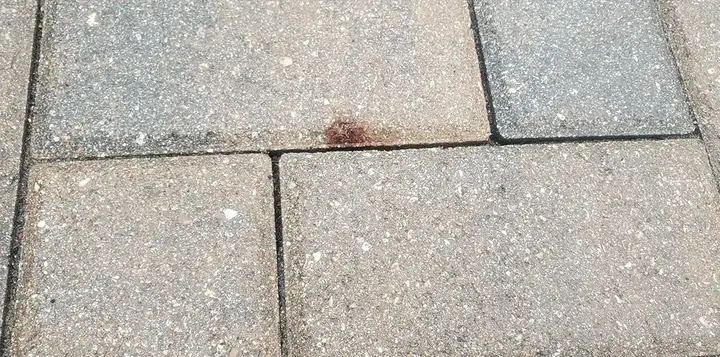
You rinse off the patio and there it is: an orange spot, a rusty streak along the edge of the lawn, or a ring where a planter used to sit. If you live in Brandon, Riverview, or anywhere else in Tampa Bay, you are not alone. Rust is one of the most common stains we treat, and the good news is that most of it can be removed or greatly reduced with the right product and a careful process.
How to Tell If It's Really Rust
Rust stains are orange to reddish brown and they don't scrub off with soap and water. A few other stains look similar, so it helps to know the difference before you buy a cleaner:
| What You See | Most Likely Cause |
|---|---|
| Orange streaks or a fan shape along the lawn edge | Sprinklers spraying iron-rich well water |
| Small round orange dots scattered across the surface | Fertilizer granules that contain iron |
| Orange rings or squares | Metal furniture feet, planters, grills, or tools |
| Brown or tan stains under trees that fade over time | Leaf and tannin stains, not rust |
| White, powdery haze | Efflorescence, natural salts from the pavers |
Where Rust on Pavers Comes From
Well Water Irrigation
This is the big one. Many homes in Hillsborough County irrigate from a private well, and well water often carries dissolved iron. Every time the sprinklers run, a little iron lands on the pavers, dries in the sun, and oxidizes. Over a few months it builds into orange streaks that follow the spray pattern of each sprinkler head.
Fertilizer
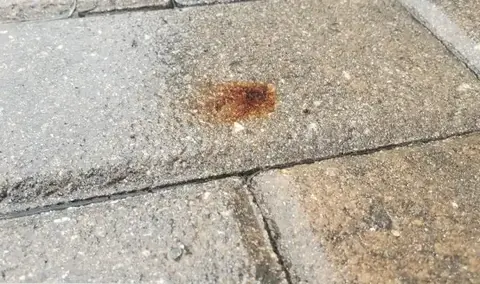
Many lawn fertilizers contain iron to green up the grass. When granules bounce onto a driveway or pool deck and get wet, each one leaves a small orange dot like the one in the photo below. This is why rust spots often show up right after the lawn service visits.
Metal Furniture, Planters, and Tools
Patio chairs with worn caps, metal plant stands, grills, wheelbarrows, and even a forgotten wrench can leave rust rings once they sit through a few Florida rainstorms.
New Construction
On newer installs, tiny metal shavings from saw blades or construction debris can rust in place and show up as pinpoint orange specks a few weeks later.
Can You Remove Rust Stains Yourself?
Sometimes. On concrete pavers, a fresh, light rust stain will often respond to a rust remover made for concrete and masonry. If you try it yourself:
- Test the product on a hidden paver first and follow the label exactly.
- Keep it off plants, metal, and glass, and rinse thoroughly when you're done.
- Don't use muriatic acid. It can burn the surface, expose the aggregate, and change the color of the pavers.
- Don't use bleach. It kills mildew but doesn't remove iron.
Pressure washing won't fix it either. Rust is a chemical stain bonded to the surface, so pressure alone mostly spreads it out or etches the paver trying. Here's more on paver cleaning vs. pressure washing.
Rust on Travertine, Marble, and Natural Stone
Natural stone is a different story. Travertine, marble, and limestone are calcium-based, and many rust removers are acidic enough to etch them, leaving dull, rough spots that are harder to fix than the rust. On stone we only use products made for natural stone, and we always test first. If your pool deck or patio is stone, this is one job worth leaving to a pro.
How We Remove Rust Stains
- Identify the surface and the stain. Concrete pavers, travertine, and marble each need a different approach.
- Test a small area to confirm the product works and won't affect the color or finish.
- Treat the stain with a surface-safe rust remover, giving it time to work.
- Rinse and neutralize so no residue is left behind.
- Clean, sand, and seal so the surface is protected going forward.
Fresh stains usually come out completely. Old, deep stains that have soaked in for years may lighten a lot rather than disappear, and we'll tell you honestly what to expect before we start. Learn more about our rust and stain removal service.
Keep Rust from Coming Back
- Adjust your sprinklers so they spray the lawn, not the pavers.
- Treat the well water. An iron filter or a rust-control injection system on the irrigation line stops the problem at the source.
- Sweep or blow fertilizer off hard surfaces right after the lawn is treated, before it gets wet. Ask your lawn service to do the same.
- Put caps or saucers under metal furniture and planters.
- Seal after the rust is removed. Sealer slows down how fast stains soak in and makes new ones easier to clean. See brick paver sealing and our paver maintenance guide.
Should You Remove Rust Before Sealing?
Always. Sealer locks in whatever is on the surface, so any rust left behind gets sealed in with it. Every paver cleaning and sealing job we do includes a stain check, and rust is treated before a drop of sealer goes down.
Fixing the Source: Sprinklers and Irrigation Water
Removing rust only lasts if the iron stops landing on the pavers. Irrigation is the source on most Tampa Bay homes we see, and the water supply makes a big difference:
| Irrigation Water | Rust Risk | What Helps |
|---|---|---|
| Private well | Highest; well water often carries dissolved iron | An iron filter or treatment system, plus redirecting heads |
| Reclaimed water | Varies; can leave mineral and organic stains | Keep spray off hardscapes and rinse often |
| City water | Usually low for rust | Still aim heads at the lawn to protect the sealer |
- Adjust or replace heads along the paver edge so they spray away from the hardscape, or switch bed zones to drip.
- Check run times. Fewer, longer cycles early in the morning wet the pavers less often.
- Fix broken or tilted heads quickly; one bad head can stain a whole section in a season.
- Sweep up fertilizer granules from pavers right after the lawn is treated, before sprinklers or rain wet them.
Once the source is under control, we remove the stains and seal so future spots wipe off more easily. See rust and stain removal and mold, mildew, and algae on pavers for the other common Florida stain.
Rust on marble or travertine needs a stone-safe method. See using a poultice on outdoor marble stains.
Outstanding job on our paver driveway and porch. The very experienced team removed oil stains and tire cleaner that I thought I was stuck with. It probably helped that they had sealed our driveway 3 years ago. Definitely, recommend; thank you Sam & Steve!
Rust Stains on Pavers FAQs
What causes orange stains on pavers?
Most often irrigation from a well, because well water carries dissolved iron. Fertilizer granules that contain iron and metal furniture, planters, or tools are the other common causes.
Why do I have small orange dots on my pavers?
Scattered orange dots usually come from fertilizer granules that landed on the pavers and got wet. On new installs, tiny metal shavings from cutting can cause pinpoint rust specks too.
Will pressure washing remove rust?
No. Rust is a chemical stain and needs a rust remover. Pressure alone usually just spreads it out, and too much pressure can damage the surface.
Does bleach remove rust stains?
No. Bleach kills mildew and algae, but it does not dissolve iron. Rust needs a rust remover matched to the surface.
Is rust remover safe on travertine and marble?
Many are acidic and can etch calcium-based stone like travertine, marble, and limestone. Use only products made for natural stone, and test first.
Can old rust stains be removed completely?
Fresh stains usually come out completely. Stains that have soaked in for years may lighten a lot rather than disappear, so we test and set expectations before treating.
Will rust stains come back?
If sprinklers keep spraying well water on the pavers, yes. Redirecting sprinklers or adding an iron filter fixes the source, and sealing makes future stains easier to clean.
Does sealing pavers prevent rust stains?
Sealing doesn't stop iron from landing on the surface, but it slows how fast stains soak in and makes them much easier to clean off.
Does an iron filter stop rust stains on pavers?
An iron filter or treatment system on a well can greatly reduce new rust stains from irrigation. Redirecting sprinkler heads away from the pavers helps too.
Does reclaimed water stain pavers?
It can leave mineral and organic stains over time. Keeping spray off the pavers and rinsing them often helps.