
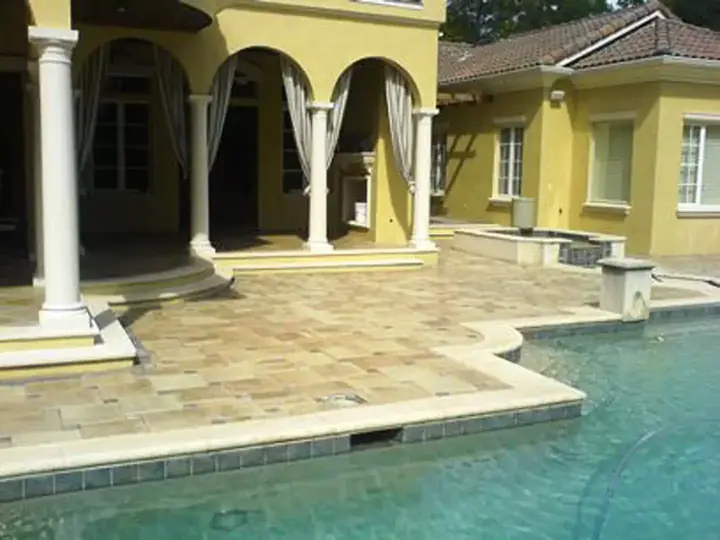
Stains in marble and travertine aren't on the surface; they soak into the stone. Scrubbing harder rarely helps and can damage the finish. A poultice works the other way: it draws the stain up and out as it dries. It's the standard method for deep stains on natural stone.
How a Poultice Draws Out Stains
A poultice is an absorbent powder mixed with a cleaning agent into a paste about the thickness of peanut butter. Spread on the stain, it re-dissolves what's in the pores, then pulls it into the powder as the paste dries. Common powders are diatomaceous earth, kaolin clay, and whiting.
Match the Poultice to the Stain
| Stain Type | Examples | Cleaning Agent in the Paste |
|---|---|---|
| Oil-based | Grill grease, sunscreen, cooking oil | A solvent such as acetone or mineral spirits |
| Organic | Leaves, berries, coffee, wine | Hydrogen peroxide (on light stone) |
| Rust | Irrigation water, fertilizer, metal furniture | A rust remover labeled safe for marble |
| Water spots and minerals | Hard water, pool splash | Often just water and a gentle stone cleaner |
Most rust removers are acidic and will etch marble, so check the label. Our paver stain removal chart covers more stain types.
How to Apply a Poultice Step by Step
- Clean and wet the area with water so the paste spreads evenly.
- Spread the paste about a quarter inch thick, overlapping the stain by half an inch.
- Cover with plastic wrap, tape the edges, and poke a few small holes so it dries slowly.
- Wait 24 to 48 hours, then remove the plastic and let the paste dry completely.
- Scrape it off with a plastic scraper, rinse, and check the stain.
- Repeat if needed. Deep stains often take two or three rounds.

Tips for Exterior Marble and Travertine
- Test any chemical in a hidden spot first.
- Work in shade so the paste doesn't dry too fast in Florida sun.
- Fix the source, such as a sprinkler hitting the stone or a dripping grill, or the stain comes back.
- Seal after the stain is out, never before, or the stain gets locked in.
When a Marble Stain Needs a Pro
Large stains, rust across a whole pool deck, stains that survived two rounds, and anything on expensive coping are worth a professional look. Our marble stain removal service treats stains before sealing, and our marble and stone sealing products page explains what we apply afterward. We work across Bloomingdale, New Tampa, SouthShore Bay, and Tampa Bay.
Is the whole deck turning yellow rather than one stain? Read why outdoor marble turns yellow.
Our travertine was stained and dull. The crew stripped the old layers off and resealed it. They did a great job. It looks like new!
Removing Stains from Outdoor Marble with a Poultice FAQs
What is a poultice for marble?
A paste of absorbent powder and a cleaning agent that draws a stain out of the stone as it dries.
How long do you leave a poultice on marble?
Usually 24 to 48 hours under plastic, then until the paste is completely dry. Deep stains may need two or three rounds.
What poultice removes oil stains from marble?
Mix an absorbent powder with a solvent such as acetone or mineral spirits for grease, sunscreen, and cooking oil.
Can a poultice remove rust from marble?
Yes, with a rust remover labeled safe for marble. Most rust removers are acidic and will etch marble, so check the label.
Does a poultice work on travertine too?
Yes. Travertine and marble are both calcium-based stones, so the same methods and cautions apply.
Should I seal marble after removing a stain?
Yes. Once the stain is out and the stone is dry, sealing keeps new spills at the surface.