
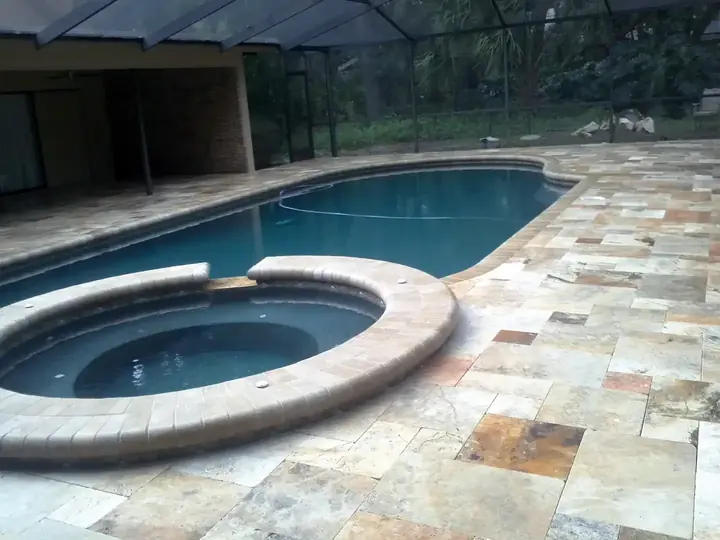
Wet stone and pavers around a pool can be slick, and a glossy sealer can make it worse. That's why we now offer slip-resistant coatings for travertine, marble, natural stone, and pavers. Our coating of choice is Cobble Grip by SurfaceLogix, a clear, water-based sealer that we apply with SurfaceLogix's non-skid additive in the final coat for better footing when the deck is wet.
It's the coating we use for our slip resistant coatings service, and it pairs with our careful cleaning, repairs, and joint sanding so the finish lasts.
What Cobble Grip Is
- Clear, water-based acrylic sealer. It dries clear with a semi-gloss sheen, cleans up with water, and isn't flammable.
- Made for outdoor hardscapes. SurfaceLogix lists pool decks, patios, walkways, and driveways, on concrete pavers, concrete, and natural stone such as travertine.
- Protective. The manufacturer says it resists UV, mildew, and staining, and helps discourage weeds, algae, and ant hills in the joints.
- Grip comes from the additive. Cobble Grip seals the surface; the non-skid additive mixed into the last coat creates the fine texture that improves traction.
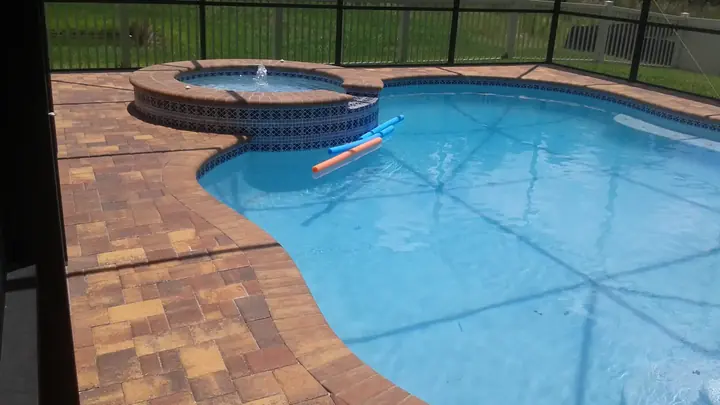
How It Makes Pool Areas Less Slippery
A sealer alone doesn't add grip, and a thick, shiny coat can actually make a surface slicker. Slip resistance comes from three things working together:
- A clean surface. Algae, mildew, sunscreen film, and failing old sealer are slippery on their own, so we remove them first.
- Thin, even coats. Cobble Grip goes on thin so the natural texture of the stone or paver still shows through.
- Non-skid additive in the final coat. A fine grit is mixed into the last coat and spread evenly, which gives bare feet and shoes more to hold onto when wet.
No coating makes a wet surface slip-proof, but this combination makes a real difference on pool decks, steps, and entries. Read more in how we make pool decks safer.
Where We Use Cobble Grip
| Surface | How We Handle It |
|---|---|
| Concrete brick pavers | Deep clean, re-sand the joints, then thin coats with non-skid in the final coat |
| Travertine | Stone-safe cleaning and a test area to confirm the look before the full deck |
| Marble | Test area first and stone-safe prep only; we never acid-etch marble |
| Natural stone and shellstone | Test area first; prep matched to the stone |
| Concrete pool decks and walkways | Concrete must be fully cured (at least 28 days) before coating |
Cobble Grip isn't recommended for pavers set on a solid slab where moisture can't escape. We'll check how your deck was built during the estimate. Not sure which sealer fits your surface? Try the sealer selection guide.
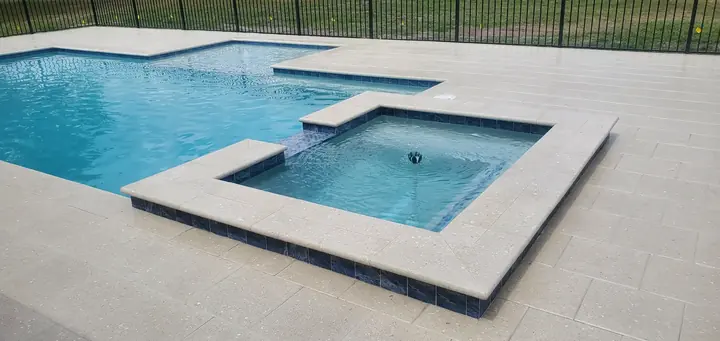
How We Apply It
- Inspect the deck and make a small test area so you can see the finish and feel the grip.
- Deep clean and treat stains, algae, and mildew, and strip failing sealer if needed.
- Repair sunken pavers or loose stone, then re-sand paver joints with ASTM C144 sand.
- Apply Cobble Grip in thin, even coats with a roller or low-pressure sprayer.
- Mix the non-skid additive into the final coat and spread it evenly, with extra attention to steps, entries, and coping edges.
- Let it cure, then walk you through care and cleaning.
Cobble Grip at a Glance
| Item | SurfaceLogix Cobble Grip |
|---|---|
| Maker | SurfaceLogix |
| Type | Clear, water-based acrylic sealer |
| Finish | Semi-gloss, dries clear |
| Slip resistance | SurfaceLogix non-skid additive mixed into the final coat |
| Use on | Concrete pavers, concrete, travertine and natural stone; marble after a test area |
| Coverage | About 300 to 500 sq ft per gallon per coat, depending on the surface |
| Coats | One or two thin coats |
| Dry and cure | Dry to the touch in about 1 hour, recoat in about 4 hours, full cure in 48 to 72 hours |
| Application temperature | Between 50 and 100°F |
| VOC | 260 g/L |
| Reapplication | No more often than every 18 months, to avoid buildup |
Figures come from the SurfaceLogix technical data sheet. We'll confirm cure times for the weather on your project day.
Cobble Grip Documents
Official manufacturer information, including the Technical Data Sheet (TDS) and Safety Data Sheet (SDS). Links open the manufacturer's current versions.
More Reading on Slip Resistance
Cobble Grip FAQs
Does Cobble Grip make a pool deck slip-proof?
No coating can make a wet surface slip-proof. Cobble Grip with non-skid additive in the final coat adds texture that improves grip when the deck is wet, and it works best on a clean surface with thin coats.
Can Cobble Grip be used on travertine and marble?
Yes, with the right prep. Travertine and natural stone are listed by the manufacturer. On marble we always do a test area first and use stone-safe cleaning, because marble is sensitive to acids.
Will I see or feel the slip-resistant texture?
You may feel a light texture underfoot, which is what provides the grip. Cobble Grip dries clear with a semi-gloss sheen, and we show you a test area first.
How soon can we use the pool deck?
It is dry to the touch in about an hour, and full cure takes 48 to 72 hours. We will tell you when furniture can go back and the deck is ready for normal pool use.
How often does Cobble Grip need to be reapplied?
The manufacturer says not to reapply more often than every 18 months to avoid buildup. Most decks need a refresh coat every few years depending on sun, traffic, and cleaning.
Can you add grip to just the steps and entries?
Yes. We can coat the whole deck or focus on steps, pool entries, coping edges, and walkways.