
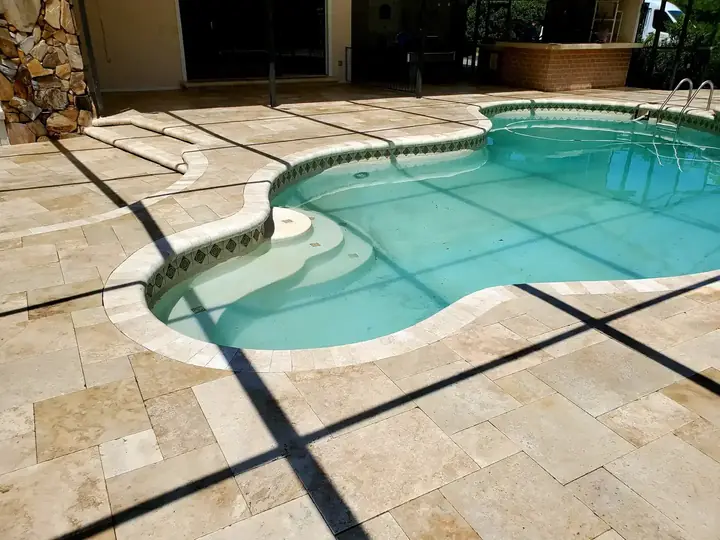
Travertine is one of the most popular pool deck materials in Florida partly because it isn't very slippery when it's the right finish. Tumbled and brushed travertine have texture that grips bare feet. But even good travertine can get slick, and it's usually for reasons you can fix.
Travertine Finishes and Grip
| Finish | Grip When Wet | Good for pool decks? |
|---|---|---|
| Tumbled | Good; rounded, textured surface | Yes, the most common choice |
| Brushed | Good; wire-brushed texture | Yes |
| Honed | Moderate; smooth matte surface | Use with care near water |
| Polished | Poor; glassy and slick when wet | Not recommended outdoors |
Learn more in types of outdoor travertine.
What Makes Travertine Slippery
- Algae and mildew, especially in shaded corners and around steps; see mold, mildew, and algae.
- The wrong sealer. Glossy film-forming sealers fill the texture and can feel slick. Travertine should get a breathable, penetrating sealer.
- Built-up sealer from too many coats over the years.
- Sunscreen, oils, and pool chemicals left on the surface.
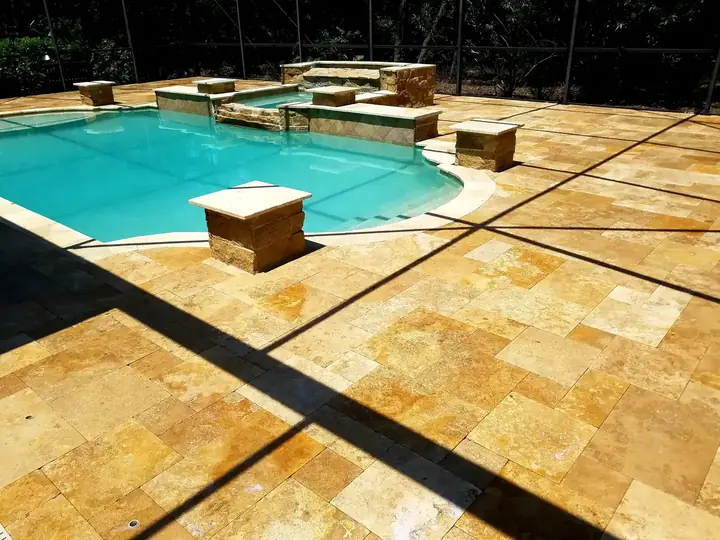
How We Keep Travertine Decks Safe
- Deep clean to remove algae, mildew, and residue from the texture.
- Strip slick, built-up film sealer if it's there; see sealer stripping.
- Seal with a natural, penetrating sealer that protects without a glossy film.
Ask about slip resistant options for steps and high-traffic wet areas.
Everyday Safety Tips
- Rinse the deck and steps regularly so residue doesn't build up.
- Treat shaded, green areas before they get slick.
- Keep pool chemicals and sunscreen off the stone.
- Use non-slip mats only where needed, and lift them to dry the stone underneath.
For paver decks, see is wet look paver sealer slippery? We clean and seal travertine pool decks across Riverview, Southshore Bay, Carrollwood, and Tampa Bay.
Comparing stones for a pool deck? See how marble and travertine compare on heat, slip, and stains.
For HOAs, condos, and rentals, see reducing slip-and-fall risk on pool decks.
5/5 Stars – Exceptional Quality and True Professionals!
Sam and Steve did an incredible job sealing our new travertine pool deck and lanai. From start to finish, their level of service, expertise, and attention to detail were second to none.
What really set them apart:
- Next-Level Thoroughness & Modern Solutions: Sam took a sample of our actual travertine, had Steve work on it off-site, and brought it back to us so we could evaluate the non-skid finish in advance of any work being done. They even brought in newer, cutting-edge products to give us the best and most up-to-date options on the market.
- Miracle Stain Removal: We had a stubborn box stain that my wife and I spent hours trying to remove using a professional product, with zero luck. Sam and Steve worked their magic, and the spot is now completely invisible!
- Seamless Experience: They were quick with pricing, prompt with scheduling, meticulous during the application, and left the entire area spotless when they finished.
They came highly recommended to us by a trusted friend, the owner of local pool company we’ve known for 50 years, and their results completely speak for themselves. If you need travertine sealing (pavers too) or restoration, look no further than Sam and Steve we will definitely be repeat customers!
Is Travertine Slippery When Wet? FAQs
Is travertine slippery around pools?
Tumbled and brushed travertine grip well when wet. It gets slippery mainly from algae, residue, or a glossy film sealer.
What travertine finish is best for pool decks?
Tumbled or brushed. Polished travertine is too slick when wet for outdoor use.
Does sealing make travertine slippery?
A glossy film sealer can. A breathable, penetrating sealer protects travertine without changing its grip.
How do I make my travertine pool deck less slippery?
Clean off algae and residue, strip any slick film sealer, and reseal with a penetrating sealer. Ask about slip resistant options for steps.
Is travertine safer than pavers around a pool?
Both can be safe. Textured travertine and pavers sealed with the right product grip well; algae and built-up sealer are the usual problems.
Why is my travertine slippery in the shade?
Shaded areas stay damp and grow algae and mildew, which are slick. Regular cleaning and sealing help.