
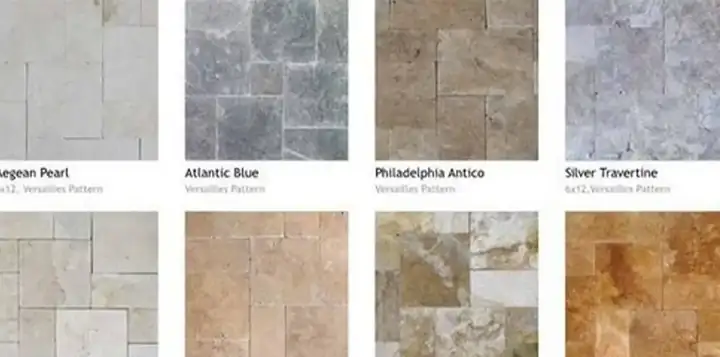
Travertine comes in several finishes and colors, and each looks and performs a little differently around a Florida pool or patio.
Travertine Finishes
Tumbled
Rounded edges and a softer, weathered look with a slightly rough texture. Less slippery than polished, great for pool areas and pathways, and good at hiding minor imperfections. Still needs sealing.
Brushed or Textured
A textured, non-slip surface with a subtle natural look. Highly recommended for pool decks and patios where slipping is a concern.
Honed
A smooth, matte finish with more uniform color and no shine. Good where slip resistance matters, though it can absorb moisture if not sealed.
Polished
Shiny and reflective, which brings out color and veining, but slippery when wet. Better for decorative features than pool decks.
Filled vs. Unfilled Travertine
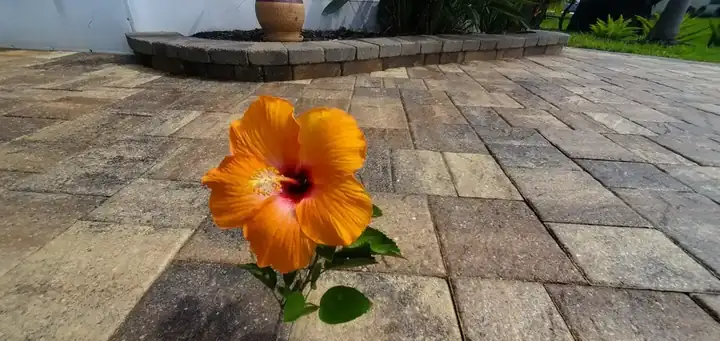
Filled travertine has its holes filled with resin or cement for a cleaner, more uniform surface. Unfilled travertine shows its natural pits for a rustic look, but collects more dirt and must be sealed well.
Travertine Colors
Popular outdoor travertine colors include ivory, light beige and classic, walnut, noce, gold, and silver, plus multi-color blends. Lighter colors stay cooler underfoot; darker and blended colors hide dirt better. An enhancing sealer deepens color, while a penetrating sealer keeps it natural.
Protecting Your Travertine
Every type benefits from travertine cleaning and sealing, especially around salt water pools.
Choosing Filled or Unfilled Travertine Outdoors
- Unfilled, tumbled travertine is the most common choice for Florida pool decks. The open holes add texture and grip, and there's no fill to wash out.
- Filled travertine has a smoother surface that's easy to sweep. Over time, sun, water, and pressure washing can loosen the fill and reopen holes.
- Reopened holes collect dirt and mildew. They can be refilled with a color-matched filler before cleaning and sealing.
Travertine Pavers vs. Tile Thickness
Outdoor travertine pavers are usually about 1.25 inches (3 cm) thick and are often set on a compacted sand base like concrete pavers. Thinner travertine tile is set in mortar on a concrete slab. The installation changes how joints are repaired, but both are cleaned and sealed the same way with stone-safe products and a breathable sealer.
Customer Reviews: Types of Outdoor Travertine
They do excellent work and great communication.
These guys know their stuff. I can't give them a high enough score!! Whoever doesn't like these guys are silly. Great company!!
Excellent customer service, courteous, and responsive. This company did an amazing job sealing my patio and ensured that the house looked amazing.
More Reading on Types of Outdoor Travertine
Types of Outdoor Travertine FAQs
What is the best travertine finish for a pool deck?
Tumbled or brushed travertine is popular for pool decks because the texture offers better grip than polished stone.
What colors does travertine come in?
Common outdoor colors include ivory, light beige and classic, walnut, noce, gold, silver, and multi-color blends.
Should filled and unfilled travertine be sealed differently?
Both should be sealed. Unfilled travertine has open holes that collect dirt; filled travertine's filler can affect how sealer absorbs, so we test first.
Is polished travertine good outdoors?
It can be slippery when wet, so it's better for decorative areas than pool decks.
Is filled or unfilled travertine better for a pool deck?
Unfilled, tumbled travertine is the most common choice. Its texture grips well and there's no fill to wash out.
Why are holes opening up in my travertine?
Fill can loosen over time from sun, water, and pressure washing. The holes can be refilled with a color-matched filler before sealing.