
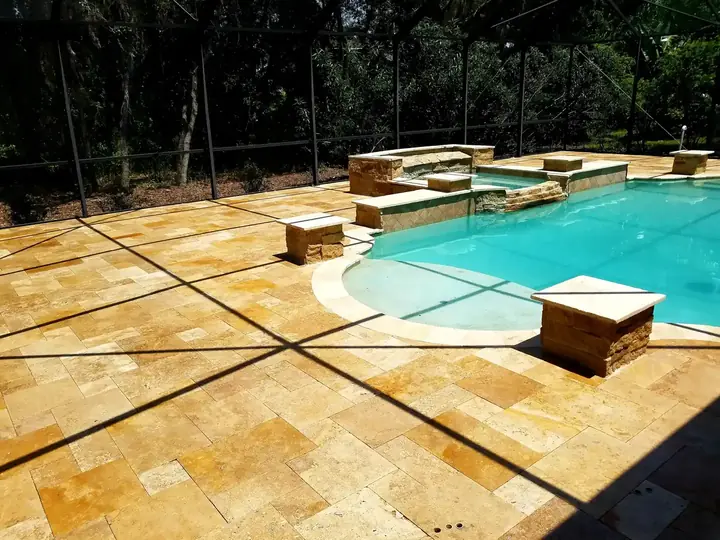
Travertine is the most popular natural stone for Florida pool decks: it's beautiful, comfortable underfoot, and stays cooler than many surfaces. It's also a soft, porous, calcium-based stone, so the wrong cleaner can etch, dull, or stain it in minutes. Here's how to clean it the right way.
What You Need
- A pH-neutral cleaner labeled safe for natural stone
- A soft or medium nylon brush and a push broom
- A garden hose, or a pressure washer with a surface cleaner or wide fan tip on low pressure
- A stone-safe mildew cleaner for shady spots
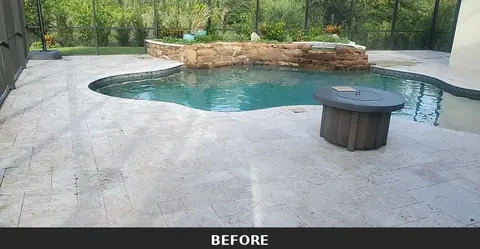
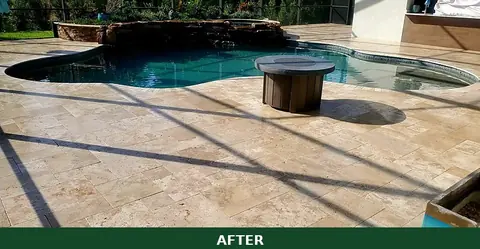
Step-by-Step Travertine Pool Deck Cleaning
- Sweep or blow off leaves and debris. Oak and palm leaves leave tannin stains if they sit.
- Rinse the whole deck with fresh water, starting near the house and working toward the pool and drains.
- Apply a pH-neutral stone cleaner mixed as the label says, a section at a time.
- Scrub gently, paying extra attention to the coping and the splash zone around steps and ladders.
- Treat mildew separately with a stone-safe product, following the dwell time on the label.
- Rinse thoroughly so no cleaner dries on the stone or ends up in the pool.
What Never to Use on Travertine
| Avoid | Why |
|---|---|
| Vinegar, lemon, or acidic cleaners | Acid dissolves calcium and etches dull spots into the stone |
| Muriatic acid or acid-based efflorescence and rust removers | Can permanently etch and pit travertine unless made for natural stone |
| A narrow pressure washer tip up close | Cuts into soft stone, opens holes, and blows out joint sand |
| Rock salt | Salt crystals inside the stone cause flaking over time |
| Wire brushes and abrasive pads | Scratch the surface and the coping edges |
Salt Water Pools Need Extra Rinsing
Salt systems leave salt on the deck every time someone climbs out. As it dries, salt crystals form inside the stone's pores and can cause flaking and pitting on unsealed travertine. Rinse the coping and splash zone with fresh water often. Read travertine around salt water pools for the full story.
Stains That Need a Pro
Rust from irrigation, deep tannin stains, and white haze from efflorescence need treatments matched to natural stone. Many store-bought rust and efflorescence removers are acidic and will etch travertine. See rust and stain removal.
Seal After a Deep Clean
Cleaning makes travertine look great. Sealing keeps it that way. A breathable, penetrating sealer helps resist salt, stains, and mildew, and makes weekly rinsing far more effective. Our travertine cleaning and sealing and pool deck sealing services include same-day pool cleaning. For routine care, follow the travertine care guide. We clean and seal travertine decks across FishHawk, Apollo Beach, Riverview, and all of Tampa Bay.
While calling around for estimates for my new paver pool deck, Steve came out quickly and was very knowledgeable in his craft. He explained everything perfectly and even added cleaning my brick grill for no extra charge. And while most places will make a mess of the dirt and sand which all ends up in the pool while cleaning, they even vacuum the pool to clean any dirt they added themselves! Steve and Sam did a great job in removing the stains from the pavers and the sealing itself and did it all in one day. Nobody had to “come back tomorrow to finish it up”. I would highly recommend Paver Sealing Florida for any sealing job you need done!
How to Clean a Travertine Pool Deck Safely FAQs
What is the best cleaner for a travertine pool deck?
A pH-neutral cleaner labeled safe for natural stone. Use a stone-safe mildew cleaner for shady spots, and avoid anything acidic.
Can I pressure wash travertine?
Yes, carefully. Use low pressure with a surface cleaner or a wide fan tip held at a distance. A narrow tip up close can damage the stone and blow out the joints.
Is vinegar safe on travertine?
No. Vinegar is an acid and etches travertine, leaving dull, rough spots.
How often should I clean my travertine pool deck?
Rinse weekly, clean with a pH-neutral cleaner monthly, and plan a professional deep clean and reseal every 2 to 4 years.
How do I remove black spots from travertine?
Most black spots are mildew. Treat them with a stone-safe mildew cleaner, scrub gently, and rinse well. Sealing helps slow regrowth.
Should travertine be sealed after cleaning?
Yes. A breathable, penetrating sealer helps travertine resist salt, stains, and mildew, especially around pools.