
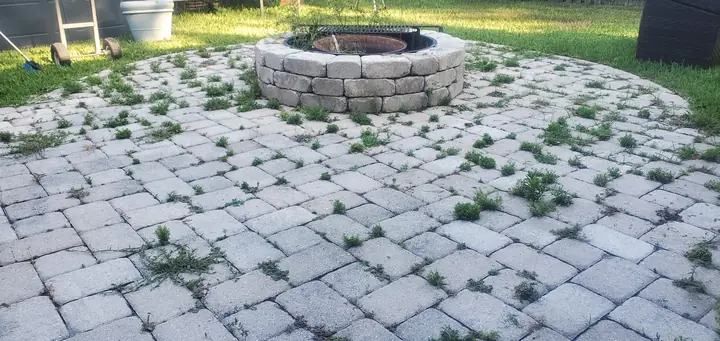
If you've lived in Tampa Bay for a summer, you've seen it: pavers that looked clean in April have a green line in every joint by August. Weeds between pavers aren't a sign you did something wrong. Florida's climate is close to perfect for them, and the same storms that water your lawn also wash the sand out of your paver joints and make room for weeds to move in. Here's why it happens so fast here, what it looks like on real jobs, and what actually keeps it from coming back.
Why Tampa Bay Is Perfect for Weeds
Most of the country gets a winter that stops weeds for months. We don't. Tampa Bay sits in USDA hardiness zones 9b and 10a, where hard freezes are rare and something is growing almost every month of the year. Add heat, humidity, and heavy summer rain, and seeds that land in a paver joint sprout fast.
- A year-round growing season. Grasses and broadleaf weeds slow down in the cooler months but rarely stop.
- A wet summer. Our rainy season runs from June through September, and nearly two-thirds of the year's rain falls in those four months. August alone averages close to eight inches.
- Humidity and shade. Joints under pool cages, along fences, and on the north side of the house stay damp, which is exactly what moss, algae, and weed seedlings need.
How Rain Opens the Door
Weeds don't grow in a full, tight joint. They grow where the sand has dropped. Florida's afternoon downpours are the main reason it drops:
- Heavy rain washes sand out. Water running across unsealed pavers, off roof edges, and out of downspouts carries joint sand away, a little at a time. See why paver sand disappears.
- The empty space collects debris. Leaves, grass clippings, oak pollen, and dust settle into the gap and break down into a thin layer of soil.
- Seeds blow in and sprout. Wind, birds, and mowers deliver seeds. Warm, wet weather does the rest.
- Roots go deep. Once roots reach the bedding sand under the pavers, pulling the top off just leaves the root to grow back.
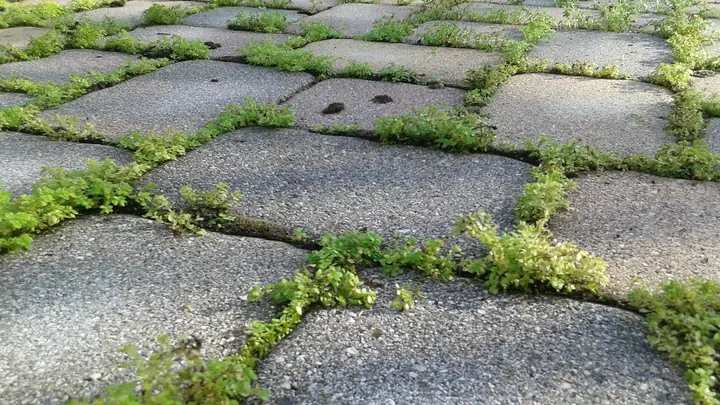
Pressure washing without re-sanding speeds all of this up. High pressure blasts sand out of the joints, and if nothing goes back in, the next rain fills the gap with dirt and seeds. That's why we always clean with a surface cleaner and re-sand after cleaning.
Where Weeds Show Up First
- Along lawn and landscape bed edges, where grass runners and seeds have the shortest trip.
- Under screen enclosures and in shady corners that stay damp. See pavers under screen enclosures.
- Below downspouts, roof valleys, and pool deck drains, where water runs hardest.
- In low spots where water sits after a storm, and along sunken edges. See sunken and uneven pavers.
- Near sprinkler heads that hit the pavers every day.
Common Weeds in Florida Paver Joints
| What You'll See | What It Looks Like | Why It's Hard to Stop |
|---|---|---|
| Grassy weeds (crabgrass and lawn runners) | Thin blades in lines along the joints | Spreads from the lawn and reseeds every season |
| Sedges (nutsedge) | Bright, shiny, grass-like shoots that grow faster than the lawn | Grows from underground tubers that stay behind if you pull the top |
| Spurge and Florida pusley | Low, flat mats of small leaves | Produces lots of seed and thrives in heat |
| Dollarweed | Round, coin-shaped leaves | Loves wet areas and irrigated edges |
| Moss and algae | Green or black film in shady joints | Feeds on constant moisture. See mold, mildew, and algae |
For help identifying a specific plant, the University of Florida's Florida Weed ID guide has photos of the common ones.
Before and After: Real Weed Jobs
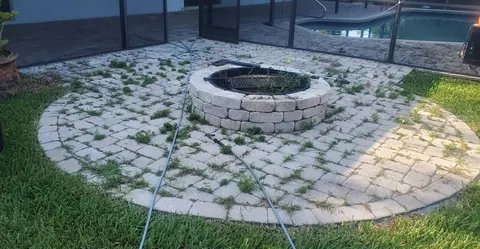
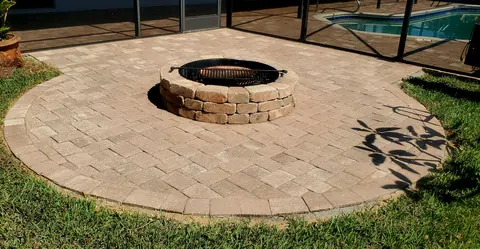
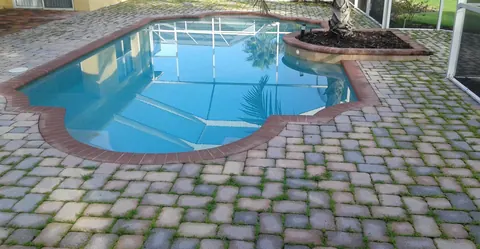
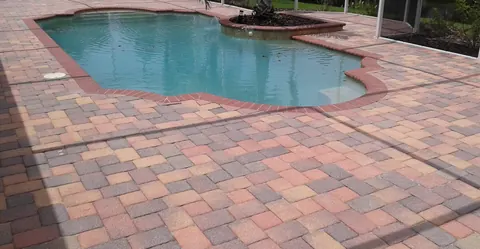
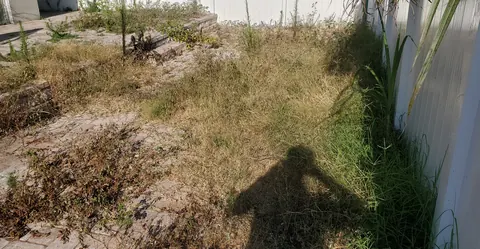
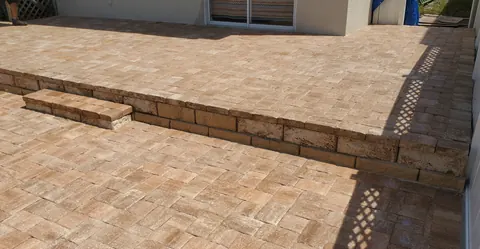
These are our own jobs, photographed the morning we arrived and the afternoon we finished.
How We Get Rid of Weeds and Keep Them Out
Killing the weeds is the easy part. Keeping them out means fixing the joint they grew in. Our process:
- Treat the growth. We treat weeds and moss in the joints so the roots die back instead of resprouting.
- Dig out the joints. We remove weeds, roots, and the dirt and organic debris that collected in the gaps.
- Deep clean. A surface cleaner lifts dirt, mildew, and stains without blasting out more sand than necessary.
- Re-sand. We sweep washed, angular ASTM C144 joint sand deep into every joint, color-matched to your pavers.
- Seal with a joint-stabilizing sealer. A sealer like Trident Hurricane CAT 5 or Trident Cyclone soaks into the joints and hardens the sand, so storms can't wash it out and seeds have nowhere to root.
"All spots that had any plant growth were thoroughly dug out, chemically handled to kill the growth and then re sanded."
Justin K., Google review
Hurricane CAT 5 has twice the urethane of other brands, and most of our customers report 3 to 4 years before they need a reseal, which keeps the joints locked through several rainy seasons. Compare options in polymeric sand vs. joint-stabilizing sealer.
Why Pulling Weeds Isn't Enough
Pulling or spraying weeds without fixing the joint is a short-term fix. The roots and the soil layer stay in the gap, the sand level stays low, and the next storm brings new seeds. In Florida, you can pull the same joint three or four times a year. Sealing over weeds is worse: it locks dirt and dead growth into the joint and under the sealer. The joint has to be cleaned out and re-sanded first.
Keeping Weeds Out Between Seals
- Point downspouts away from pavers or add splash blocks so roof water doesn't run across the joints.
- Rinse, don't blast. A garden hose or a low-pressure rinse cleans sealed pavers without pulling sand.
- Blow off leaves and clippings so they don't break down into soil in the joints.
- Keep lawn edges trimmed so grass runners don't creep into the first rows of pavers.
- Spot-treat early. A single seedling is easy to remove. A joint full of roots isn't.
- Watch the sand line. If you can see the sides of the pavers in the joint, sand is going and weeds are next. Our paver maintenance guide has a yearly checklist.
Timing Around the Rainy Season
Sealer needs dry joints to soak in and cure, so the drier months from October through May are the easiest time to clean, sand, and seal. We seal during the summer too, by working in the mornings and scheduling around afternoon storms. Read the best time to seal pavers in Tampa Bay.
We remove weeds, re-sand, and seal pavers in Brandon, Riverview, Lithia, Wesley Chapel, and across Tampa Bay. Every price is an estimate based on the condition of your paver system; see our paver sealing cost guide.
Steve and Sam Sadler were great. We recently moved into our home and had stained and dingy pavers around the entire pool deck. Many weeds starting to pop up between the joints of the pavers in many areas. Steve thoroughly explained the multi step procedure to clean, resand and seal the pavers. They arrived exactly when they said and were very efficient and thorough! They cleaned up entire area when they were done and the pool deck looks amazing. Highly recommend this company and these brothers. Fee was more than reasonable for the work that was done. Very pleased with the whole experience!
Why Weeds Grow So Fast Between Pavers in Florida FAQs
Why do weeds grow between my pavers so fast in Florida?
Florida has a nearly year-round growing season, and heavy summer rain washes sand out of the joints. Debris and seeds fill the gaps and sprout quickly in the heat and humidity.
Does rain really wash out paver sand?
Yes. Downpours, downspouts, and runoff carry unsealed joint sand away over time. Low joints collect dirt and seeds, which is where weeds start.
Will sealing pavers stop weeds?
A joint-stabilizing sealer over clean, full joints hardens the sand so it can't wash out and seeds have nowhere to root. Sealing over existing weeds doesn't work; the joints must be cleaned out and re-sanded first.
Is it bad to just pull the weeds?
Pulling helps for a few weeks, but the roots, soil, and low sand stay behind. In Florida the same joints can need pulling several times a year until they're re-sanded and sealed.
When is the best time to fix weeds in pavers in Tampa Bay?
The drier months from October through May are easiest, but we work year-round by sealing in the mornings and scheduling around summer storms.
How long do sealed joints stay weed-free?
It depends on sun, shade, and drainage. With Hurricane CAT 5, most of our customers report 3 to 4 years before a reseal, and the joints stay locked in between with simple upkeep.