
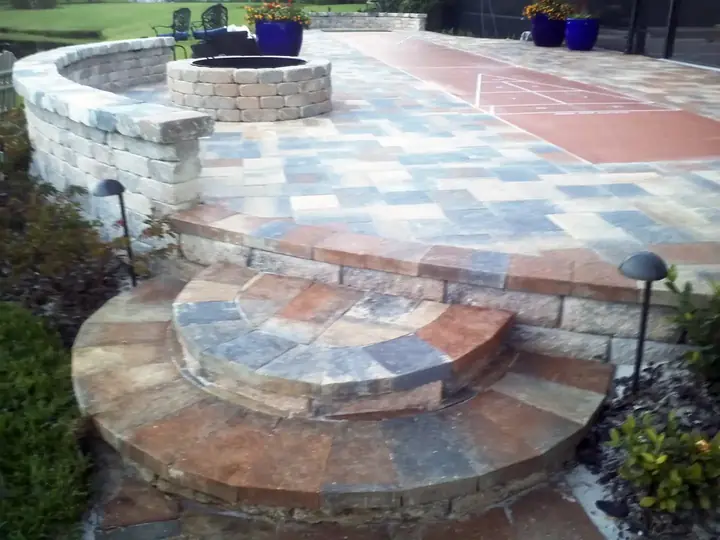
A low spot in the driveway, a puddle that wasn't there last year, or a paver that rocks underfoot: settling is one of the most common paver problems in Tampa Bay. Our sandy soil drains fast, which is great for pavers, until water starts carrying the base away.
Why Pavers Sink
| Cause | Where You See It |
|---|---|
| Water washing out the base | Under downspouts, along pool edges, at low corners |
| Weak or missing edge restraint | Outer rows spreading and dropping along the lawn |
| Poor compaction at install | Wheel paths on driveways, areas over old trenches |
| Irrigation or plumbing leaks | A low spot that keeps getting worse near a valve or line |
| Tree roots | Raised and cracked areas near oaks and palms |
| Ants and empty joints | Scattered rocking pavers and sand piles; see ants in pavers |
To understand what's under the surface, read understanding brick paver installations.
Sinkholes and Drainage
Parts of Hillsborough and Pasco counties sit on limestone that can develop sinkholes. Most paver settling is not a sinkhole; it's water moving sand. But a depression that appears suddenly, keeps growing, or shows cracks in nearby walls, slabs, or the house should be looked at by a qualified professional right away. Fixing drainage, like extending downspouts and correcting grades, prevents many repeat repairs.
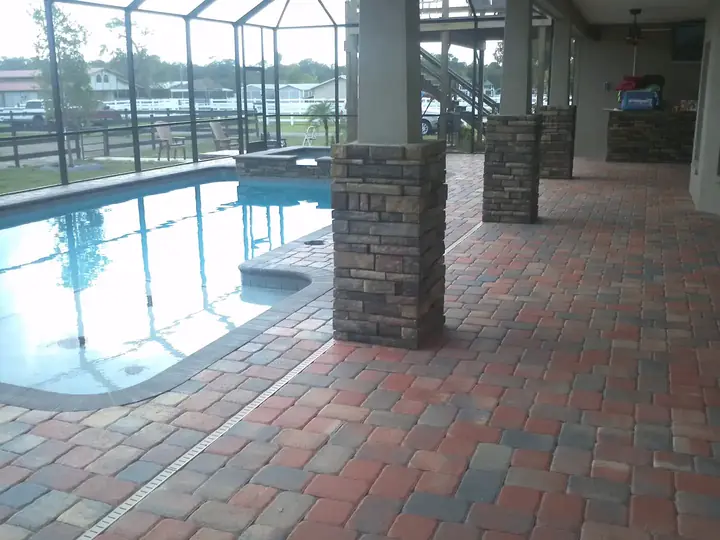
How Sunken Pavers Are Fixed
- Pavers in the low area are carefully lifted and set aside.
- The base is rebuilt and compacted, and bedding sand is screeded level.
- The cause is addressed: edge restraint, drainage, or roots.
- Pavers are reset, compacted, and the joints filled.
- The area is cleaned and sealed so it matches the rest of the surface.
We coordinate the repair with the highest rated local paver installers, then clean, sand, and seal. See paver repairs and leveling, or travertine and marble repairs for stone.
Why You Should Repair Before Sealing
Sealing locks in whatever is there, including low spots and rocking pavers. Repairing first means one clean, even finish and joints that stay put. It's one of the sealing mistakes we fix most often.
Trip Hazards Around Pools and Entries
Uneven pavers near pools, steps, and front entries are trip hazards for kids, guests, and older family members. If an edge sticks up enough to catch a toe, it's worth fixing soon. We see settling everywhere from Lithia and Plant City to Wesley Chapel, and most repairs are small and fast.
Outstanding experience from start to finish. They did a fantastic job sealing our pavers, and look amazing. Professional, reliable, and detail oriented. Would absolutely recommend!
Sunken or Uneven Pavers: Causes and Fixes FAQs
Why are my pavers sinking?
Usually water is washing sand out of the base, often near downspouts, pool edges, or a weak edge restraint. Leaks, roots, and ants can also cause settling.
Can sunken pavers be fixed without replacing them?
Yes. The pavers are lifted, the base is rebuilt and leveled, and the same pavers are reset, then cleaned and sealed.
Is a sunken paver a sign of a sinkhole?
Usually not; most settling is water moving sand. A depression that appears suddenly or keeps growing, or cracks in nearby structures, should be checked by a qualified professional.
Should I seal pavers before fixing low spots?
No. Sealing locks in low spots and rocking pavers. Repair first, then clean and seal.
How do I stop pavers from sinking again?
Fix the cause: drainage, downspouts, edge restraint, or leaks. Keep joints full and sealed so water and ants can't move the sand.
Do you fix travertine that has settled?
Yes. We coordinate stone repairs with experienced local installers, then clean and seal the deck.