
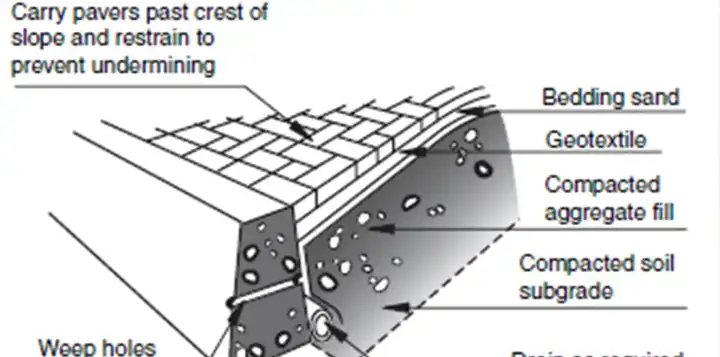
A paver driveway or patio is a system. What's under the pavers matters as much as the pavers themselves.
The Layers of a Paver Installation
- Pavers with sand-filled joints that lock them together
- Bedding sand, usually about 1 to 2 inches, which the pavers sit in
- Compacted base that carries the load
- Geotextile fabric in many installs, separating base from soil
- Compacted soil below
- Edge restraint that keeps the field from spreading
The Interlocking Concrete Pavement Institute (ICPI) publishes installation guidance for contractors.
What This Means for Sealing
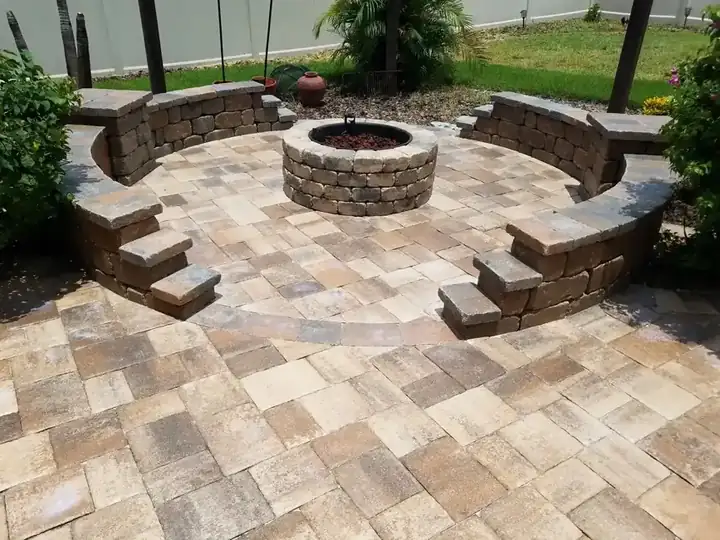
Sealing protects the surface and hardens the joint sand, but it can't fix a soft base or failed edge. Sunken or spreading areas need repairs and leveling first. We work with the highest rated local paver installers to assure repairs are done correctly before sealing.
When the base fails, pavers settle. See sunken or uneven pavers: causes and fixes.
Not sure what your surface is made of? Read how care differs for concrete pavers, clay brick, and travertine.
Steven and crew did a fabulous job and I highly recommend this company for their professional service, start to finish including clean up. Great family owned company.
Understanding Brick Paver Installations FAQs
Why do pavers sink?
Usually because the base under them settled or washed out, or the edge restraint failed.
Can sealing fix a bad base?
No. Sealing locks the surface and joints. Base problems need repair and re-leveling first.