
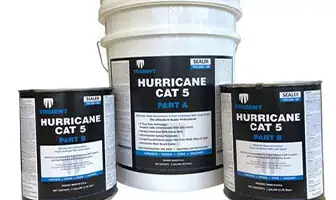
When a driveway or patio needs the toughest protection and the richest color, we use Trident Hurricane CAT 5. It's a professional-only, 2-part water-based urethane that does three jobs at once: it seals the surface, deepens the color with a wet look, and hardens the joint sand so it stays put.
Hurricane CAT 5 is a professional-only product. We are Trident Trusted Certified Master Technicians, trained to mix, dilute, and apply it correctly. More about Trident.
Wondering if CAT 5 is right for your surface? Use the sealer selection guide to check in a minute.
What Hurricane CAT 5 Does
- Stabilizes joint sand. Hardens the sand between pavers to reduce washout, weeds, and insect activity.
- Enhances color. Brings out deep color with a semi-gloss to high-gloss finish.
- Protects the surface. Resists salt, mild acids, and stains, which makes cleaning easier.
- Fights mold and algae. Includes an antifungal additive that protects the sealer film.
- Stays clear. Won't yellow in sunlight, and it's breathable and low VOC.
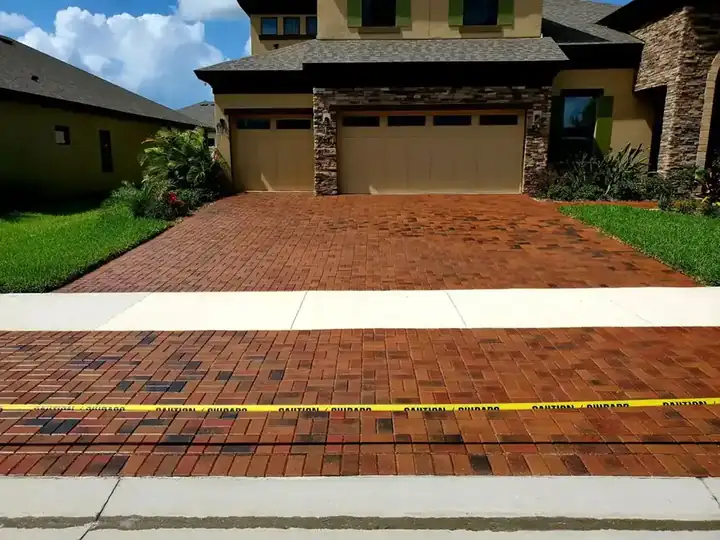
Where We Use Hurricane CAT 5
CAT 5 is suitable for concrete and clay pavers, travertine (after a test), natural and manufactured stone (test required), flat and stamped concrete, retaining wall block, and exposed aggregate. It's ideal for paver driveways and other high-traffic areas. It isn't recommended for marble, granite, or polished stone; for those we use penetrating stone sealers.
Choosing the Sheen
CAT 5 is mixed and diluted on site. Trident offers two dilution rates, and combining them across two coats sets the finish:
| 1st Coat | 2nd Coat | Joint Stabilization | Sheen |
|---|---|---|---|
| D1 | D1 | Ultimate | High-gloss |
| D1 | D2 | Ultimate | Gloss |
| D2 | D1 | Best | Gloss |
| D2 | D2 | Best | Semi-gloss |
Prefer a natural look with no shine? We'll recommend Trident Cyclone instead. Compare finishes on our sand colors and finishes page.
How We Apply It
- Deep clean and treat stains so no dirt or old sealer is trapped.
- Wet-sand the joints with ASTM C144 joint sand for tight compaction.
- Mix Part A and Part B, then dilute to the rate for your chosen sheen.
- Apply two coats, with the second going on after the first is dry to the touch.
Coverage for joint stabilization is about 80 to 120 square feet per mixed gallon, so a full kit covers roughly 1,500 to 2,000 square feet depending on dilution.
Why Hurricane CAT 5 Is the Better Value
Hurricane CAT 5 has twice as much urethane as other brands. That extra urethane is what gives it commercial-grade protection, excellent color enhancement, and joint sand that stays hard through Florida's summer storms. It also stretches the time between sealings: most of our customers report 3 to 4 years before they need a reseal.
| What You Get | Why It Matters |
|---|---|
| Twice the urethane of other brands | A tougher film that stands up to tires, foot traffic, and UV |
| Commercial-grade protection | Built for driveways, pool decks, and busy community walkways |
| Excellent color enhancement | Deep, rich color in a semi-gloss to high-gloss finish |
| Joint stability | Hardened sand that resists washout, weeds, and ants |
| 3 to 4 years between reseals for most customers | Fewer service visits and a lower cost per year |
A cheaper sealer that has to be redone every year or two costs more over time. That's why we consider CAT 5, applied over a careful clean and wet-sanded joints, the best value in the business. See what goes into the price in our paver sealing cost guide.
Hurricane CAT 5 at a Glance
| Item | Trident Hurricane CAT 5 |
|---|---|
| Type | Professional-only, 2-part water-based urethane |
| Finish | Wet look: semi-gloss to high-gloss, set by dilution |
| Joint sand | Hardens it to reduce washout, weeds, and insects |
| Protection | Salt, mild acids, stains, mold, and algae; non-yellowing, breathable, low VOC |
| Coverage | About 80 to 120 sq ft per mixed gallon for joint stabilization; a full kit covers roughly 1,500 to 2,000 sq ft |
| Use on | Concrete and clay pavers, travertine and stone (after a test), flat and stamped concrete, wall block, exposed aggregate |
| Not for | Marble, granite, or polished stone |
| How long it lasts | Most of our customers report 3 to 4 years between reseals |
Hurricane CAT 5 vs. Cyclone
Both are Trident sealers that harden joint sand. The difference is the look. Hurricane CAT 5 deepens color with a wet look, while Trident Cyclone keeps a natural, matte finish. Not sure which fits your pavers? Try the sealer selection guide.
Hurricane CAT 5 Documents
Official manufacturer information, including the Technical Data Sheet (TDS) and Safety Data Sheet (SDS). Links open the manufacturer's current versions.
Customer Reviews: Hurricane CAT 5
I had Paver Sealing Florida seal my driveway, backyard patio, and pool deck pavers, and they did an outstanding job. The team was efficient, friendly, and clearly knew what they were doing. They paid close attention to every detail and made sure everything was done right.
The finished product looks amazing—like everything was freshly installed. The color of the pavers really pops now, and the surface is protected and easy to maintain. I’m beyond satisfied with the quality of their work and would definitely use them again. Highly recommend!
Hired paver sealing for our rear patio pavers around the swimming pool. These guys are professional. They did an amazing job. They kept us in the loop the entire process on what they were doing, when they were arriving, and when they left. We even had to have some pavers replaced by our pool installation company, and the guys came back; and resealed the pavers that were replaced. Great guys to work with! We definitely will have them out again in a couple years when it’s time to reseal again.
I would highly recommend Paver Sealing Florida. Steve and Sam were very professional, polite, and knowledgeable. They worked at our house two days, cleaned and sealed our lanai and driveway. The transformation of our 4 year old pavers was amazing. They brought back colors in our pavers we forgot were there. We will definitely be calling them again. Top notch 5 out of 5 rating!
More Reading on Hurricane CAT 5
Hurricane CAT 5 FAQs
Is Hurricane CAT 5 slippery?
Applied correctly, it isn't overly slick, but any high-gloss finish can feel slippery when wet. Trident notes that excessive application can make a surface slippery and some surfaces may need an anti-slip additive. We offer a slip resistance add-on for an additional charge.
What finish does Hurricane CAT 5 give?
It ranges from semi-gloss to high-gloss with deep color enhancement, depending on the dilution used for each coat.
Can Hurricane CAT 5 be used on marble?
No. Trident's data sheet says it isn't recommended for marble, granite, ceramic tile, or polished and honed surfaces. For marble we use penetrating sealers instead.
How long before I can drive on pavers sealed with CAT 5?
Plan on 24 hours before foot traffic and 48 hours before driving. Allow extra time in cold or damp weather. We'll confirm timing for the weather on your service day.
Can CAT 5 be stripped later?
It's very durable, and Trident warns it's extremely difficult to strip. That's why we help you choose the finish carefully before we apply it.
Does CAT 5 trap moisture or efflorescence?
It's a breathable, water-based sealer designed not to trap naturally occurring efflorescence or moisture.
How long does Hurricane CAT 5 last?
Most of our customers report 3 to 4 years before they need a reseal, depending on sun, traffic, and irrigation.
What makes Hurricane CAT 5 different from other paver sealers?
It has twice as much urethane as other brands, which gives it commercial-grade protection, strong color enhancement, and hardened joint sand.
Can homeowners buy Trident Hurricane CAT 5?
Hurricane CAT 5 is a professional-only product that has to be mixed, diluted, and applied correctly. We are Trident Trusted Certified Master Technicians.
Is Trident CAT 5 a wet look sealer?
Yes. Depending on the dilution of each coat, it ranges from a semi-gloss to a high-gloss wet look. For no shine, we use Trident Cyclone.
How long does Hurricane CAT 5 last?
Most of our customers report 3 to 4 years between reseals. Full sun, heavy traffic, and irrigation overspray shorten that time.