
Most Florida patios, driveways, and pool decks are concrete pavers, clay brick, or travertine. They look similar from the street, but they're made differently, so they stain, fade, and take sealer differently. Care that's right for one can damage another.
How the Three Materials Compare
| Item | Concrete Pavers | Clay Brick | Travertine |
|---|---|---|---|
| Made of | Cement, sand, and pigment | Fired clay | Natural limestone |
| Color | Surface pigment can fade in sun | Color runs through; fades very little | Natural tones; can darken or yellow if neglected |
| Absorbs Water | Moderately | Little | Readily, through pores and holes |
| Efflorescence | Common, especially when new | Possible | Rare |
| Acid Cleaners | Pros only, used carefully | Pros only | Never; acid etches the stone |
| Typical Sealer | Film-forming, natural or wet look | Thin coats; dense surface limits absorption | Breathable penetrating or stone-rated sealer |
Caring for Concrete Pavers
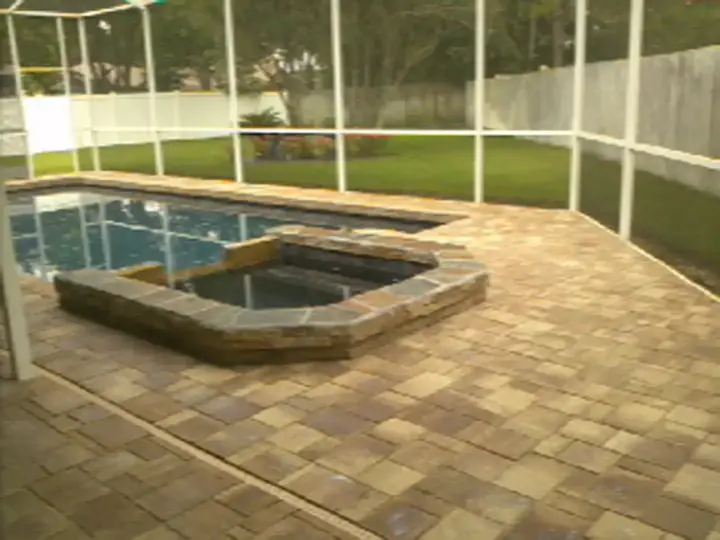
Concrete pavers are the most common surface we seal. Sun fades the surface pigment, and new pavers often show white efflorescence for the first months. A surface cleaner at controlled pressure, fresh joint sand, and a UV-stable sealer bring the color back. See how to restore faded pavers.
Caring for Clay Brick Pavers
Fired clay holds its color for decades, so clay brick rarely needs sealer to look bright. Because it absorbs so little, heavy coats can sit on top and turn cloudy. We apply light, even coats when a homeowner wants richer color or stain protection.
Caring for Travertine
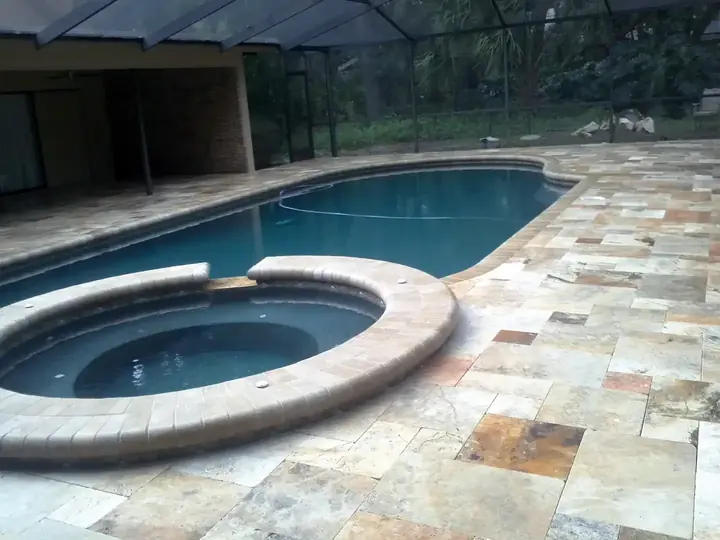
Travertine is calcium-based stone, so acids, some pool chemicals, and many household cleaners etch it. Use pH-neutral, stone-safe cleaners, low pressure, and a breathable sealer that lets moisture escape. Our travertine care guide covers routine cleaning, and etching on travertine and marble explains the dull spots acids leave.
What All Three Share
- Full joints keep weeds, ants, and shifting out.
- Stains come out more easily before sealing than after.
- Florida sun and rain wear sealer faster than labels suggest.
Joint Sand Differences by Material
All three sit on a compacted base with sand joints, but the joints differ. Concrete pavers and clay brick usually have tight joints that hold polymeric sand or a joint-stabilizing sealer well. Travertine joints vary with tile size and pattern, and wider joints around a pool need sand that won't wash out. See polymeric sand vs. joint-stabilizing sealer and joint sand colors and sealer finishes.
Not sure what you have? We identify the material on every estimate across Riverview, Sun City Center, Carrollwood, and Tampa Bay. For choosing a new surface, read our travertine vs. pavers comparison.
I hired Steve after talking to two other companies. The reason I decided on Paver Sealing Florida was due to Steve’s thorough explanation of the sealing process and cost for materials etc…Steve’s crew arrived 15 minutes early for my scheduled appointment and completed all the work by the afternoon.
Later that evening we experienced heavy rain fall the same day of the sealing process . Surprisingly, everything held up exceptionally well, however, before I could even reach out, Steve was at my property the following day to inspect everything after the rain we had the night before. He decided to add another coat of sealant at no cost just to ensure everything will hold up well. I am extremely impressed by the quality and professionalism of Paver Sealing Florida.
If you’re in the process of find a paver sealing company for your property, look no further, these guys will go above and beyond to ensure a quality product. 5 stars!
How Care Differs for Concrete Pavers, Clay Brick, and Travertine FAQs
What's the difference between concrete pavers and clay brick pavers?
Concrete pavers are cement with surface pigment that can fade. Clay brick is fired clay with color all the way through, so it fades very little and absorbs less water.
Can you use the same cleaner on pavers and travertine?
Not always. Acidic cleaners that are sometimes used on concrete pavers etch travertine. Use pH-neutral, stone-safe cleaners on natural stone.
Does clay brick need to be sealed?
It doesn't need sealer to keep its color, but sealing adds stain protection and a richer look. Thin coats prevent cloudiness on dense brick.
Which fades more, concrete pavers or travertine?
Concrete pavers fade more because their color is surface pigment. Travertine keeps its natural tone but can darken or yellow if dirt and old sealer build up.
Why do new concrete pavers turn white?
That's efflorescence, natural salts rising from the cement. It's common in the first months and fades or can be cleaned before sealing.