
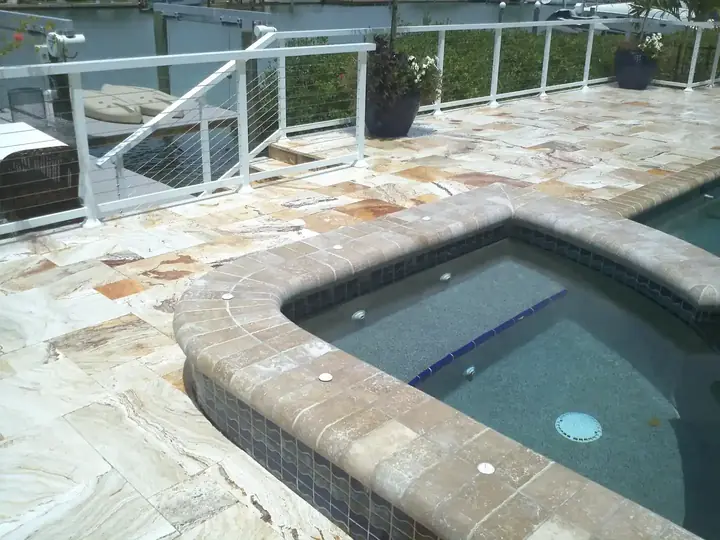
Dull, light spots on an outdoor travertine or marble deck that won't wipe off are usually etching. Unlike a stain, which is something added to the stone, etching is the stone itself being eaten away by acid. Both travertine and marble are calcium-based, so they're especially sensitive.
Etching vs. Stains
| Item | Etching | Stain |
|---|---|---|
| Looks Like | Dull, lighter, or rough spot; often the shape of a splash or drip | Darker or colored mark: orange, brown, black |
| Caused by | Acid dissolving the stone surface | Something soaking into the stone |
| Fix | Prevention; deep etching needs stone refinishing | Cleaning or poultice matched to the stain |
What Etches Outdoor Travertine and Marble
- Vinegar and lemon, including "natural" DIY cleaners
- Citrus, wine, soda, and cocktails spilled on the deck
- Pool acid used to adjust pH, if it's splashed or diluted water runs onto the deck
- Acid-based rust, efflorescence, and concrete cleaners not made for natural stone
- Some fertilizers and weed killers drifting onto the stone
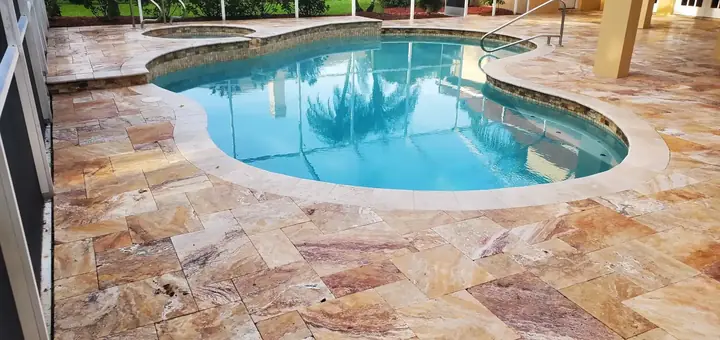
Does Sealing Prevent Etching?
Not completely. A penetrating sealer slows down stains by keeping liquids from soaking in, but it doesn't change the stone's chemistry, so acid can still etch the surface. Sealing does buy you time to rinse a spill before it soaks in, and it makes cleaning far easier. That's why we pair sealing with good habits.
Preventing Etching
- Rinse spills from drinks, citrus, and pool chemicals right away with plenty of fresh water.
- Use only pH-neutral, stone-safe cleaners; see how to clean a travertine pool deck.
- Add pool chemicals carefully and away from the coping, and rinse any splashes.
- Keep fertilizer and weed killer off the stone.
- Keep the stone sealed; see travertine sealing and marble paver sealing.
Can Etching Be Fixed?
On tumbled or textured outdoor stone, light etching often blends in after a thorough cleaning and sealing. Deeper etching that changed the surface texture may need stone refinishing by a restoration specialist; we focus on exterior cleaning and sealing, so we'll tell you honestly what to expect before we start. Badly damaged pieces can be replaced; see travertine and marble repairs.
We clean and seal outdoor travertine and marble across South Tampa, Harbour Island, FishHawk, and Tampa Bay.
For routine care that prevents etching, read outdoor marble cleaning do's and don'ts, and for deep stains, removing stains from outdoor marble with a poultice.
Sam and Steve at Paver Sealing Florida just finished sealing our paver pool deck and driveway and they look awesome! We just had a new pool built and we had a large preexisting deck that was about 7 years old. We had our pool builder (Integrity Pools) reuse our old deck pavers that were removed. They had 7 years of grime built up on them and honestly we weren’t sure that they could be brought back to life. Sam and Steve completely revived them and you’d think we just had brand new pavers installed! Sam and Steve are great to work with and very meticulous. They treat your property like it’s their own, which is very hard to come by these days. We are very pleased with the final results and we highly recommend them.
Etching on Travertine and Marble FAQs
What causes dull spots on travertine?
Usually etching from acid: vinegar, citrus, drinks, pool acid, or acid-based cleaners dissolving the stone surface.
Is etching the same as a stain?
No. A stain is something soaked into the stone. Etching is damage to the stone surface itself and won't wash off.
Does sealing stop etching on marble?
Not completely. Sealing slows stains and gives you time to rinse spills, but acid can still etch calcium-based stone.
Can pool chemicals damage travertine?
Yes. Splashed pool acid and strong chemicals can etch travertine and marble. Add chemicals carefully and rinse any splashes.
Can etching be removed?
Light etching on textured outdoor stone often blends in after cleaning and sealing. Deep etching may need stone refinishing by a restoration specialist.
What cleaner is safe for outdoor marble?
A pH-neutral cleaner labeled safe for natural stone. Avoid vinegar, lemon, and acidic or ammonia-based cleaners.