
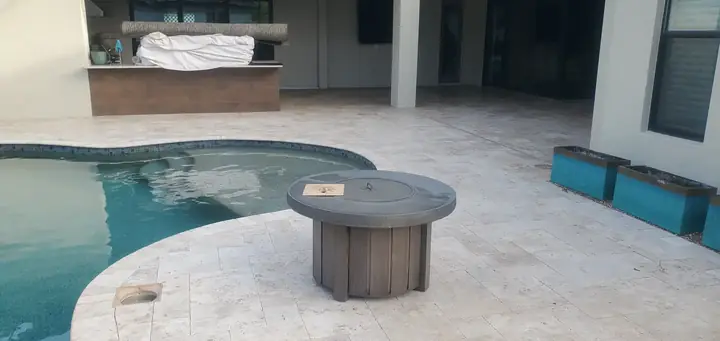
Marble pool decks and patios are beautiful, but marble is softer than concrete and reacts with acids. Most of the damage we see on exterior marble comes from the wrong cleaner or too much pressure, not from age. These do's and don'ts keep it bright. We clean and seal exterior marble only; we don't work on indoor floors or countertops.
Marble Cleaning Do's
- Do use pH-neutral, stone-safe cleaners for routine washing.
- Do rinse often. Plain water removes sand, pollen, and pool splash before they grind or stain.
- Do use a soft brush or low pressure with a surface cleaner or wide fan tip held well back.
- Do blot spills fast, especially wine, juice, sunscreen, and grill drips near an outdoor kitchen.
- Do keep the sealer up, usually every 2 to 4 years outdoors, so stains stay at the surface.
Marble Cleaning Don'ts
- Don't use vinegar, lemon, or acid cleaners. They etch dull, rough spots into marble.
- Don't use bleach or harsh degreasers unless the label says they're safe on marble.
- Don't blast it. High pressure pits the surface and opens the joints.
- Don't let fertilizer or irrigation water sit on the stone; both can leave rust and etch marks.
- Don't pour pool acid or shock near the deck without rinsing splashes right away.
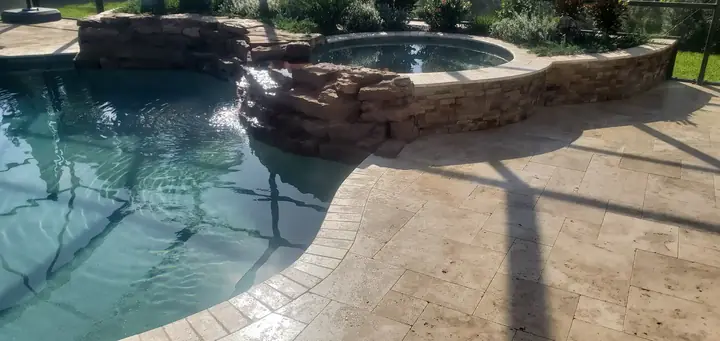
Pool Water, Salt, and Chemical Splash
Pool decks take the most abuse. Chlorine, salt, and acid splash land on the coping every day. A quick freshwater rinse after heavy swim days and after adding chemicals prevents most etching and white buildup. See pool chemical and calcium stains and stone around salt water pools.
Already Dull or Etched?
Light etching often blends back in after a professional clean and a fresh coat of sealer. Deeper etching that changed the surface texture needs a stone refinishing specialist, and we'll tell you honestly before we start. Read etching on travertine and marble for what to expect.
Professional Marble Cleaning and Sealing
We clean exterior marble with stone-safe products and controlled pressure, re-sand the joints, and apply a breathable sealer. See our marble paver sealing service and marble and stone FAQs. We serve Tampa Palms, South Tampa, Lithia, and nearby communities.
Seeing a yellow or amber tint? See yellowing outdoor marble: causes and fixes.
I’m so happy that I found Steven & Sam they are both incredibly knowledgeable. What I found most impressive is their honesty and reliability. They walked me through the project details and then they did exactly what they told me they would do. They showed up when they said they would and did a fantastic job. They both take great pride in their work and it shows. Companies like this are incredibly rare and hard to find. If you need your pavers sealed and done correctly, look no further and give them a call.
Outdoor Marble Cleaning Do's and Don'ts FAQs
What is the best way to clean an outdoor marble patio?
Rinse often, wash with a pH-neutral, stone-safe cleaner and a soft brush, and use low pressure if you use a washer at all.
Can I use vinegar on outdoor marble?
No. Vinegar is an acid and etches marble, leaving dull, rough spots.
Can you pressure wash marble pavers?
Only at low pressure with a surface cleaner or a wide tip held well back. High pressure pits marble and blows out joint sand.
How often should exterior marble be sealed?
Usually every 2 to 4 years outdoors in Florida, sooner around salt water pools or in full sun.
Do you clean indoor marble floors or countertops?
No. We clean and seal exterior marble only, such as pool decks, patios, lanais, and outdoor kitchens.
Is bleach safe on marble pavers?
Avoid it unless the product is labeled safe for marble. Stone-safe cleaners remove mildew without risking discoloration.