
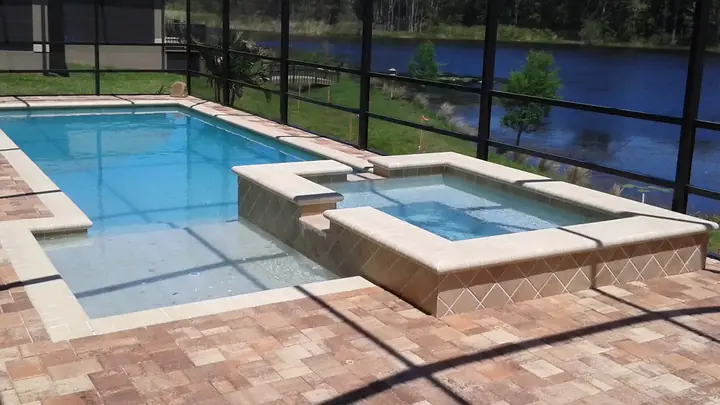
A pool deck should be the most relaxing spot at home, but wet feet, algae, sunscreen, and glossy sealer can turn it into the most slippery one. Kids run, guests carry drinks, and older family members need steady footing. Here's how our products and 20 years of experience help make pool areas safer, on pavers, travertine, marble, and natural stone.
Why Florida Pool Decks Get Slippery
- Algae and mildew grow fast in our heat and humidity, especially in shade and under screen enclosures.
- Sunscreen and pool chemicals leave a slick film on the surface.
- Glossy or built-up sealer fills in the texture that gives feet something to grip.
- Smooth stone such as polished or honed marble is naturally slick when wet.
- Steps, coping, and entries are where people change direction with wet feet, so slips happen there first.
Our Slip-Resistant Coating
We now offer slip-resistant coatings for travertine, marble, natural stone, and pavers. Our coating of choice is Cobble Grip by SurfaceLogix, a clear, water-based sealer. We mix SurfaceLogix's non-skid additive into the final coat, which leaves a fine texture that improves traction when the deck is wet. It dries clear with a semi-gloss sheen and is listed by the maker for pool decks, patios, and walkways.
On paver decks that also need hard joint sand, we can add grip to our Hurricane CAT 5 finish instead. Either way, you see a test area before we coat the whole deck.
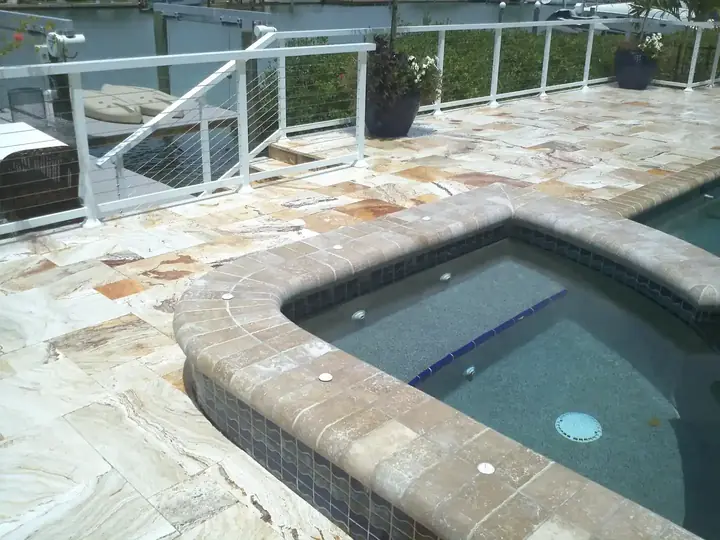
Why Expertise Matters as Much as the Product
A non-slip coating only works when it's put down right. This is where most DIY jobs and bargain crews go wrong:
| Step | What We Do | Why It Matters |
|---|---|---|
| Cleaning | Remove algae, mildew, sunscreen film, and stains with surface-safe cleaners | Coating over grime traps it and stays slippery |
| Old sealer | Strip peeling, cloudy, or built-up sealer when needed | Thick old layers are often the reason a deck is slick |
| Repairs | Fix sunken pavers and loose stone with top-rated local installers | Trip edges are a hazard no coating can fix |
| Stone-safe prep | Match the prep to the stone, and never acid-etch marble | Wrong chemicals can etch and dull travertine and marble |
| Thin, even coats | Roll or spray thin coats so the stone texture stays | Heavy coats fill in texture and get slick |
| Grip where it counts | Non-skid additive in the final coat, with extra care on steps, entries, and coping | Those are the spots where most slips happen |
Steve and Sam measure, prep, and coat every job themselves. We are Trident Trusted Certified Master Technicians, and every job is backed by our lifetime labor guarantee.
Which Surfaces Benefit Most
- Travertine pool decks: tumbled travertine has some natural grip, but algae and glossy sealers can take it away. Read is travertine slippery?
- Marble pool decks: smooth marble is the slickest when wet, so a test area and gentle prep come first.
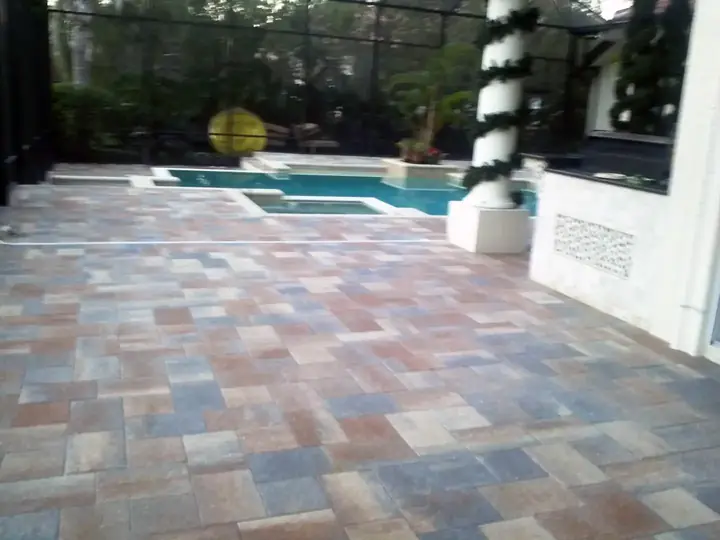
- Paver pool decks: wet-look finishes look great and can be paired with grip. See is wet look sealer slippery?
- Natural stone, steps, and entries: anywhere water collects or people walk barefoot.
What to Expect on Project Day
- We cover the pool skimmer and protect plants, screens, and doors.
- We clean, repair, and re-sand as needed, then let the deck dry.
- We apply thin coats, with the non-skid additive in the final coat.
- The coating is dry to the touch in about an hour. Full cure takes 48 to 72 hours, and we'll tell you when furniture can go back.
See how to get ready with our sealing day prep checklist.
Keeping the Deck Safe Year After Year
- Rinse sunscreen and pool chemicals off the deck regularly, and treat algae before it builds up.
- Use a gentle cleaner made for sealed surfaces; avoid harsh acids on travertine and marble.
- Schedule a refresh coat every few years. The maker advises not reapplying more often than every 18 months, to avoid buildup.
For HOAs, condos, and rentals, see pool deck slip safety for property owners and our commercial and HOA services. This article is general information; no coating makes a wet surface slip-proof.
Ready for safer footing around your pool? Learn about our slip resistant coatings service or call or text (813) 389-3683 for a free written estimate. We serve Brandon, Riverview, FishHawk, Apollo Beach, Sun City Center, and all of Tampa Bay.
Safer Pool Deck FAQs
What is the best way to make a pool deck less slippery?
Clean off algae and film, fix trip edges, and apply a clear coating in thin coats with a non-skid additive in the final coat. That combination adds grip without hiding the stone or pavers.
Do you offer slip-resistant coatings for travertine and marble?
Yes. We coat travertine, marble, natural stone, and pavers. Stone gets stone-safe prep, and we always do a test area on marble.
What product do you use?
Cobble Grip by SurfaceLogix, a clear, water-based sealer, with SurfaceLogix non-skid additive in the final coat. On some paver decks we add grip to Trident Hurricane CAT 5.
Will a slip-resistant coating change how my deck looks?
Cobble Grip dries clear with a semi-gloss sheen and a light texture. We show you a test area before coating the whole deck.
How long does a slip-resistant coating last?
It depends on sun, traffic, and cleaning. Most decks need a refresh coat every few years, and not more often than every 18 months.
Is it worth adding grip to just the steps?
Yes. Steps, pool entries, and coping edges are where most slips happen, so starting there makes sense if you are on a budget.