
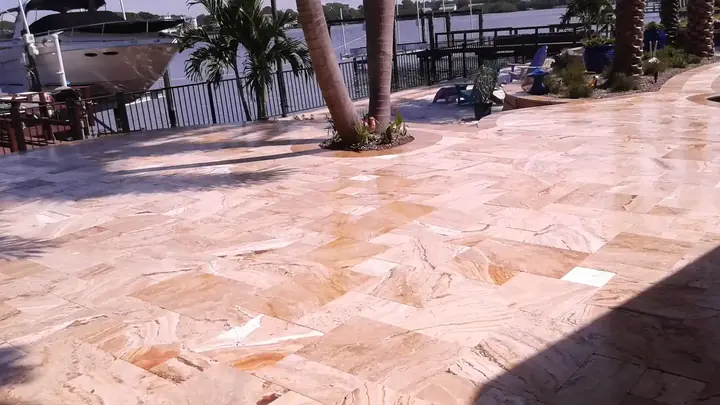
After a hurricane, your pavers are the last thing on your mind, and they should be. Safety, family, and your home come first. When it's time to clean up, a few careful steps can keep mud, salt, and debris from turning into permanent stains and costly repairs.
Safety First
- Stay off areas with downed power lines, and never rinse near electrical equipment that may be wet or damaged.
- Treat floodwater mud as contaminated. Wear gloves and boots and keep kids and pets away until it's cleaned up.
- Take photos of damage before cleaning for your insurance claim.
Step-by-Step Cleanup for Pavers and Stone
- Remove debris like branches and leaves quickly. Wet oak and palm leaves leave tannin stains.
- Shovel or scrape off mud and silt before it dries hard.
- Rinse with plenty of fresh water, working toward drains and away from the house.
- Flush salt after storm surge. Rinse waterfront pavers, travertine, and coping several times over a few days. Salt left inside stone can cause flaking as it dries.
- Use gentle pressure. Blasting with a narrow tip drives silt deeper and blows out joint sand.
Check for Damage
| What You See | What It Means |
|---|---|
| Empty or washed-out joints | Needs re-sanding and a joint-stabilizing seal |
| Low spots or puddles that weren't there | Base washout; needs paver repairs and leveling |
| Loose coping or cracked stones | See travertine and marble repairs |
| Brown or orange stains after the water drops | Tannin, silt, or iron; treat before sealing. See stain removal |
| White crust drying on stone | Salt or efflorescence; rinse and treat with stone-safe products |
Pool Decks After a Storm
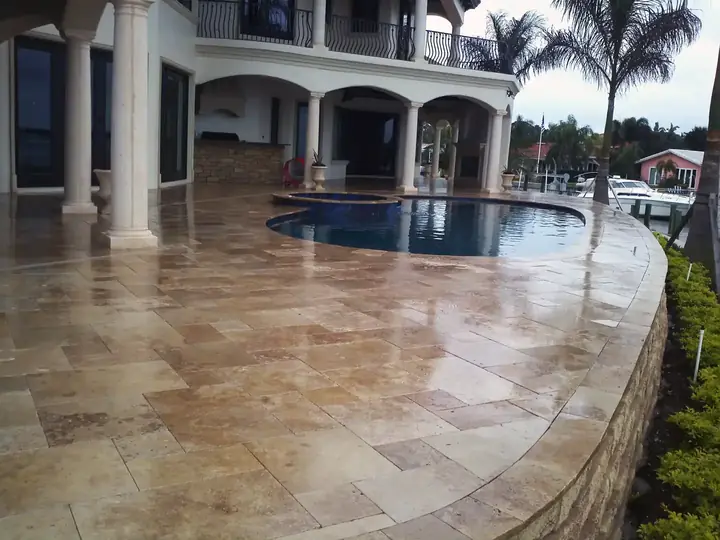
Clear debris before it can blow or wash into the pool, and check the coping for movement. Salt water pool owners should rinse the deck well, since surge and the pool both add salt. Read travertine around salt water pools.
When to Reseal After a Storm
Wait until repairs are done and the base and joints are fully dry. Then a professional clean, fresh joint sand, and a new seal restore protection. For bayfront homes we often recommend breathable penetrating sealers like Trident Sea Wall for natural stone. If you're getting ready for next season, see why to seal before hurricane season.
We help homeowners recover hardscapes across Apollo Beach, Ruskin, Gibsonton, Pinellas County, and all of Tampa Bay. Our hardscape restoration service handles the full cleanup, repair coordination, and sealing.
We had recently had pavers installed from our driveway to the front door. Upon completion we needed to have the newly installed pavers sealed. In connecting with various sources to get the pavers sealed I was quite surprised at most company’s minimum charge. Almost giving up I came across Paver Sealing Florida. Not only was their minimum charge very reasonable but it came with excellent customer service, attention to detail and a high degree of knowledge & professionalism. We have recommended them to our friends and will be utilizing their services in the future.
Paver and Stone Care After a Hurricane FAQs
How do I clean mud off pavers after a flood?
Scrape off as much as you can before it dries, then rinse with plenty of fresh water and gentle pressure. Wear gloves and boots, since floodwater mud can be contaminated.
Does salt water damage pavers and travertine?
Salt left to dry inside stone can cause flaking and pitting over time. Rinsing thoroughly with fresh water after surge helps a lot.
Should I pressure wash pavers after a hurricane?
Use gentle pressure only. A narrow tip can blow out joint sand and drive silt deeper into the surface.
Why are my pavers sinking after a storm?
Heavy rain and surge can wash out the sand base under the pavers. Low spots should be lifted, re-based, and reset before sealing.
When should I reseal after a hurricane?
After repairs are done and the pavers, joints, and base have fully dried out.
Will my sealer protect pavers from storm damage?
Sealer helps hold joint sand in heavy rain, but it can't stop standing floodwater or a washed-out base.