
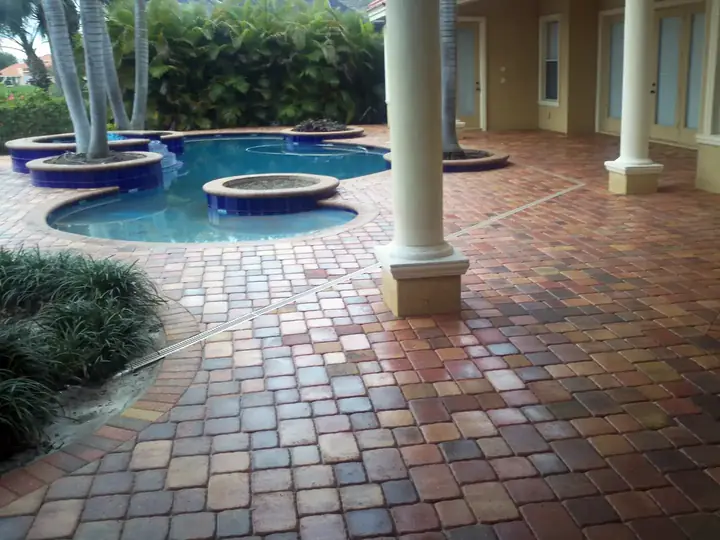
When sealer peels, turns milky white, or yellows, a lot of homeowners assume the pavers are ruined. Usually they aren't. The problem is the sealer on top, and it can be removed. Here's how to decide between stripping and resealing or tearing out and replacing.
The Problem Is Usually the Sealer, Not the Pavers
Concrete pavers and travertine can last for decades. What fails is the coating: too many layers, the wrong product, sealer applied over damp pavers, or a solvent sealer that trapped moisture. Signs include peeling, flaking, white or cloudy patches, and a slick, plastic look. Read why paver sealer turns white or cloudy and the biggest sealing mistakes we fix.
When Stripping and Resealing Makes Sense
- The pavers themselves are solid, with little cracking or crumbling.
- The surface is mostly level, with only a few low spots that can be reset.
- The problem is peeling, hazy, or yellowed sealer.
- You like the pavers and just want them to look right again.
Stripping removes the old coating with a stripper matched to the sealer, followed by a deep clean, fresh joint sand, and a new seal. See our brick paver and travertine sealer stripping service.
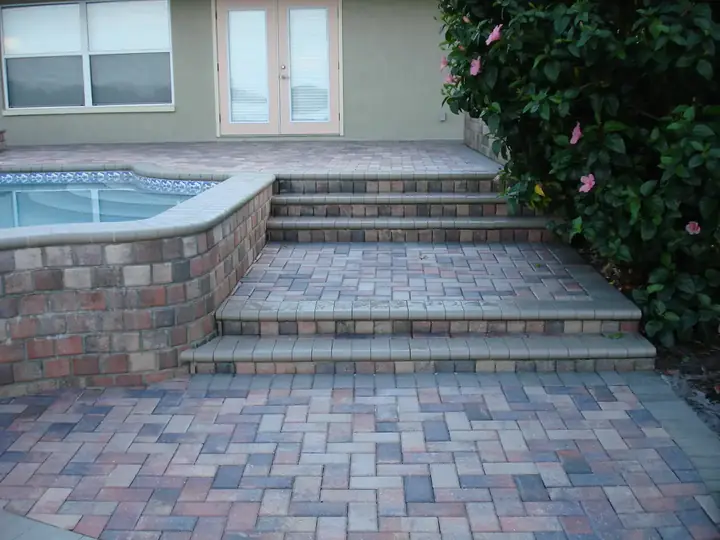
When Replacement Makes Sense
- Many pavers are cracked, spalling, or crumbling.
- The base has failed across a large area and most of the surface would have to be lifted anyway.
- You want a completely different look, size, or layout.
Even then, lifted pavers in good condition can sometimes be reused. For smaller problem areas, paver repairs and leveling fix the spot without redoing everything.
How the Costs Compare
| Item | Strip and Reseal | Replace |
|---|---|---|
| What's Involved | Strip, deep clean, re-sand, seal | Tear out, haul away, new base, new pavers, sand, then seal |
| Typical Cost | $3.00 to $5.00 per square foot for full stripping and restoration | Usually many times more per square foot |
| Time | Typically a few days | Usually much longer, plus permits or HOA approval in some communities |
| Disruption | Light | Heavy equipment, debris, and landscaping repair |
The best savings come from never needing to strip. Many failed jobs we strip came from the "$99 guy," and fixing them often costs double. For typical sealing prices and what changes them, see the paver sealing cost guide. Every job starts with an on-site measurement and a written price.
Travertine Too
Travertine with the wrong sealer can look plastic or turn hazy. It can be stripped with stone-safe products and resealed with a breathable sealer. See travertine cleaning and sealing.
Get an Honest Opinion
We'll tell you if your pavers can be saved. Most can. Our paver restoration work across Valrico, Riverview, New Tampa, and Tampa Bay brings faded and failed surfaces back for far less than replacement.
These guys are the best! They took the time to explain the process and why the exact steps where needed.
My pavers were disgusting but they were able to "bring them back" and they now look new again.
They stripped the old sealant, removed all stains, treated my pavers for efluorescence, did another treatment that cleaned the pavers, sanded the joints and then applied the sealant.
They cleaned the work area and vaccummed the pool to remove any sand or debris that may have entered the pool during treatment.
I would highly recommend these two old guys!
Strip and Reseal vs. Replace Pavers FAQs
Can peeling paver sealer be fixed?
Yes. The old sealer is stripped, the pavers are cleaned and re-sanded, and a fresh, compatible sealer is applied.
Is it cheaper to strip and reseal or replace pavers?
Usually, yes. Full stripping and restoration typically costs $3.00 to $5.00 per square foot, a fraction of tearing out and replacing pavers.
When do pavers need to be replaced?
When many pavers are cracked or crumbling, or the base has failed across most of the area. Small problem spots can usually be repaired instead.
Can white, cloudy sealer be removed?
Yes. Cloudy sealer can often be revived or stripped, depending on the cause, and then resealed correctly.
Can travertine sealer be stripped?
Yes, with stone-safe strippers. Travertine is then resealed with a breathable, penetrating sealer.
How long does paver stripping take?
Most homes take a few days, including stripping, cleaning, re-sanding, drying, and sealing.