
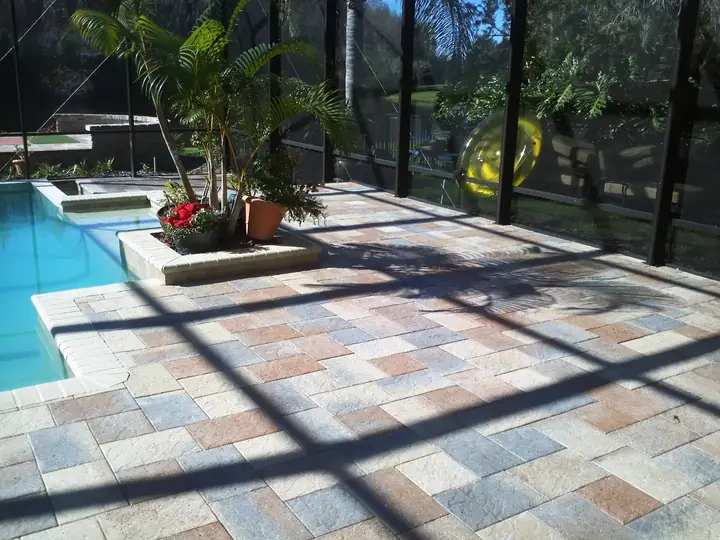
Sealing pavers looks simple: rinse, roll on sealer, done. In practice, most of the cloudy, peeling, and slippery pavers we fix in Tampa Bay started as weekend projects. You can do it yourself, but it helps to know what the job really involves and where it usually goes wrong.
DIY Paver Sealing Step by Step
- Check the weather. You need several dry days: dry pavers before, and dry hours after. See the best time to seal pavers in Tampa Bay.
- Deep clean. Remove dirt, mildew, oil, and rust with cleaners matched to each stain. Sealer locks in whatever is left.
- Repair low spots before sealing; sealing over sunken pavers locks the problem in.
- Let everything dry completely, including the joints. Damp sand under sealer is a common cause of white haze.
- Refill the joints with clean, dry joint sand and sweep off the excess.
- Apply thin, even coats with a low-pressure sprayer or roller, following the label's coverage rate. Avoid puddles and lap marks.
- Keep off it for the full cure time before furniture, foot traffic, and cars.
Where DIY Jobs Go Wrong
| Mistake | What Happens |
|---|---|
| Sealing damp pavers or sand | Trapped moisture turns the sealer white or cloudy |
| One heavy coat | Puddles, a slippery plastic look, peeling |
| Skipping the stains | Rust, oil, and mildew sealed in for years |
| Sealing over old, failing sealer | The new coat peels with the old one |
| Wrong product for the surface | Film sealers on travertine trap moisture; some products yellow in sun |
| Dry-sweeping sand only | Joints settle and wash out in the first storms |
We cover more of these in the biggest paver sealing mistakes we fix and why paver sealer turns white.
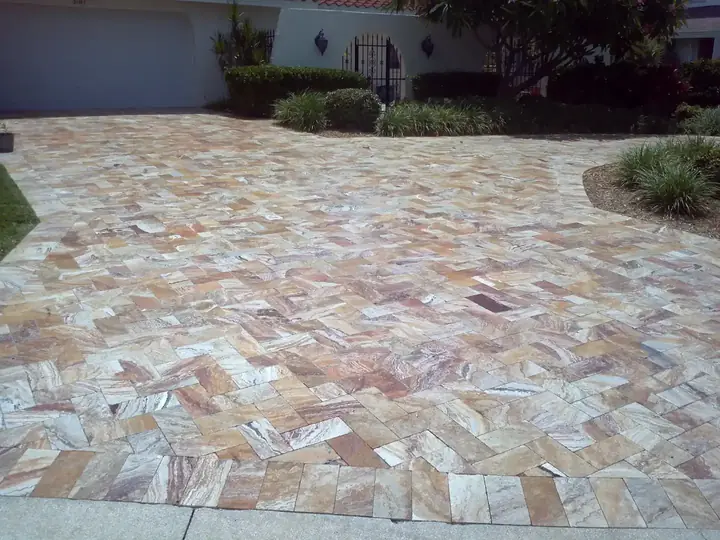
Sealing Travertine Yourself
Travertine and other natural stone need stone-safe cleaners and a breathable, penetrating sealer, not a glossy film made for concrete pavers. Acidic cleaners etch the stone. If you're unsure, see travertine sealing or the travertine pool deck cleaning guide.
Store-Bought vs. Professional Sealer
Big-box sealers are made to be easy for anyone to apply. Professional products, like the Trident sealers we use, are built for Florida sun and rain and come with application training. The bigger difference is usually the prep: commercial cleaning equipment, stain treatments, and wet-sanding the joints so sand is packed deep. See the best paver sealer for Florida.
When Hiring a Pro Makes Sense
- Large areas, driveways, or pool decks
- Old sealer that's peeling, cloudy, or yellow
- Rust, oil, or efflorescence stains
- Travertine, marble, or other natural stone
- No time to wait for a long dry-weather window
Our 8-step process is done by the two owners on every job, with a lifetime labor guarantee. Free written estimates across Brandon, Seffner, Plant City, and Tampa Bay. Before you hire anyone, read 8 questions to ask a paver sealing company.
Had a great experience with Steve and Sam. Both are highly professional and do excellent work. We are repeat customers in Riverview and definitely recommend them.
DIY Paver Sealing vs. Hiring a Pro FAQs
Can I seal my own pavers?
Yes, if you clean thoroughly, let everything dry completely, fill the joints, and apply thin coats in a dry weather window. Most DIY problems come from skipping those steps.
Why did my DIY paver sealer turn white?
Usually moisture was trapped under the sealer, from damp pavers or sand, rain too soon after, or a solvent product in humid weather.
Is professional paver sealing worth it?
For driveways, pool decks, natural stone, or pavers with stains or failed sealer, professional prep and products usually last longer and avoid costly stripping later.
Should I roll or spray paver sealer?
Either works if coats are thin and even. Heavy coats and puddles cause most appearance problems.
Can I use paver sealer on travertine?
Not all of them. Travertine needs a breathable sealer made for natural stone and stone-safe cleaners.
How long should I stay off newly sealed pavers?
Follow the product label. For our jobs, it's 24 hours for foot traffic and furniture and 48 hours for vehicles, longer in cool or damp weather.