
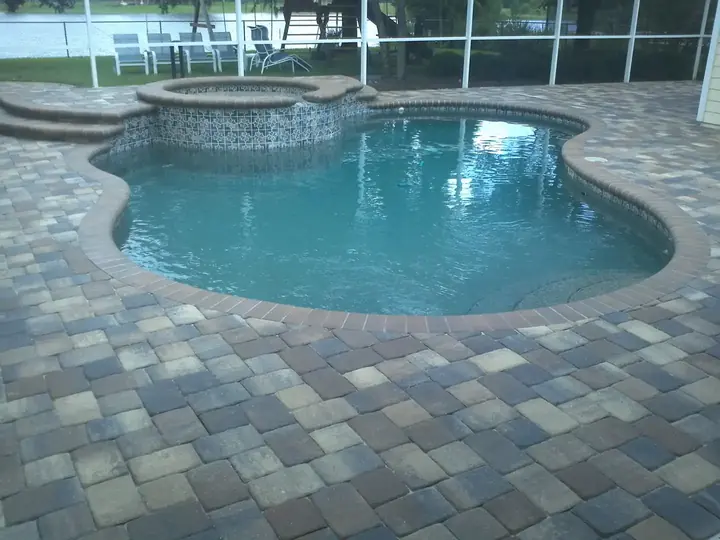
New pavers look amazing, and it's natural to want to protect them right away. The usual advice is to wait about 60 to 90 days before sealing new concrete pavers. Here's why, and when it's safe to go sooner.
Why Waiting Helps: Efflorescence
New concrete pavers often push a white, powdery haze to the surface in the first months. That's efflorescence. If a sealer goes on over it, the haze can be trapped under the finish and look cloudy until the sealer wears off.
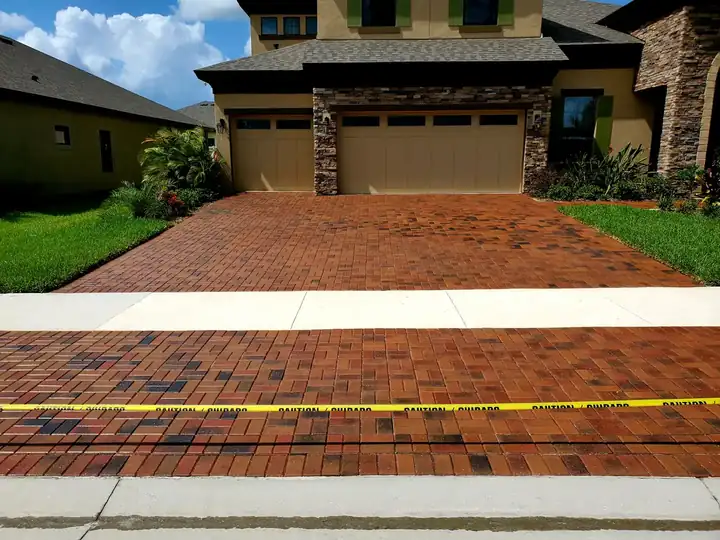
Can new pavers be sealed sooner?
Some breathable, water-based sealers are designed not to trap efflorescence or moisture. Trident's data sheet for Hurricane CAT 5, for example, says it can be applied to most new, clean, dry surfaces without waiting. Even so, we look at your pavers first, because sealing over visible efflorescence is never a good idea.
What We Check on New Installs
- Visible efflorescence or haze
- Polymeric sand or joint sand already installed
- Your installer's warranty guidance
- The finish you want: natural or wet look
Ready when you are. Request a free estimate and we'll recommend the right timing.
The guys from Paver Sealing Florida did an outstanding job providing long lasting sealant to our pavers. They did a thorough job and protected our pool from any damage due to the process. Thanks for a job well done!
When Can You Seal New Pavers? FAQs
How long should I wait to seal new pavers?
Many installers recommend 60 to 90 days so efflorescence can surface and be cleaned off. Some breathable sealers can go on sooner; we check your pavers before recommending a date.
What is the white haze on my new pavers?
That's usually efflorescence, natural salts that rise out of new concrete pavers. It must be removed before sealing.
Will sealing too early void my paver warranty?
Check your installer's and manufacturer's warranty terms. We're happy to work around their recommended timing.