
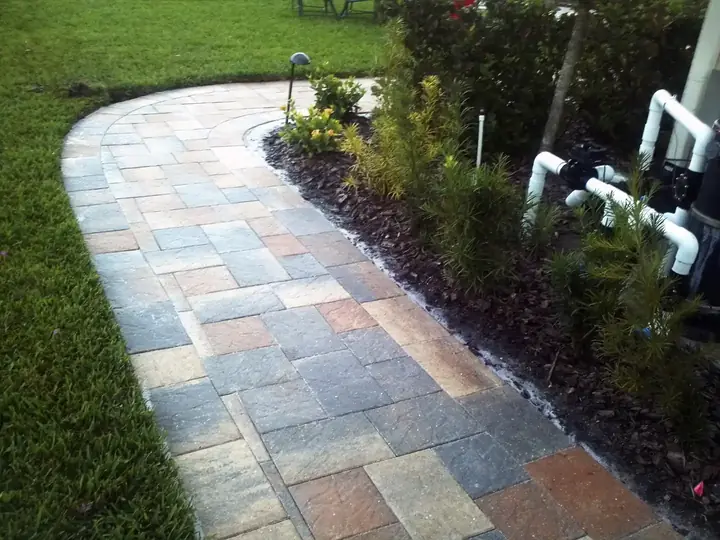
Yes, you can pressure wash pavers yourself, and plenty of Tampa Bay homeowners do. The trouble is that a pressure washer is a powerful tool on a surface made of sand-filled joints and soft concrete or stone. Most of the damage we repair after DIY washing comes from the same few mistakes, and all of them are avoidable.
What Goes Wrong When You Pressure Wash Pavers
| Problem | What Causes It | What It Leads to |
|---|---|---|
| Empty joints | Spraying straight into the joints | Weeds, ants, and loose or shifting pavers |
| Zebra stripes and swirl marks | A narrow tip held close, uneven passes | Lines etched into the surface that sealer won't hide |
| Rough, faded surface | Too much pressure on concrete pavers | The smooth top layer wears away and exposes aggregate |
| Pitted or chipped stone | High pressure on travertine and marble | Opened holes and damaged edges and coping |
| Splatter on walls and windows | Dirty water thrown everywhere | Extra cleanup and water forced past door seals |
How to Pressure Wash Pavers Safely
- Use a surface cleaner attachment if you can. It cleans evenly and keeps the spray off the joints.
- Otherwise use a wide fan tip, never a zero-degree or turbo tip, and keep the wand well away from the surface.
- Spray at a low angle, moving with the joints rather than across them, and keep the wand moving.
- Pre-treat mildew, rust, and oil with the right cleaner first. Pressure alone doesn't remove chemical stains. See mold, mildew, and algae on pavers.
- Rinse toward drains and away from the house.
- Re-sand the joints once everything is dry, or weeds and ants move in within weeks.
Travertine and Marble Need Extra Care
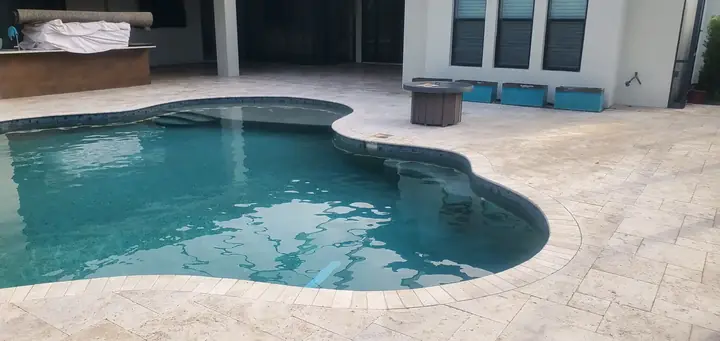
Natural stone is softer than concrete pavers. Use low pressure, a surface cleaner or wide tip at a distance, and stone-safe cleaners only. Never use acid. Read how to clean a travertine pool deck before you start.
Pressure Washing vs. Professional Paver Cleaning
Pressure washing removes surface dirt. Professional cleaning adds stain treatments, the right pressure for each material, careful joint work, and fresh sand. The difference shows the moment the surface dries, and even more after sealing. See paver cleaning vs. pressure washing.
When to Call a Pro
- You plan to seal afterward and want the surface truly clean and the joints filled.
- There are rust, oil, efflorescence, or old sealer problems.
- The surface is travertine, marble, or another natural stone.
- It's a large driveway or pool deck.
Our pressure washing and paver cleaning services use commercial surface cleaners and controlled pressure across Brandon, Riverview, Wesley Chapel, and Tampa Bay.
Choosing a cleaner? See which paver cleaning chemicals are safe on each surface.
I really like how they pay attention to details, very professional and knowledgeable, definitely recommend to friends and family, thanks guys
Can You Pressure Wash Pavers Yourself? FAQs
Can you pressure wash pavers?
Yes, carefully. Use a surface cleaner or a wide fan tip at a distance, avoid spraying into the joints, and re-sand afterward.
What PSI should I use on pavers?
Use the lowest pressure that cleans, with a surface cleaner or a wide fan tip held well away from the surface. Too much pressure etches concrete pavers and damages natural stone.
Why are there stripes on my pavers after pressure washing?
Stripes and swirl marks come from a narrow tip held too close or uneven passes. They're etched into the surface, so sealer won't hide them.
Do I need to re-sand after pressure washing?
Almost always. Pressure washing removes joint sand, and empty joints invite weeds and ants and let pavers shift.
Can I pressure wash travertine?
Only at low pressure with a surface cleaner or wide tip at a distance, and with stone-safe cleaners. High pressure pits and chips travertine.
Will pressure washing remove rust or oil stains?
Usually not. Rust and oil are chemical stains that need the right cleaner. Pressure alone can spread them or etch the surface.