
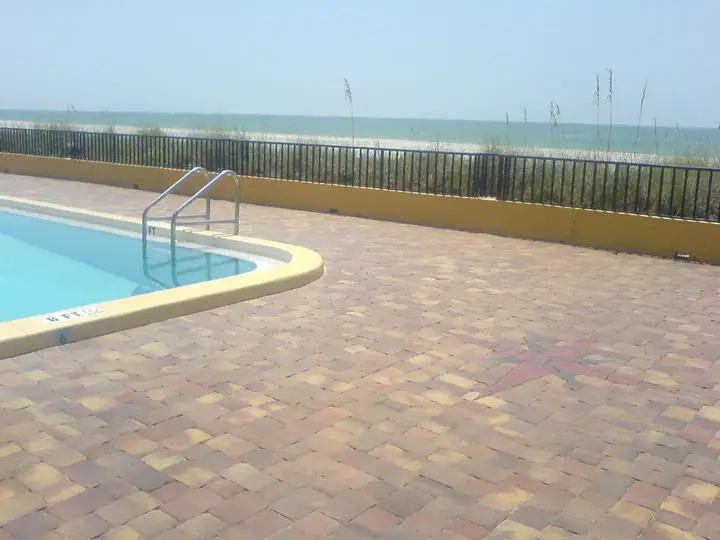
Entrance pavers, pool decks, sidewalks, and amenity patios are some of the most visible parts of a community, and some of the easiest to let slide until they look worn. A simple multi-year plan keeps them consistent and avoids the large surprise cost of stripping failed sealer or replacing damaged areas.
What to Include in the Hardscape Budget
| Line Item | Typical Cycle | Budget Guide |
|---|---|---|
| Cleaning only | Yearly, more often at pools | Quote by area |
| Cleaning, sanding, and sealing | Every 2 to 5 years | $1.75 to $3.00+ per sq ft |
| Stripping and resealing | Only when sealer has failed | $3.00 to $5.00 per sq ft |
| Repairs and leveling | As needed, after inspections | Set aside a contingency |
| Rust and stain treatment | As needed, often irrigation-related | Quote with cleaning |
Exact pricing depends on area, access, condition, and finish. Our paver sealing cost guide explains what moves the number.
Phase the Work by Area
Most boards don't seal everything in one year. A rotating plan spreads cost evenly and keeps every area looking cared for:
- Year 1: entrance and monument pavers, which set first impressions.
- Year 2: pool deck and clubhouse lanai, timed for the slower season.
- Year 3: walkways, amenity patios, and any remaining areas.
Pool Decks Need Their Own Line
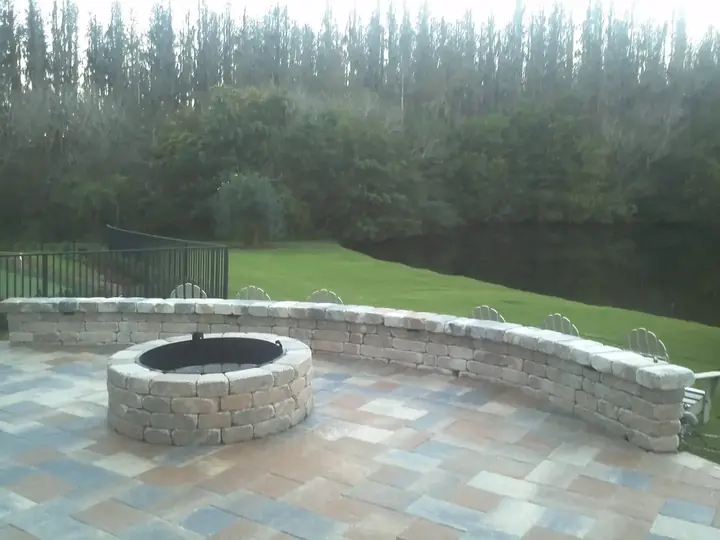
Community pool decks see heavy traffic, chemicals, and wet feet. Slip resistance and fast reopening matter as much as appearance. Budget for slip-resistant sealing and schedule work around pool closures and resident notices.
Avoid the Most Expensive Mistake
The lowest bid is often a quick rinse and a heavy coat of the wrong sealer. When it peels or clouds, stripping it costs $3.00 to $5.00 per square foot, often double the original job. Ask every contractor about cleaning, joint sand, sealer type, and references. See tips on hiring a paver sealing company.
Questions to Ask Before Approving a Proposal
- Which areas are included, and how was each one measured?
- How will stains, efflorescence, and rust be treated before sealing?
- Which joint sand and sealer will be used, and are they suited to pool decks?
- How long will each area be closed, and how will residents be notified?
- Is the contractor licensed and insured, with community references?
Plan With Us
We walk HOA and condo properties, measure each area, and provide a written, phased proposal. See our commercial and HOA services and HOA paver sealing guide. We work with communities across Tampa Palms, Sun City Center, Pinellas County, and Tampa Bay.
Pool decks carry the most slip risk; see pool deck slip safety.
Low bid on our hoa pool deck paver clean, sand and seal project. This was a large commercial project, and these guys went beyond our expectations. The deck was neglected for years, and they brought it back under budget, with quality work. We have got all positive comments from our members, and we will use them again in two years. 5 stars!
How HOAs Budget for Paver and Pool Deck Maintenance FAQs
How often should an HOA seal its pavers?
Most communities reseal every 2 to 5 years, with yearly cleaning and more frequent attention at pool decks.
How should an HOA budget for paver sealing?
Use a phased plan that seals one or two areas a year, with a separate line for pool decks and a contingency for repairs.
How much does commercial paver sealing cost?
Cleaning, sanding, and sealing typically runs $1.75 to $3.00 or more per square foot, depending on area, access, and condition.
Why is stripping sealer so expensive?
Removing failed sealer is slow, careful work. It typically costs $3.00 to $5.00 per square foot, often double the original job.
Can you work around pool closures and residents?
Yes. We schedule by area, coordinate resident notices, and plan pool deck work to minimize closures.