
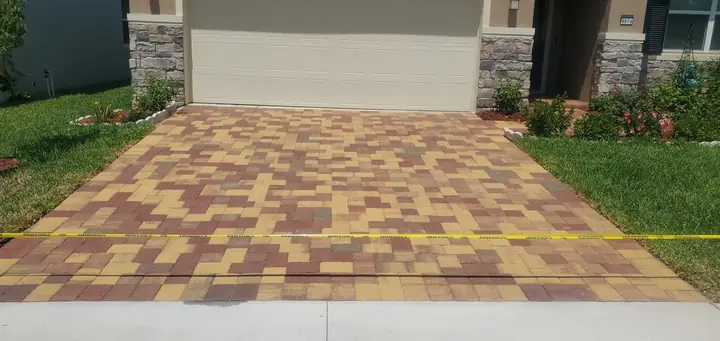
Driveways in Tampa Bay take a beating: oil drips from older cars, power steering and brake fluid, black tire marks from hot tires turning in place, and grease from grills and outdoor kitchens on the patio. The sooner you treat these stains, the more completely they come out.
Fresh Oil and Grease Spills
- Blot, don't wipe. Wiping spreads the oil into more of the surface.
- Cover it with an absorbent like clay cat litter or sawdust, press it in, and leave it for several hours or overnight.
- Sweep it up and repeat if the spot still looks wet.
- Scrub with a degreaser made for concrete and pavers, or a strong dish soap and warm water, using a stiff nylon brush.
- Rinse well and let it dry before judging the result.
Old, Set-In Oil Stains
Oil that has soaked in for months needs more than soap. A paver degreaser or poultice draws oil back out of the pores as it dries, and it may take two or three applications. Very old stains often lighten a lot rather than disappearing completely. On travertine and marble, use only products labeled safe for natural stone.
Tire Marks on Paver Driveways
Black marks where you turn the wheel or park usually come from rubber rubbing off hot tires. Most clean off with a degreaser and a brush. On a sealed driveway, tire marks sometimes come from the sealer itself softening under hot tires, often called hot tire pickup. Thin, even coats of a sealer suited to driveways, and full cure time before driving, reduce it. See our prep checklist for cure times.
Grill and Outdoor Kitchen Grease
Grease drips around grills and outdoor kitchens soak into pavers and stone fast. Put a grill mat under the cooking area, wipe drips while they're warm, and treat spots with a degreaser. Stone counters and floors around outdoor kitchens clean up much more easily once sealed; see patio, lanai, and outdoor kitchen sealing.
What Not to Do
- Don't pour gasoline or solvents on pavers; they spread the stain and are a fire hazard.
- Don't blast oil with high pressure; it drives it deeper and can etch the surface.
- Don't use acid; it doesn't remove oil and it damages stone.
How Sealing Protects Driveways from Oil
Sealed pavers resist oil soaking in, so drips sit on top long enough to wipe up. That's a big reason we recommend driveway paver sealing with a joint-stabilizing sealer. For stubborn stains, our stain removal treats them before sealing. We serve driveways across Valrico, FishHawk, New Tampa, and Tampa Bay.
Grease around a grill or outdoor kitchen? See cleaning and sealing outdoor kitchen stone.
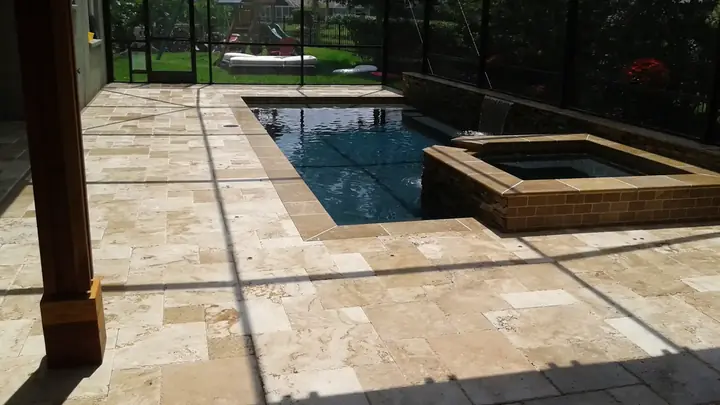
Sam & Steve did a great job, worked fast, removed all stains, and applied 3 coats of sealer. The pavers actually sparkle in the sun with the paver color shining throughout the pool deck. I was worried about the sand used around the pool area, but when they were done it was not gritty, and looked sharp. They did a wonderful job, highly recommended, and will use them again when needed again.
How to Remove Oil, Grease, and Tire Marks from Pavers FAQs
How do you get oil stains out of pavers?
Blot the spill, cover it with an absorbent like clay cat litter, then scrub with a paver degreaser and rinse. Old stains may need a poultice and several applications.
Will old oil stains ever come out completely?
Fresh stains usually do. Stains that have soaked in for years often lighten a lot rather than disappear completely.
How do I remove tire marks from my paver driveway?
Most come off with a degreaser and a stiff brush. If marks come from softened sealer, the sealer may need attention.
What is hot tire pickup?
It's when hot tires soften some sealers and pull or mark them. Thin coats of a sealer suited to driveways and full cure time before driving help prevent it.
Does sealing stop oil stains?
It doesn't make pavers stain-proof, but sealed pavers resist oil soaking in, so drips can be wiped up before they stain.
Is it safe to use gasoline to clean oil off pavers?
No. It spreads the stain deeper and is a fire hazard. Use a degreaser made for pavers instead.